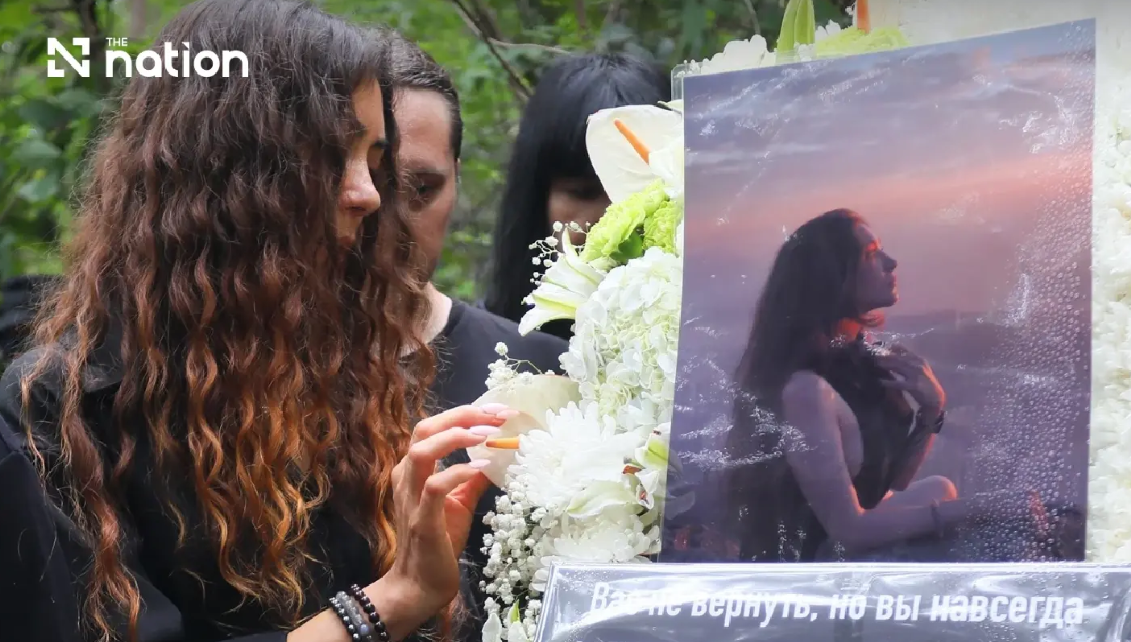
Sharina Nazimova gathered with Thai and international mourners in Huai Yai subdistrict, Bang Lamung district on Thursday to honour her children Diana and Roman alongside three members of a Thai family, all believed to have been killed by the same suspects now in police custody. The ceremony held at the site where the Russian siblings were discovered became a poignant moment of collective remembrance, drawing officials from Chon Buri provincial authorities, law enforcement personnel, and civil servants who stood alongside friends and strangers united in grief.
The memorial service followed Buddhist traditions, with monks chanting sacred verses and conducting rituals intended to transfer merit to the five deceased. Attendees maintained respectful silence, pressed their palms together in the Thai wai gesture, and paid final homage to those whose lives were cut short by violence. The spiritual ceremony provided a formal closure for the bereaved families while acknowledging the broader impact these deaths had rippled through both the local and expatriate communities in Thailand.
Floral tributes dominated the physical memorial landscape, with mourners arranging white carnations, lilies, and roses—blooms traditionally associated with purity, reverence, and the peaceful transition between life and the afterlife. The selection of white flowers carried symbolic weight across both Western and Buddhist traditions, creating a shared language of mourning that transcended cultural boundaries. Beyond these conventional gestures, Nazimova's family placed a cup of coffee at the site, a deeply personal touch that transformed the memorial into something more intimate, honouring Diana's cherished preference and anchoring remembrance in everyday human connection.
Visibly overwhelmed by emotion, Nazimova wept throughout the proceedings as relatives and fellow mourners offered their comfort and presence. Her public expression of gratitude extended beyond her immediate circle to encompass the broader Thai society that had mobilized around her family's tragedy. She specifically acknowledged the work of government institutions, police investigators, and volunteer organisations, recognising how their collective efforts had provided both practical assistance and emotional sustenance during the darkest period imaginable.
The significance of Nazimova's gratitude extends deeper than mere politeness. International tragedies involving foreign nationals can sometimes create friction between countries or spark resentment among expatriate communities. Instead, the Russian mother's genuine appreciation for Thai support demonstrates a capacity for healing that bridges the gap between victim families and host nations. Her words reflected a family that, despite catastrophic loss, chose to recognise the humanity and compassion shown by ordinary Thais rather than focus solely on systemic failures that may have enabled the crimes.
The family's Buddhist faith provided crucial spiritual grounding for this memorial observance. Nazimova had raised both Diana and Roman as practitioners of Buddhism, a decision that shaped how they lived and ultimately how their deaths would be commemorated. The alignment between the family's religious convictions and Thai Buddhist traditions created a natural convergence that allowed Thai society to extend mourning practices reflecting their own spiritual frameworks, transforming a foreign tragedy into one that resonated within familiar cultural and religious contexts.
The arrests of Thana Kerdthong and Thongchai Srinil on July 31 in Sa Kaeo province represented a critical development that had given the investigation concrete focus. Police characterised the two men as primary suspects in the murders, describing an encounter they allegedly orchestrated by impersonating police officers. According to investigators, the suspects restrained Diana and Roman beside a roadway before transporting them to a wooded location where the fatal crimes occurred. Police theorised that motorcycle theft served as the triggering motive, suggesting that circumstances escalated from attempted robbery into homicide.
The investigation subsequently expanded dramatically when the detained suspects provided investigators with information about burial sites. While leading authorities to where the Russian siblings had been concealed, police simultaneously discovered the remains of three Thai family members in a nearby grave, transforming a dual murder investigation into a quadruple homicide enquiry. This expansion revealed a pattern of alleged violence suggesting the suspects may have targeted multiple victims across a concentrated timeframe, potentially indicating a more serious criminal trajectory than initially suspected.
Police have noted that the suspects provided conflicting accounts of the events, with investigators expressing scepticism about the consistency and completeness of their statements. Detectives indicated they were systematically cross-referencing the suspects' testimonies against forensic evidence, physical evidence, and other investigative findings to establish definitive facts. This methodical approach reflects recognition that murder investigations of this magnitude require extraordinary evidentiary scrutiny, particularly when suspects offer competing narratives about fundamental questions regarding how victims died and where remains were disposed.
The memorial service occurred within this ongoing investigative context, meaning that formal judicial processes remained incomplete despite arrests and initial evidence gathering. Mourners attending the ceremony expressed collective hope that the justice system would pursue accountability with vigour and deliver verdicts reflecting the gravity of the alleged crimes. Their aspiration extended beyond simple punishment to encompass genuine justice that would acknowledge the lives lost and provide bereaved families with some measure of closure through a fair legal process.
For Malaysia and Southeast Asia more broadly, this case illuminates vulnerabilities facing foreign nationals travelling through the region and highlights the importance of robust police cooperation when crimes cross national boundaries. Thai authorities' efforts to investigate systematically and transparent communication with victim families have largely prevented the kind of international incident that sometimes follows violent deaths of tourists or expatriates. As regional travel patterns intensify, such cases underscore the significance of maintaining public confidence in law enforcement institutions across all Southeast Asian nations.

