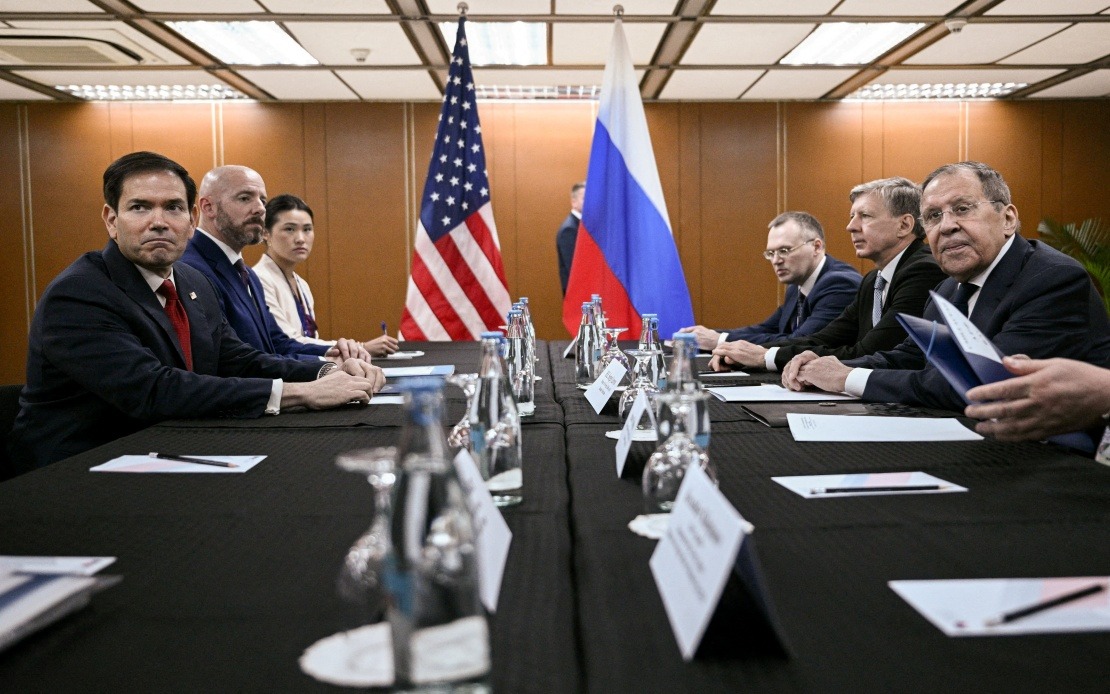
Russian Foreign Minister Sergey Lavrov and United States Secretary of State Marco Rubio have reached an understanding to preserve ongoing dialogue between their respective foreign ministries, with particular emphasis on coordination through multilateral international bodies. The agreement, announced by Moscow's Foreign Ministry on Thursday following their meeting in Manila, signals a deliberate effort to maintain channels of communication despite broader geopolitical tensions between the two powers.
The commitment to continue contacts specifically within the framework of international organisations represents a pragmatic approach to sustaining diplomatic engagement. Rather than relying solely on bilateral mechanisms, both nations have opted to utilise their participation in global forums as venues for maintaining ministerial-level discussions. This approach allows each country to preserve communication pathways while operating within established multilateral structures that command international legitimacy and oversight.
Beyond the general agreement on maintaining contact, the two foreign ministers identified several concrete areas requiring immediate attention. Chief among these was the normalisation of working conditions for diplomatic missions operated by each country within the other's territory. The current operational difficulties facing embassy and consulate staff reflect the practical strain that broader US-Russia relations have imposed on diplomatic infrastructure, making this component of the agreement particularly significant for ensuring that day-to-day diplomacy can function effectively.
A particularly noteworthy development emerging from the Manila discussions involves the resumption of full-scale cooperation between Roscosmos, Russia's state space agency, and NASA, the American space administration. Both ministers welcomed this revival of space sector engagement, acknowledging that scientific and technological collaboration represents a domain where cooperation can transcend political disagreements. The restoration of comprehensive contacts between these institutions carries symbolic weight, suggesting that certain areas of mutual interest remain resilient even amid diplomatic friction.
The agreement also encompasses renewed emphasis on parliamentary-level exchanges between the two nations. Such interparliamentary contacts provide alternative diplomatic channels and foster understanding among legislators who shape their respective countries' foreign policies. By encouraging these exchanges, Lavrov and Rubio recognised that building relationships across multiple institutional levels strengthens the overall foundation for peaceful coexistence and reduces the risk of miscalculation.
Cultural exchanges likewise received attention in the ministers' discussion, reflecting recognition that people-to-people connections and cultural understanding constitute essential components of maintaining stable international relations. Cultural diplomacy serves as a soft power tool that can gradually reshape perceptions and build goodwill even when official relations remain strained. The explicit inclusion of cultural ties in the agreement demonstrates both parties' commitment to preventing complete diplomatic isolation.
For Southeast Asian observers, this development carries particular relevance given the region's delicate balancing act between major powers. The Manila venue itself underscores how regional forums and locations serve as neutral ground where significant diplomatic negotiations occur. Malaysia and other ASEAN nations have long recognised the importance of maintaining inclusive dialogue frameworks that accommodate all major powers, and this agreement reflects that principle in action. The willingness of Russia and the United States to engage through international organisations validates the ASEAN approach to regional diplomacy.
The practical implications of this understanding extend to organisations where both Russia and the United States maintain significant roles—bodies ranging from the United Nations and its specialised agencies to regional development banks and scientific consortiums. These institutional channels provide structure and purpose to diplomatic engagement, moving conversations beyond abstract principles toward concrete collaborative projects that serve broader international interests.
However, the very necessity of formalising such an agreement highlights the underlying fragility of current US-Russia relations. That foreign ministers must explicitly commit to maintaining contact through international organisations suggests that bilateral relations have deteriorated sufficiently to require such guarantees. The agreement essentially represents damage control rather than a breakthrough toward substantive reconciliation on major geopolitical disputes.
The emphasis on space cooperation revival deserves particular attention as a confidence-building measure. Scientific collaboration, particularly in high-stakes fields like space exploration, requires sustained communication, good faith, and mutual trust. By committing to restore full-fledged Roscosmos-NASA contacts, both nations signal their recognition that certain collaborative ventures transcend political disagreement and serve broader human interests. This restoration may generate positive momentum that gradually improves the overall diplomatic atmosphere.
For regional powers like Malaysia, the outcome of the Lavrov-Rubio meeting reinforces the importance of multilateral engagement frameworks. ASEAN's long-standing commitment to dialogue and inclusive multilateralism gains validation when major powers themselves resort to international organisations as preferred venues for maintaining contact. This development suggests that Southeast Asian nations, through organisations like ASEAN, can continue to play meaningful roles as neutral facilitators and conveners of international dialogue.
Looking forward, the sustainability of this agreement will depend on both nations' commitment to honouring the principles of continued contact and expanding cooperation in non-contentious areas. The space sector cooperation and parliamentary exchanges represent test cases for whether officials at various institutional levels can work productively despite escalating tensions elsewhere. Success in these limited domains might gradually expand the zones of cooperation and create momentum toward addressing more substantive disputes that have strained US-Russia relations.

