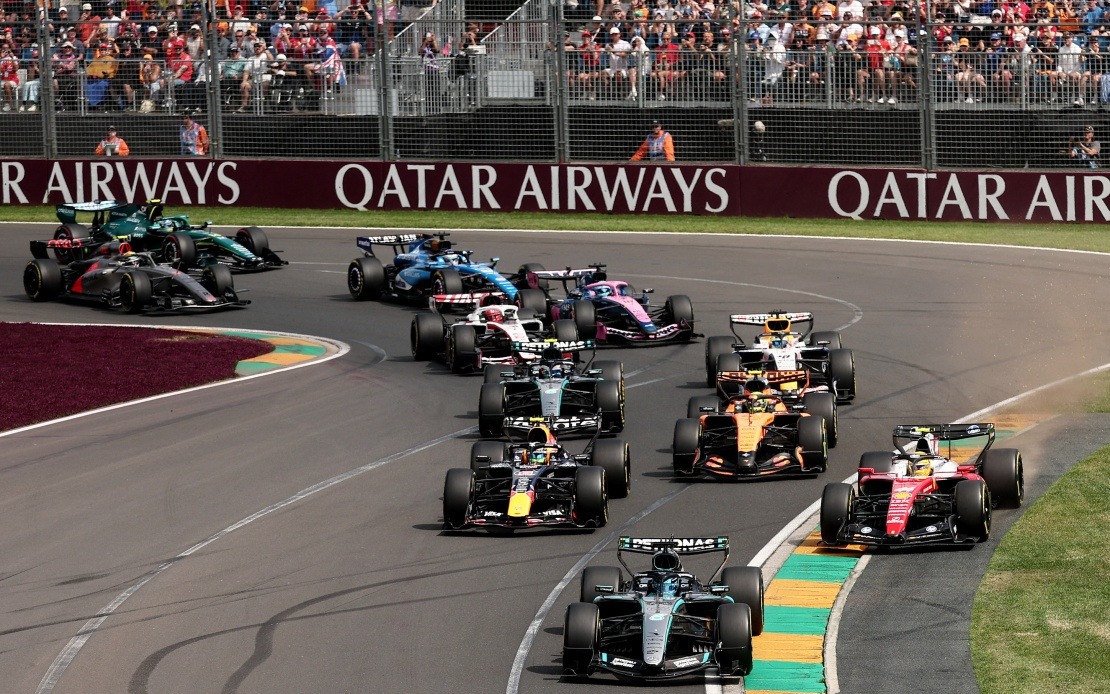
The sounds of frustration crackled across the radio waves at Spa-Francorchamps on Sunday as George Russell vented his exasperation at Mercedes following a retirement that has severely compromised his world championship ambitions. The British driver's outburst, captured in transmissions not broadcast during the race, painted a picture of mounting desperation at a team struggling with reliability at a critical juncture in the season.
Russell's deficit to his Italian teenage teammate Kimi Antonelli now stands at a daunting 50 points after the younger driver claimed his sixth victory from ten rounds contested so far. This gap has effectively shifted the championship narrative, transforming what appeared to be a closely contested battle into a scenario where Antonelli holds a commanding advantage heading into the latter stages of the campaign. For Russell, the mathematics are unforgiving, particularly with only a handful of races remaining before the summer break provides time for reflection and recalibration.
The sequence of events that unfolded at the Belgian circuit began promisingly enough before deteriorating rapidly. Russell's weekend was undermined from the outset by a mysterious engine glitch during the opening lap that exposed him to the chasing pack, immediately placing him on the back foot for what followed. This initial mechanical problem compounded his qualifying performance, where he trailed Antonelli by half a second—a margin attributable to deployment issues within the Mercedes power unit. The collision with teammate Lewis Hamilton that eventually ended his race came as the final indignity to an increasingly troublesome weekend.
Russell's radio eruption centred on battery charge management systems, with the driver bellowing questions about state of charge depletion during straights where maximum electrical power is typically available. His increasingly colourful language underscored the depth of his frustration, with repeated references to the unacceptability of the situation across the entire weekend. The emotional release captured a driver reaching the limits of his tolerance for mechanical setbacks that appeared to lie beyond his direct control or influence.
The initial diagnosis proved misleading, with Mercedes engineers initially attributing the qualifying deficit to Russell's driving style and energy management approach. However, further investigation quickly ruled out this theory, leaving a baffled engineering department searching for root causes. This misdiagnosis speaks to the complexity of modern Formula 1 power units and the difficulty in pinpointing issues when symptoms manifest inconsistently across different track configurations and driving conditions.
Russell expressed cautious optimism that solutions might materialise before the Hungarian Grand Prix, the final round before the summer shutdown, though his comments revealed a driver dealing with cumulative disappointment. His admission of growing numb to setbacks carries psychological weight, suggesting the relentless catalogue of technical failures has begun to erode both confidence and mental resilience. This is a significant concern for any driver battling for a championship, as mechanical frustration can undermine focus and decision-making in the cockpit.
Mercedes team principal Toto Wolff offered a measured response to Russell's frustrations, acknowledging the emotional toll while attempting to reframe the situation within the context of elite motorsport. Wolff emphasised that driving for Mercedes remains a privilege, suggesting Russell should view temporary hardship as part of the broader honour of representing a championship team. This framing, while defensible in principle, risks appearing dismissive of genuine technical failures that fall squarely within the team's responsibility to resolve.
Wolff provided technical elaboration on the specific nature of the power unit problem, describing the intricate relationships between energy harvesting, deployment strategies, and driver interaction within the hybrid system. The team principal indicated that engineers had identified a definite engine issue affecting energy availability into Turn 18, one of the circuit's demanding corners. This represented approximately half of Russell's qualifying gap to Antonelli, though Wolff acknowledged that the deficit extended beyond purely technical explanations.
The complexity of modern Formula 1 power units, with multiple layers of energy recovery and deployment systems, creates opportunities for subtle failures that challenge even experienced engineering teams. Wolff's observation that the problem manifested more clearly at Spa-Francorchamps, a high-speed, energy-demanding circuit, compared to other venues reflects this reality. Budapest's characteristics as a low-energy circuit would have masked the fault more effectively, meaning the team benefited from the visibility gained through Russell's weekend struggles, however cold comfort that provides the driver himself.
The situation highlights broader reliability concerns facing Mercedes this season, with Russell's difficulties compounding a narrative of technical fragility. For Malaysian and Southeast Asian observers following the championship, this represents a cautionary tale about how mechanical issues can rapidly unravel championship campaigns. Russell's 50-point deficit would require an extraordinary reversal of fortune to overturn, placing increased pressure on immediate improvements.
The contrast between Antonelli's six victories and Russell's mechanical misfortunes underscores how thin the margins have become in contemporary Formula 1. A few percentage points of reliability difference translate into massive championship consequences. Russell's acknowledgment of emotional numbness signals a driver in need of immediate respite and tangible improvements to rebuild confidence.
Moving forward to Budapest, Mercedes faces a critical test of its troubleshooting capabilities. Success in identifying and resolving the underlying technical issues could represent a turning point for Russell's season, while further failures would likely signal a decisive championship outcome. The team's engineering response in the coming days will prove as important as any on-track performance, making the Hungarian Grand Prix a pivotal moment for both Russell's championship prospects and Mercedes' credibility as a competitive force.

