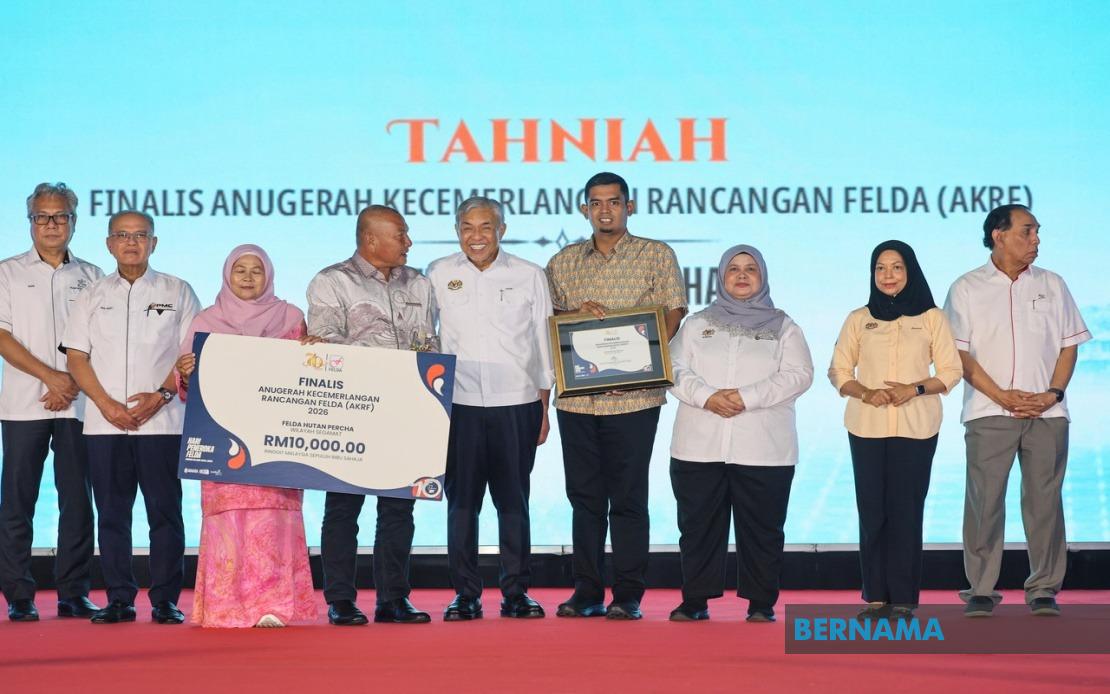
At the inaugural World Rural Development Day celebration held at Bandar Tun Razak Stadium in Maran, Deputy Prime Minister Datuk Seri Dr Ahmad Zahid Hamidi delivered a forceful message about reimagining Malaysia's approach to rural economic growth. The minister, who oversees the Rural and Regional Development portfolio, contended that confining rural development strategy within domestic parameters represents an outdated model that fails to unlock the full potential of Malaysia's rural enterprises and communities.
Ahmad Zahid's intervention reflects a strategic pivot in how Kuala Lumpur views its rural economy in the context of regional integration and global commerce. Rather than viewing rural development as a compartmentalised domestic concern, the government increasingly recognises that Malaysian rural producers operate within a competitive international ecosystem where market access, brand positioning, and cross-border networks determine competitive advantage. This reorientation carries particular significance for Malaysia, where rural areas historically have been centres of agricultural production, cottage industries, and traditional crafts with inherent export potential.
The Deputy Prime Minister emphasised that Malaysian rural entrepreneurs possess substantial untapped opportunities in expanding their reach into larger markets, particularly within the ASEAN bloc and the expanding global halal economy—a sector where Malaysia maintains established credibility and regulatory frameworks. He argued that rural products and brands must cultivate sufficient market confidence to compete internationally, a transition that demands psychological shift as much as logistical and financial support. The implication here extends beyond mere commercial expansion; it speaks to rural Malaysia's capacity to participate meaningfully in regional value chains and global supply networks.
Central to Ahmad Zahid's vision is the National Rural Economy Agenda, which he positioned as the comprehensive blueprint guiding Malaysia's next phase of rural transformation. This framework represents an attempt to harmonise multiple development streams—infrastructure, human capital, entrepreneurship, and market access—under a coherent strategic vision rather than fragmented, project-based interventions. The approach suggests recognition that sustainable rural prosperity requires integrated policy architecture addressing supply-side constraints, demand-side opportunities, and enabling ecosystem conditions simultaneously.
The ministry has introduced targeted initiatives over the preceding three years designed to strengthen rural entrepreneurial capacity and market penetration. Programmes including RisSMart and IkonDesa exemplify this effort to move beyond conventional infrastructure investment toward market-oriented support mechanisms. These initiatives aim to equip rural business operators with contemporary tools for product marketing, brand development, and market intelligence—capabilities increasingly essential in digitally connected economies where geographical isolation no longer guarantees market protection.
The quantified outcomes of these interventions demonstrate substantial ground-level impact. The ministry reports developing more than 7,000 new rural entrepreneurs whilst simultaneously generating approximately 15,000 employment opportunities and producing sales revenues exceeding RM1.77 billion. These figures suggest that rural entrepreneurship development, when coupled with appropriate institutional support and market linkage mechanisms, can generate meaningful economic activity and employment. The emphasis on moving beyond infrastructure-centric development toward competitive, market-responsive rural economies indicates growing sophistication in how government conceptualises rural economic transformation.
Parallel to entrepreneurial development, Ahmad Zahid highlighted progress in human capital advancement among traditionally marginalised groups. The admission of nearly 500 Orang Asli students to universities marked the highest historical level, reflecting targeted initiatives to expand educational access among indigenous communities. This dimension of rural development carries significance beyond immediate economic metrics; it speaks to inclusion, social mobility, and development of technical expertise within communities historically underrepresented in higher education and professional sectors.
Infrastructure modernisation remains foundational to rural development strategy. During the 12th Malaysia Plan period, nearly 5,000 kilometres of rural roads underwent upgrading, directly addressing connectivity challenges that impede market access and economic opportunity. Simultaneously, electrical power extension reached more than 7,000 homes whilst clean water supply improvements benefited over 10,000 rural households. Housing initiatives resulted in construction or refurbishment of nearly 10,000 residential units, directly improving living conditions for approximately 40,000 rural residents. These infrastructure investments address basic service deficiencies that constrain quality of life and economic productivity in rural areas.
The World Rural Development Day observance itself carries symbolic and practical significance for Malaysia's rural development agenda. The United Nations formally proclaimed the occasion on September 6, 2024, designating July 6 as the annual observance date commemorating establishment of the Centre on Integrated Rural Development for Asia and the Pacific. Malaysia's formal adoption of this observance from 2026 onwards, following the inaugural global celebration in 2025, signals the government's commitment to aligning domestic rural development priorities with international frameworks and peer-learning networks. This institutional integration facilitates knowledge exchange, policy benchmarking, and collaborative approaches to addressing common rural development challenges across the Asia-Pacific region.
Ahmad Zahid's emphasis on transcending national borders reflects deeper structural realities confronting Malaysian rural communities. Domestic markets alone, constrained by population size and purchasing power, cannot absorb the productive capacity rural entrepreneurs might develop. Regional integration through ASEAN provides access to substantially larger consumer bases and complementary production networks. The halal economy—valued at over USD2 trillion globally—represents a particular opportunity where Malaysia's institutional expertise, certification frameworks, and brand heritage position the country for competitive advantage in serving Muslim-majority and halal-conscious consumer populations worldwide.
The government's rural development calculus increasingly recognises that infrastructure investment, entrepreneurial support, and human capital development yield limited returns unless accompanied by genuine market access and competitive positioning in regional and global value chains. Ahmad Zahid's statements reflect this maturing understanding: that contemporary rural development transcends traditional rural-urban dichotomies or domestic-international boundaries. Instead, successful rural economies function as integrated nodes within regional networks, with entrepreneurs operating across borders, supply chains spanning multiple jurisdictions, and growth constrained primarily by capability gaps rather than geographical position.
For Malaysian policymakers, the strategic challenge lies in translating this conceptual reorientation into concrete institutional mechanisms, regulatory frameworks, and resource allocations that genuinely facilitate rural entrepreneurs' cross-border participation. This requires coordinated efforts spanning trade facilitation, skills development, financing access, and regulatory harmonisation—extending rural development ministries beyond traditional domestic roles into active participants in regional economic integration processes. The success of Ahmad Zahid's vision ultimately depends on whether Malaysia's rural development apparatus can effectively operationalise this broader development paradigm across multiple ministry portfolios and institutional contexts.

