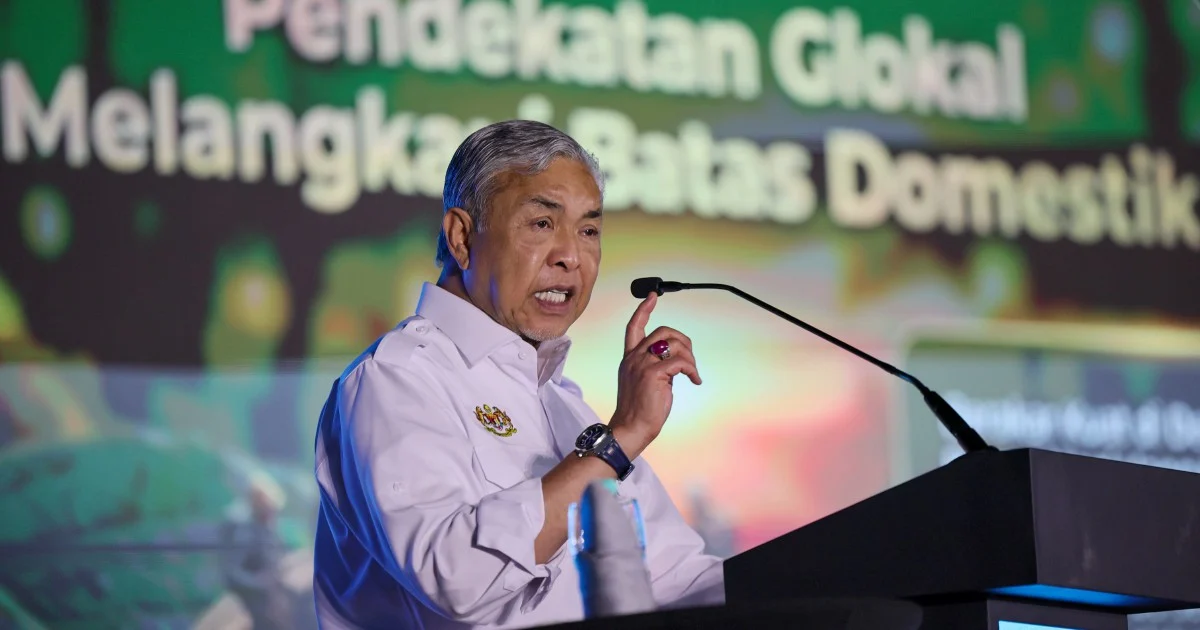
Deputy Prime Minister Datuk Seri Dr Ahmad Zahid Hamidi has called for Malaysia's National Rural Economic Agenda to function as a comprehensive strategic framework that bridges domestic rural development with broader international economic imperatives. Speaking in Maran, Zahid underscored that rural growth across the nation cannot operate in isolation from global market trends and international commitments, but must instead evolve in tandem with the wider economic landscape.
The emphasis on synchronising rural development with global agendas reflects growing recognition in Malaysian policymaking circles that localised development strategies require alignment with international standards, trade obligations, and sustainability frameworks. Rather than treating rural advancement as a separate track, Zahid's remarks suggest the government views it as an integral component of Malaysia's broader economic positioning in an increasingly interconnected world.
Rural development has traditionally been approached through domestically focused programmes centred on infrastructure, agricultural modernisation, and poverty alleviation. However, the Deputy Prime Minister's framing introduces a shift towards considering how these initiatives can simultaneously address international expectations—whether related to environmental sustainability, digital transformation, or global supply chain integration. This dual approach requires careful calibration to ensure rural communities benefit economically while meeting external benchmarks.
Malaysia's rural sector represents a significant portion of the population and economy, yet has historically lagged urban centres in income levels, infrastructure quality, and service access. The National Rural Economic Agenda presents an opportunity to address these disparities while positioning rural areas as contributors to Malaysia's competitive advantage internationally. For instance, rural agricultural exports must meet global food safety standards, while rural tourism initiatives need to align with international visitor expectations and sustainability certifications.
The integration of global agendas into rural planning also carries implications for technology adoption and skills development. Rural communities will need access to digital infrastructure and training programmes that meet international standards, enabling them to participate effectively in digital economies and e-commerce platforms. This requires substantial investment and coordination between federal and state governments, private sector partners, and international development agencies.
Zahid's call also touches on Malaysia's international commitments in areas such as climate action, sustainable development goals, and trade agreements. Rural agricultural practices, for example, increasingly fall under scrutiny from global sustainability frameworks and international markets demanding carbon-neutral or eco-certified products. Integrating these requirements into the National Rural Economic Agenda ensures Malaysian rural producers can maintain competitiveness in discerning international markets.
The challenge for policymakers lies in preventing the pursuit of global standards from becoming burdensome for rural stakeholders with limited resources. Implementation mechanisms must consider the practical constraints faced by smallholder farmers, rural entrepreneurs, and local governments in meeting international benchmarks. Capacity-building and financial support become critical components of any agenda that seeks to harmonise rural development with global priorities.
Regional implications extend throughout Southeast Asia, where rural development patterns influence trade flows, migration patterns, and regional economic integration. Malaysia's approach to aligning rural growth with global agendas may set precedents that other ASEAN nations observe or adopt, particularly regarding the balance between local development aspirations and international economic participation.
Successful execution of such a strategy demands clear articulation of specific global agendas that rural development should address. Whether prioritising climate-smart agriculture, digital inclusion, or integration into regional supply chains, clarity enables stakeholders to align resources and efforts effectively. Ambiguity risks creating conflicting directives that leave rural communities uncertain about investment priorities.
The statement arrives amid broader global discussions about inclusive development and ensuring that rural populations benefit from globalisation rather than experiencing its dislocations. Malaysia's National Rural Economic Agenda, positioned as Zahid describes it, could demonstrate that rural advancement and global competitiveness need not be contradictory objectives but can reinforce each other when properly integrated.
Government coordination across multiple ministries will prove essential, as rural development touches agriculture, education, transportation, digital infrastructure, and environmental management—each with distinct international dimensions. Creating an institutional framework that harmonises these sectoral approaches while remaining responsive to local rural priorities represents a significant administrative undertaking that will test governance capacity.
Moving forward, the effectiveness of the National Rural Economic Agenda will depend on translating these high-level strategic objectives into concrete policies, measurable targets, and adequate resource allocation. Rural stakeholders will need transparent communication about which global priorities the agenda addresses and how compliance supports rather than undermines their economic interests and community wellbeing.

