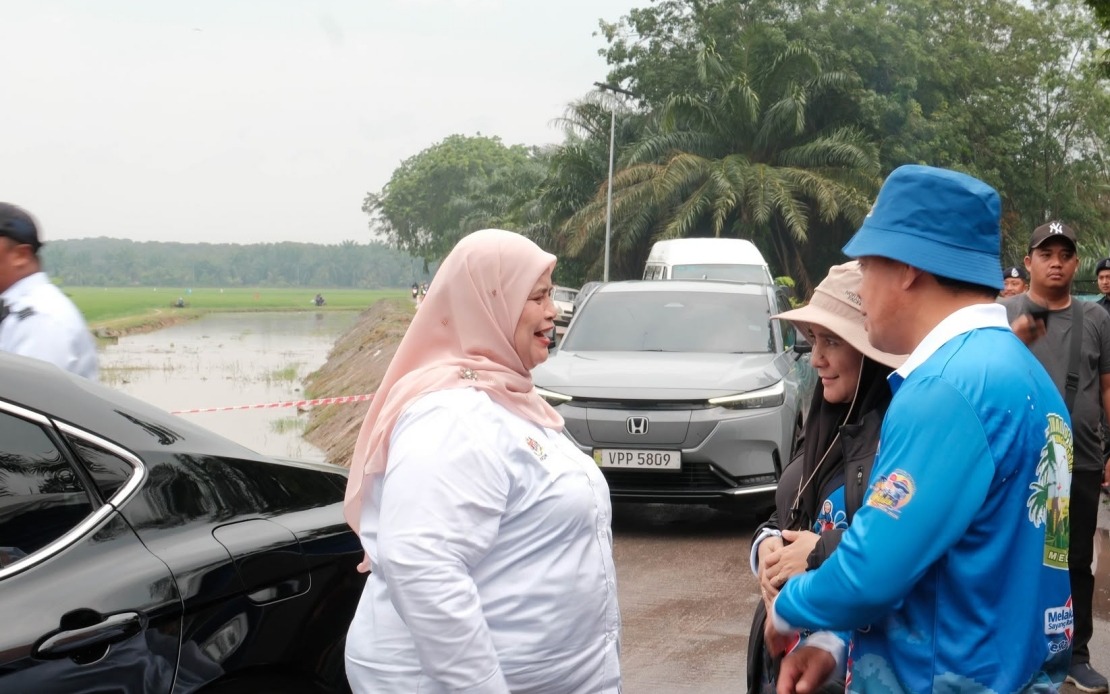
The Ministry of Rural and Regional Development (KKDW) is channelling RM1.911 million into Sungai Rambai over the six-year period from 2021 to 2026, reflecting a sustained commitment to revitalizing rural infrastructure in Melaka. This substantial investment addresses two interconnected development priorities: modernizing the physical fabric of rural communities while simultaneously creating economic opportunities that can stem migration to urban centres. Deputy Minister Datuk Rubiah Wang unveiled the funding commitment during the closing ceremony of the D'Bendang Melaka Festival, signalling the government's intention to link infrastructure spending with broader rural tourism and agribusiness strategies.
The allocation breaks down into two principal components, each targeting distinct but complementary outcomes. The Social Amenities Programme (PAMS) has received RM1.001 million to finance eleven separate projects focused on upgrading public facilities throughout Sungai Rambai. These improvements, which range from community spaces to service infrastructure, aim to enhance the daily quality of life for rural residents by providing better-maintained and more functional public amenities. Such investments are crucial in rural Malaysia, where infrastructure gaps between urban and rural areas have historically prompted outmigration of younger populations seeking better living standards.
The second stream of investment, totalling RM910,000, supports thirteen Rural Connectivity Road (JPD) projects designed to improve accessibility across the district. Better road infrastructure has proven instrumental in rural development contexts across Southeast Asia, as improved connectivity directly facilitates movement of agricultural produce to markets, enables residents to access healthcare and education services in regional centres, and attracts economic activity to previously isolated communities. In Sungai Rambai's context, where padi cultivation remains economically significant, enhanced road networks can reduce post-harvest losses and expand market reach for local farmers.
The timing of these announcements coincides with efforts to position Sungai Rambai and broader Melaka as agrotourism destinations, a strategy increasingly popular across Malaysia's rural states. The D'Bendang Melaka Festival, now in its fourth iteration, exemplifies how cultural heritage and agricultural landscapes can be repackaged as tourist attractions. The festival has evolved from a modest community event into a comprehensive platform integrating rural economic development, cultural preservation, and tourism promotion. This transformation mirrors similar initiatives across the region, where rural communities leverage traditional agricultural practices and cultural distinctiveness to create economic value beyond commodity farming.
The festival's economic footprint extends beyond direct tourism revenue. According to Deputy Minister Rubiah Wang, over sixty local entrepreneurs participate annually, marketing small and medium enterprise products, handicrafts, and agricultural goods. This entrepreneurial ecosystem generates employment and income distribution across multiple community segments, from homestay operators to artisans and agricultural producers. The multiplier effect of festival visitors—accommodation, food, transportation, and retail spending—creates spillover benefits throughout the local economy that justify infrastructure investment in supporting roads and public facilities.
Melaka's positioning as an agrotourism hub aligns strategically with the Visit Malaysia Year 2026 initiative, a national campaign designed to boost international and domestic tourism during a designated promotional year. By consolidating agrotourism offerings and improving underlying infrastructure, Melaka seeks to capture a portion of growing demand for authentic cultural and agricultural experiences. This approach reflects recognition that rural development cannot rely solely on traditional agricultural productivity; instead, diversification into tourism and value-added activities is essential for rural sustainability. The RM1.9 million investment effectively serves dual purposes: enhancing basic infrastructure that rural residents require while simultaneously creating conditions favourable for tourism and entrepreneurial activity.
The involvement of various government stakeholders underscores the multi-agency coordination now characteristic of rural development policy in Malaysia. The presence of Melaka Science, Technology, Innovation and Digital Communications Committee chairman Datuk Fairul Nizam Roslan, alongside state assemblywoman Datuk Siti Faizah Abdul Azis, indicates that rural development initiatives increasingly cut across multiple policy domains. Digital connectivity, infrastructure, cultural preservation, and economic development are no longer treated as siloed concerns but rather as integrated components of comprehensive rural transformation strategies.
For Malaysian policymakers, the Sungai Rambai case offers insights into implementing sustainable rural development. The combination of hard infrastructure (roads, facilities) with soft economic interventions (tourism positioning, entrepreneurship support) addresses the multifaceted nature of rural challenges. Many rural areas across Malaysia face simultaneous pressures: ageing populations, youth outmigration, declining agricultural profitability, and inadequate public services. Single-sector interventions rarely succeed; instead, holistic approaches that simultaneously improve living conditions and create economic opportunities have demonstrated greater effectiveness.
The emphasis on cultural heritage preservation within an economic development framework also merits attention. The D'Bendang Festival's integration of traditional activities, padi field aesthetics, and cultural programming suggests that rural development need not mean cultural homogenization or the abandonment of traditional practices. Instead, thoughtful positioning can convert cultural distinctiveness into competitive advantage in domestic and international tourism markets. This approach respects community identity while creating market value around heritage preservation.
Looking forward, the success of Sungai Rambai's development trajectory will depend on sustained implementation and adaptive management. Infrastructure investment only generates returns when complemented by effective maintenance regimes, community engagement, and market development. Road improvements require ongoing upkeep; public facilities need operational management and programming; tourism initiatives demand consistent quality control and visitor experience management. The Ministry of Rural and Regional Development's commitment to fund implementation through 2026 suggests medium-term strategic planning, though beyond this period, sustainability mechanisms must be established to ensure continued investment and development momentum.
The broader implications extend across the Southeast Asian region, where rural development remains a policy priority. Malaysia's experience with integrating infrastructure, tourism, and agribusiness offers transferable lessons for neighbouring countries grappling with rural-urban disparities. Strategies that enhance physical connectivity while simultaneously creating economic opportunities through cultural tourism and entrepreneurship support represent proven models worthy of consideration elsewhere in the region. The RM1.9 million allocation to Sungai Rambai, therefore, represents not merely a local investment but a demonstration of rural development approaches with potential relevance across the wider regional context.

