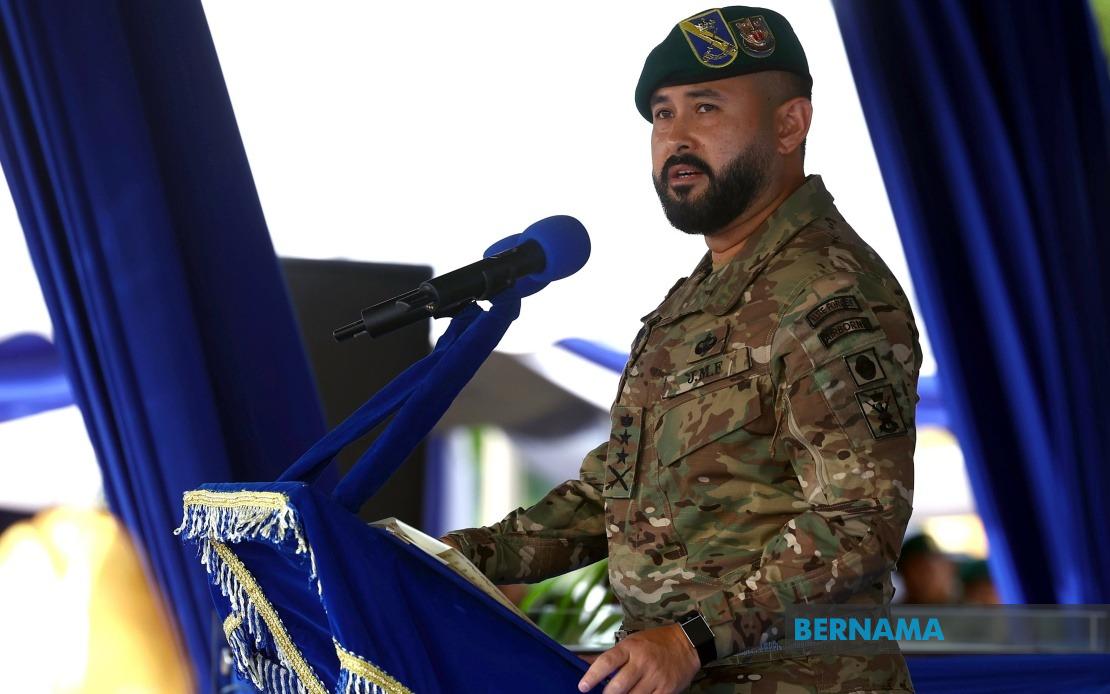
During a parade marking the 61st anniversary of Malaysia's elite special forces unit, the Regimen Gerak Khas (RGK), Tunku Mahkota Ismail delivered a forceful message to defence officials and government planners: decisions that have received royal endorsement must remain sacrosanct. Speaking in Mersing on August 20, the Regent of Johor stressed that no aspect of RGK development planning should be modified simply to serve the interests of particular individuals or factions seeking to exploit previously sound strategic decisions for personal or institutional gain.
The Regent's intervention signals deep concern about the management and planning architecture within Malaysia's defence establishment. His remarks, delivered in his formal capacity as head of state, underscored the constitutional weight behind royal approvals of defence procurement and operational frameworks. Tunku Mahkota Ismail emphasised that any plan or development initiative involving the RGK must not only secure His Majesty's consent in his role as Colonel Commandant of the unit, but must also be executed with the highest degree of trustworthiness and professional responsibility. This dual emphasis on constitutional authority and institutional integrity reflects broader anxieties about the integrity of defence sector decision-making.
Critically, the Regent issued what amounted to a public reprimand targeting senior defence ministry officials, indicating he possesses detailed knowledge of the power structures within the Ministry of Defence. He directly referenced the position of the Kementerian Pertahanan's Secretary-General, suggesting he intends to address what he perceives as systemic dysfunction. Tunku Mahkota Ismail framed his concerns in stark terms, describing certain organisational pathologies as a "cancer" that ought not to exist within the Malaysian Armed Forces. This blunt language suggests frustration with what he views as entrenched problems resistant to conventional oversight mechanisms.
The Regent's critique extends to the operational readiness of Malaysia's premier commando force at a particularly sensitive geopolitical moment. He highlighted that the security environment across the Indo-Pacific region has grown substantially more unpredictable, with ongoing tensions in the South China Sea and intensifying strategic competition among major powers creating new demands on military capabilities. In this context, he argued, Malaysia cannot afford to maintain outdated or inadequate equipment, weapons systems, mobility platforms, or technological infrastructure. The RGK, as the nation's most elite operational unit, must be equipped to respond to contemporary and anticipated future threats rather than remain constrained by legacy systems or procurement decisions driven by budgetary constraints rather than operational necessity.
Moreover, Tunku Mahkota Ismail articulated a comprehensive framework for how future defence procurement and development should function. All initiatives must be evaluated primarily on capability metrics, quality standards, operational effectiveness, and value-for-money considerations rather than on political patronage or bureaucratic preferences. This prescription implicitly acknowledges that Malaysia's defence procurement processes have historically been vulnerable to influence from non-meritocratic considerations. By insisting that the 13th Malaysia Plan's allocation for RGK development be prioritised and evaluated against criteria emphasising technological modernity, cost-efficiency, operational suitability, and long-term strategic requirements, the Regent is essentially establishing a governance standard that defence officials should follow.
Equally important in the Regent's address was his emphasis on personnel management within the RGK. He called for transparency and strict adherence to merit-based advancement and career progression, with zero tolerance for favouritism or considerations rooted in personal connections rather than professional qualifications. This focus on merit represents a pointed critique of what many analysts regard as endemic challenges within Malaysia's military bureaucracy, where promotion and assignment decisions sometimes reflect factional loyalties or political patronage networks rather than individual capability. The Regent warned that allowing such practices to persist—through non-transparent management, failures in oversight systems, or the elevation of personal interests above organisational objectives—would seriously compromise the unit's ability to meet its operational requirements.
The timing of these remarks carries additional significance for Malaysian defence policy. The RGK functions as what military strategists term the "tip of the spear" in confronting acute threats to national sovereignty and security. As such, its operational effectiveness directly impacts Malaysia's capacity to respond to contemporary security challenges. The Regent's insistence that personnel maintain the highest standards of skill, physical and mental resilience, integrity, and unwavering loyalty to the Agong and the nation represents more than ceremonial exhortation; it reflects a genuine understanding that elite military units can only function at peak effectiveness when organisational culture prioritises meritocratic advancement and institutional integrity.
For Malaysian and regional observers, the Regent's intervention also demonstrates the continued role of the constitutional monarchy in checking executive overreach and ensuring adherence to established strategic frameworks. While Malaysia's defence ministry operates as a civilian-led institution, the presence of royal oversight—particularly when explicitly exercised by senior members of the royal hierarchy—provides an additional institutional check on decision-making that deviates from approved plans or that elevates factional interests above national security imperatives. This reflects the constitutional architecture of Malaysia's system, where the Yang di-Pertuan Agong retains significant formal authority over military matters.
The broader context for these comments includes ongoing discussions across Southeast Asia about military modernisation and the strategic imperatives created by regional instability. Malaysia's defence planners face genuine pressure to upgrade the RGK's capabilities in response to evolving threats in the South China Sea and broader Indo-Pacific region. However, budgetary constraints and competing demands on the defence ministry's resources create pressure to prioritise spending in ways that may not align with the most pressing operational needs. The Regent's insistence that approved plans cannot be unilaterally altered serves to protect strategic coherence against such pressures.
Ultimately, Tunku Mahkota Ismail's remarks constitute a forceful statement about the governance standards that should apply to Malaysia's defence establishment. By explicitly tying royal authority to the protection of previously approved strategic decisions, he has created a framework within which future modifications to RGK development plans will face heightened scrutiny. His emphasis on merit-based advancement and transparent decision-making processes sets clear expectations for how defence officials should conduct their responsibilities. For Malaysia's defence sector, these remarks represent both a clear directive and an implicit warning: institutional integrity and adherence to approved strategic plans must take precedence over factional interests or bureaucratic convenience.

