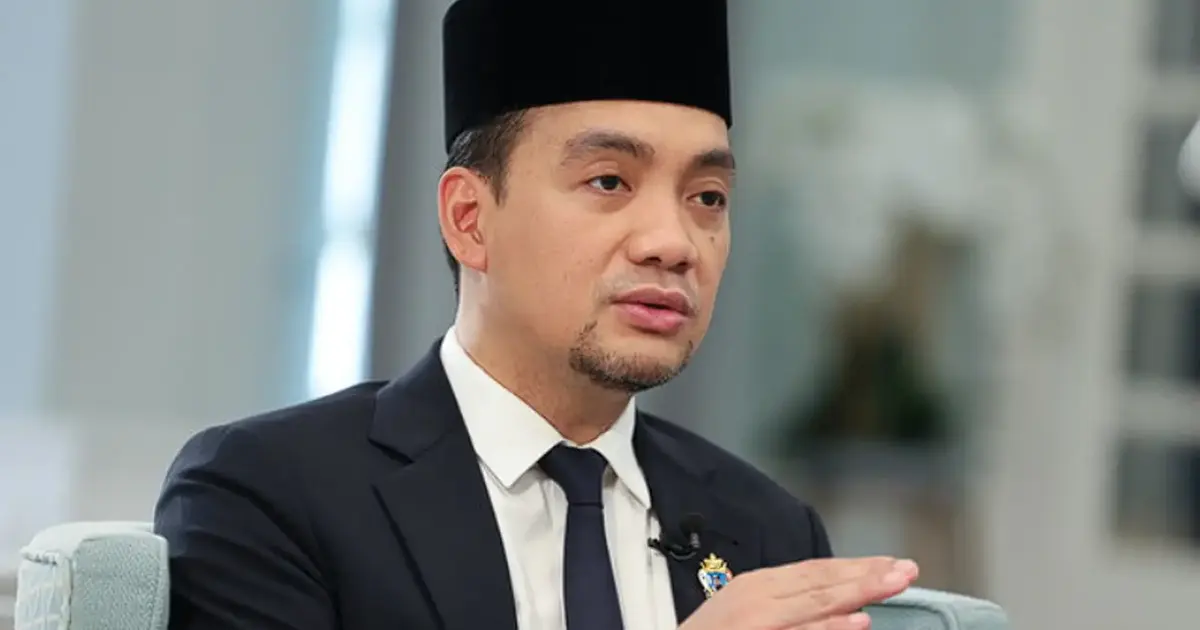
Johor's caretaker menteri besar Onn Hafiz has moved to clarify the constitutional standing of the Sultan's approval for the state assembly's dissolution, rejecting characterisations that frame the palace's involvement as political interference. Speaking in his capacity as interim leader, Onn Hafiz distinguished between the formal legal requirements governing dissolution proceedings and discretionary political decisions, positioning the monarchy's role as a procedurally necessary mechanism rather than an exercise of independent political will.
The distinction Onn Hafiz drew reflects deeper constitutional principles embedded in Malaysia's system of governance. Under the Malaysian constitution and the Johor state constitution, the menteri besar does not possess unilateral authority to dissolve the state assembly; the sovereign's formal assent is a prerequisite to the validity of such proceedings. This requirement serves as a structural check within the constitutional framework, ensuring that dissolution cannot be initiated arbitrarily by the executive without the ruler's approval. The menteri besar's framing thus emphasises procedure over substance—the granting of assent, in his view, represents mechanical compliance with constitutional architecture rather than an autonomous political choice by the palace.
The timing and context of this clarification carry significance for Malaysian federalism. Johor, as one of Malaysia's most politically prominent states and home to a substantial portion of the country's economic activity, frequently serves as a testing ground for constitutional interpretations and power dynamics between state executives and royal institutions. The current dissolution and the accompanying clarification reflect broader national debates about the appropriate boundaries of monarchical authority in a system where the Yang di-Pertuan Agong and state sultans occupy ceremonial heads of state roles while governments exercise executive power.
Onn Hafiz's statement appears designed to preempt potential criticism from political opponents or civil society observers who might argue that palace consent to dissolution constitutes involvement in partisan political contests. By reframing the Sultan's assent as a technical constitutional obligation rather than a political judgment, the caretaker menteri besar attempts to insulate the monarchy from scrutiny regarding the timing and circumstances surrounding the assembly's dissolution. This rhetorical strategy acknowledges that heightened public sensitivity around the monarchy's role in political processes has grown in recent years, particularly following various constitutional controversies at federal and state levels.
The practical implications for Johor's electoral cycle and governance structure depend significantly on how this constitutional interpretation is received and applied. If the assent is understood as purely procedural, it establishes a precedent that state rulers will routinely grant dissolution approvals as requested by their ministers, limiting the meaningful discretion available to the monarchy in such matters. Conversely, if future disputes arise over whether the Sultan possessed grounds to withhold assent—perhaps on the basis that no extraordinary circumstances justified early dissolution—the constitutional clarity would be undermined, creating potential for institutional conflict.
From a Southeast Asian perspective, Johor's experience reflects broader challenges faced by constitutional monarchies throughout the region in defining the scope of formal powers retained by heads of state. Thailand, Cambodia, and other neighbouring jurisdictions have experienced significant turbulence when monarchical roles and limitations have been contested or ambiguously defined. Malaysia's relative institutional stability partly derives from established conventions that govern how formal constitutional powers are exercised, and Onn Hafiz's clarification reinforces one such convention—that dissolution assents function as constitutional formalities rather than political decisions.
The statement also carries implications for the broader Johor electorate and political parties preparing for elections. Clarity regarding the constitutional basis for assembly dissolution removes potential grounds for post-election disputes over legitimacy or the proper functioning of democratic processes. When citizens and political stakeholders understand that dissolution follows prescribed constitutional procedures, confidence in the electoral framework's integrity is enhanced, regardless of which party ultimately emerges victorious. Onn Hafiz appears to be addressing this legitimacy concern by emphasising that no political favouritism or unconstitutional intervention influenced the Sultan's decision.
Within Johor's political establishment, this clarification may reflect broader consensus among governing elites that maintaining a clear separation between the monarchy's formal constitutional role and its political preferences serves everyone's long-term interests. By describing royal assent as procedurally mandatory rather than discretionary, Onn Hafiz may be signalling to political competitors and the general public that the palace remains neutral regarding which party or coalition forms the next government. This neutrality is foundational to the legitimacy of constitutional monarchy in a democratic system, as the ruler is expected to serve all Johoreans equally regardless of which administration holds executive power.
The emphasis on constitutionalism rather than political motivation also responds to broader concerns about executive overreach. Menteri besars in various states have occasionally been accused of strategically timing assemblies' dissolutions to maximise electoral advantage or circumvent legislative oversight. By anchoring the dissolution in constitutional necessity rather than calculated political timing, Onn Hafiz attempts to depoliticise what might otherwise appear to be a self-interested executive decision. Whether this rhetorical strategy succeeds in shaping public perception will depend on how subsequent election campaigns unfold and which parties prove most effective in framing the dissolution narrative to their advantage.
Looking ahead, the constitutional clarity that Onn Hafiz has articulated may become important precedent for other states facing similar dissolution questions. If the characterisation of royal assent as procedural rather than political is widely accepted, it establishes a norm that limits grounds for challenging dissolution legitimacy on the basis of alleged palace intervention. However, this same norm could potentially constrain the monarchy's ability to exercise genuine discretion in genuine constitutional crises or extraordinary circumstances where the ruler might reasonably question whether dissolution serves the public interest.
Ultimately, Onn Hafiz's clarification reflects an attempt to navigate the complex relationship between constitutional formalism and political reality that defines Westminster-style systems adapted to Malaysia's particular institutional context. By emphasising that the Sultan's role in assembly dissolution remains bounded by constitutional requirements rather than extending into partisan political decision-making, the caretaker menteri besar seeks to preserve public confidence in both the monarchy and democratic institutions as separate but complementary components of Johor's governance framework.

