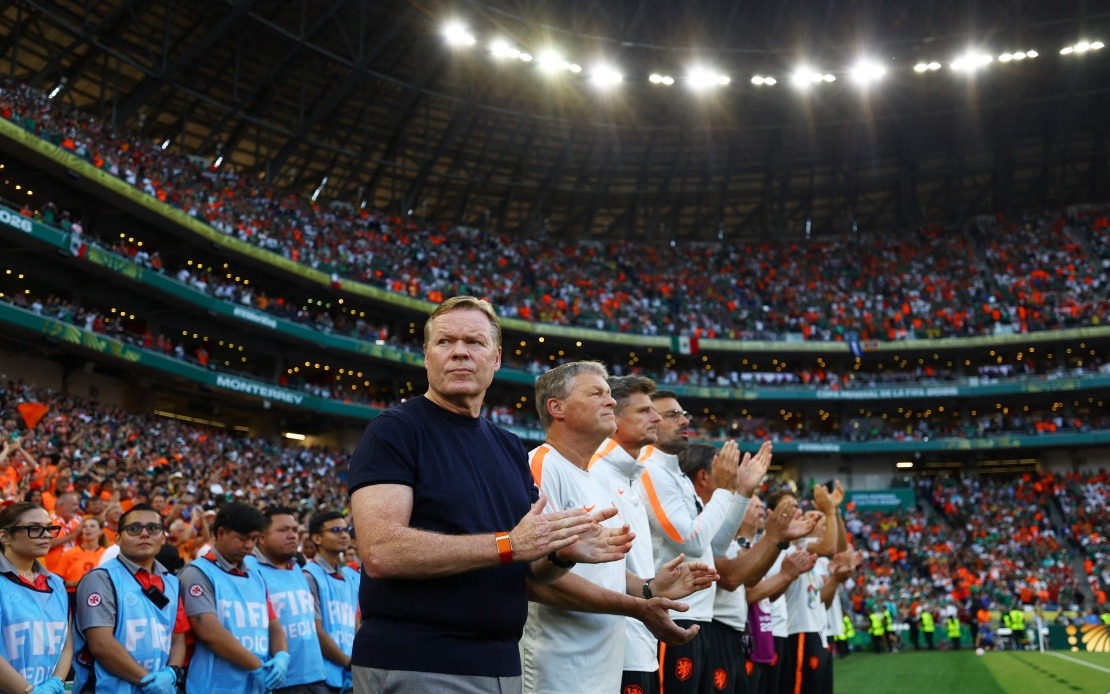
Ronald Koeman has ended his second tenure as manager of the Dutch national football team following their elimination from the 2026 World Cup qualifying campaign, when Morocco defeated them on penalties in a dramatic knockout clash. The 63-year-old's departure comes after what had appeared to be a promising run through the tournament, leaving the Dutch federation to search for fresh leadership as they attempt to rebuild their programme.
The Netherlands had advanced from Group F as table-toppers, demonstrating strong form with a commanding 5-1 victory over Sweden among their credentials. This performance suggested Koeman's squad possessed the quality to make a substantial World Cup push, yet their hopes crumbled in heartbreaking fashion when they came agonisingly close to securing a place in the knockout stage proper. With less than a minute remaining in regular time against Morocco, Issa Diop's injury-time equalizer upended the narrative, dragging the encounter into extra time before the eventual penalty defeat ended Dutch ambitions.
Koeman's announcement through the Dutch Football Federation's Instagram account reflected a composed, philosophical tone rather than one of frustration or recrimination. He acknowledged the difficulty of stepping away from a squad and coaching team with whom he had built substantial relationships, emphasising that the decision had not been made lightly. His words suggested careful consideration of his position rather than an impulsive reaction to the tournament's conclusion, framing the transition as both a personal and professional crossroads.
The 63-year-old's statement prioritised his family circumstances, indicating that the demands of international management at his age had prompted reflection on how he wished to spend his remaining years. By explicitly mentioning his desire to allocate more time to his wife, children, and grandchildren, Koeman presented a narrative centred on life balance rather than professional failure. This messaging may prove significant for how Dutch supporters and media interpret his exit, potentially forestalling accusations of abandoning the post at a difficult moment.
Koeman's first spell managing the Netherlands extended from 2018 through 2020, a period that included navigating the complications of the COVID-19 pandemic and several competitive campaigns. His subsequent departure to Barcelona represented a natural progression in his coaching career, as the Spanish club offered a prestigious opportunity at one of world football's most prominent institutions. That appointment, however, did not provide the sustained success either party had envisioned, and his return to the Dutch national team had represented a homecoming of sorts for the experienced tactician.
The timing of this exit carries implications for Netherlands football as they contemplate their longer-term World Cup strategy. With the tournament still three years away, the federation has opportunity to identify and nurture a successor with sufficient time to establish tactical philosophy and player development systems. However, the loss of a coach with Koeman's experience and international pedigree represents a setback in continuity, particularly following such a painful elimination that will require careful psychological management within the squad.
For regional observers in Southeast Asia, the Netherlands' unexpected vulnerability against Morocco demonstrates how tournament football at the elite level has evolved to become increasingly unpredictable. The penalty shootout format, while dramatic for audiences, eliminates teams irrespective of their tactical superiority or overall quality, creating scenarios where marginal moments determine outcomes. Morocco's emergence as a genuine World Cup contender reflects broader shifts in global football power distribution, with African and North African nations increasingly challenging traditional European dominance.
Koeman's departure also illuminates the psychological pressures inherent in international football management, particularly for coaches in their sixties who have already established legacies. Unlike club management, where economic incentives and contract structures often encourage prolonged tenures, international positions require sustained motivation and energy for tournament cycles spanning several years. Koeman's choice to prioritise personal wellbeing at this career stage may represent a template increasingly followed by coaches approaching retirement, where strategic timing of exits becomes as important as performance metrics.
The Dutch Football Federation must now navigate the familiar challenge of appointing fresh leadership while maintaining squad cohesion and preventing the demoralisation that frequently follows major tournament exits. Their search will likely emphasise stability and experience, qualities that proved attractive when Koeman was reappointed. Yet the federation may alternatively consider younger candidates willing to implement a generational reset, building toward 2026 with fresh ideas rather than attempting to recalibrate the existing framework.
Koeman's legacy with the Netherlands encompasses two distinct periods defined by different challenges and contexts. His initial appointment helped stabilise the programme following earlier turbulence, while his recent spell saw him manage an ageing squad transitioning toward its next evolutionary phase. Whether his early exit proves beneficial or detrimental to Dutch World Cup prospects will ultimately depend on his successor's capabilities and the federation's strategic vision for the years ahead.

