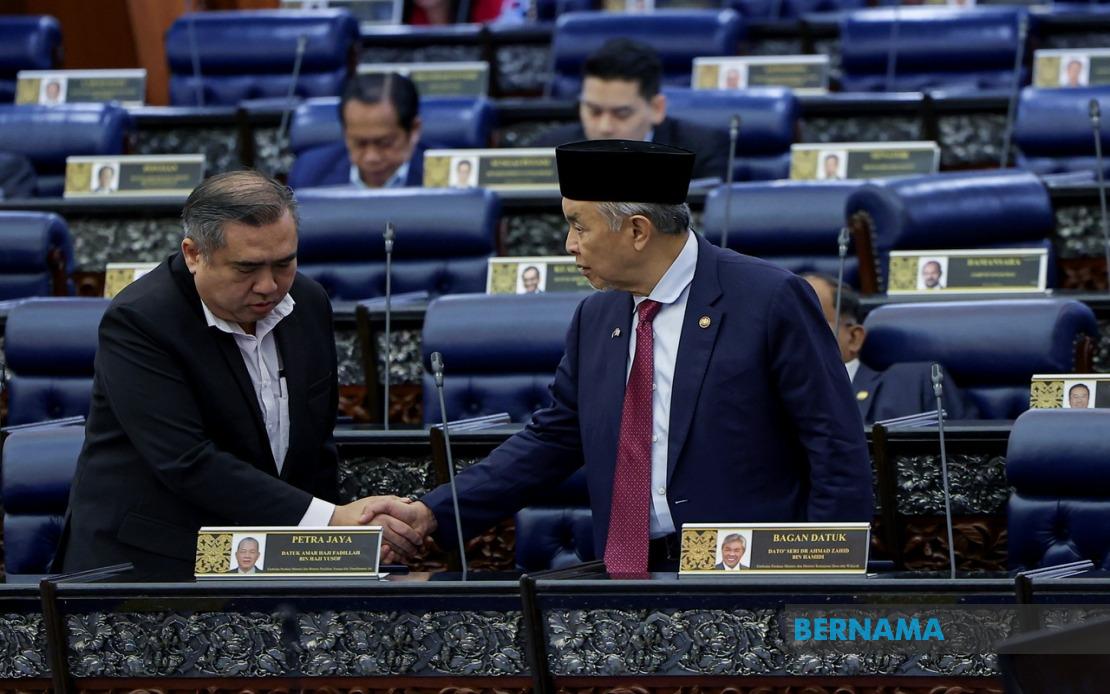
The Malaysian Parliament has initiated legislative action on a sweeping overhaul of road traffic enforcement mechanisms through the Road Transport (Amendment) Bill 2026, which Transport Minister Anthony Loke formally introduced for first reading in the Dewan Rakyat. The Bill represents a comprehensive recalibration of the country's approach to traffic safety and regulatory compliance, with the government signalling its intention to move the measure through second reading during the current parliamentary session. This accelerated timeline underscores official commitment to strengthening road safety infrastructure amid rising concerns about reckless driving behaviour across Malaysian highways and urban areas.
At the core of the proposed amendments lies a significant expansion of financial penalties across multiple traffic infringements. The Bill raises baseline fines from RM300 to RM500 for numerous common violations, affecting motorists guilty of fundamental breaches such as failing to display vehicle registration plates, operating vehicles without proper licensing, driving with an expired or invalid licence, exceeding speed limits, and disregarding traffic signals and instructions. Street racing—an increasingly visible problem in urban centres—falls explicitly within this enhanced penalty framework, reflecting growing public frustration with dangerous driving practices that endanger communities. The broadened scope of offences subject to increased fines demonstrates legislative recognition that existing penalty levels have failed to deter repeat violations and may no longer reflect the true societal costs of traffic non-compliance.
Perhaps the most striking enforcement escalation concerns driving with a suspended licence, an infraction that poses acute risks to public safety yet has historically carried relatively modest consequences. Under Clause 13 of the Bill, individuals convicted of this offence will face potential imprisonment of up to three years or financial penalties ranging from RM3,000 to RM10,000—a dramatic increase from the previous maximum of one year imprisonment or RM5,000 in fines. This tripling of potential jail time signals official determination to prevent motorists from evading licence suspension orders, which are typically imposed following serious traffic violations or multiple infractions. The severity of the new penalty structure suggests policymakers view continued driving while suspended as a form of wilful disregard for traffic laws rather than a technical or administrative oversight.
Illegal street racing has become particularly prominent on Malaysian roads, with organised and spontaneous racing events causing fatal accidents and terrorising residential neighbourhoods. Clause 15 addresses this specific menace by establishing a new criminal offence specifically targeting racing and speed-testing on public roads. First-time offenders face fines between RM2,000 and RM10,000 alongside potential imprisonment for up to two years. However, the Bill implements a dramatically harsher regime for repeat offenders, imposing mandatory minimum sentences of five years imprisonment combined with fines ranging from RM5,000 to RM20,000. This escalating penalty structure creates meaningful disincentives for habitual street racers, particularly younger drivers who may view initial punishment as inconsequential. The quantum leap in consequences for second convictions effectively removes any assumption that street racing represents youthful exuberance meriting lenient treatment.
Beyond traffic conduct itself, the Bill strengthens enforcement mechanisms targeting dishonesty within the road transport regulatory framework. Clauses 28 and its sub-clauses impose extraordinarily severe penalties—up to RM200,000 in fines or ten years' imprisonment—for individuals making false statements to road transport authorities. Such provisions target document fraud, false licence applications, and misrepresentation during vehicle registration processes. The severity of these penalties reflects recognition that integrity within transport administration systems remains fundamental to overall safety outcomes; fraudulent licensing particularly endangers public safety by placing incompetent or dangerous drivers on roads.
Compounding authority has likewise been strengthened through Clause 37, which raises the maximum compoundable amount from RM300 to RM500, permitting enforcement officers greater discretion in resolving infractions without court proceedings. This administrative flexibility potentially accelerates resolution of routine violations while freeing judicial resources for serious cases. Additionally, Clause 22 transfers regulatory authority to the Transport Minister regarding fees for entry permits issued to foreign motor vehicles, streamlining administrative procedures whilst maintaining standardised cost structures across transport authorities.
The Bill expands institutional powers vested in law enforcement, granting police officers and road transport officers substantially broader authority to control and redirect traffic flows. This enhanced discretionary power aims to improve emergency response capabilities and manage congestion more dynamically. Simultaneously, the legislation introduces new protections for enforcement personnel by classifying obstruction or assault of road transport officers as arrestable offences, thereby elevating such conduct from minor infringements to serious criminal matters. This protection reflects rising incidents of enforcement officers facing verbal and physical aggression during routine duties.
Micromobility vehicle proliferation has created novel regulatory challenges across Malaysian urban centres, with electric scooters and similar devices causing injuries and congestion. The Bill introduces formal procedures for detention and disposal of micromobility vehicles, providing enforcement authorities with clear legal frameworks for managing illegal or improperly operated devices. This provision acknowledges that traditional vehicle regulations require adaptation to accommodate emerging transportation technologies whilst maintaining public safety standards.
For Malaysian motorists, the practical implications of these amendments are substantial. Routine traffic violations that previously incurred modest fines now carry significantly higher financial consequences, potentially affecting household budgets. The expansion of arrestable offences means that traffic violations previously handled administratively could result in arrest and detention, with cascading effects on employment and family circumstances. However, supporters of the Bill argue that meaningful behavioural change requires penalties sufficiently severe to overcome casual disregard for safety regulations. International evidence suggests that steep penalties, particularly mandatory minimum sentences for serious violations like street racing, do produce measurable improvements in compliance rates.
The Bill's progression through Parliament will likely generate debate regarding proportionality and enforcement equity. Rural motorists and commercial drivers, who depend extensively on road networks, may argue that uniform fine increases disproportionately burden lower-income groups whilst wealthy offenders absorb penalties without meaningful lifestyle adjustment. Concerns regarding enforcement disparities—whether penalties are applied uniformly across demographics and regions—will probably feature in parliamentary discussion. Additionally, civil society organisations may question whether enhanced penalties represent optimal policy responses compared to alternative approaches such as expanded driver education programs or infrastructure improvements designed to reduce accidents.
For the broader Southeast Asian context, Malaysia's legislative direction reflects regional trends toward stricter road safety enforcement. Thailand, Indonesia, and Singapore have similarly implemented escalating penalty regimes in recent years, suggesting recognition across the region that mounting traffic fatality rates demand more aggressive regulatory responses. Malaysia's amendments align with these international patterns while maintaining distinctly local elements addressing endemic problems such as street racing culture. The Bill's emphasis on protecting enforcement officers through new assault provisions also resonates across Southeast Asian jurisdictions, where officer safety has emerged as pressing concern.
Implementation will prove critical to determining whether enhanced penalties achieve intended deterrent effects. Enforcement consistency, public awareness campaigns, and adequate resourcing of compliance monitoring systems remain essential variables. The government has indicated that second reading will proceed during the current parliamentary session, potentially enabling passage before year-end. Pending parliamentary debate and any amendments, Malaysia's road transport regulatory framework appears positioned for significant augmentation of enforcement powers and financial consequences, fundamentally reshaping the cost-benefit calculations facing traffic offenders.