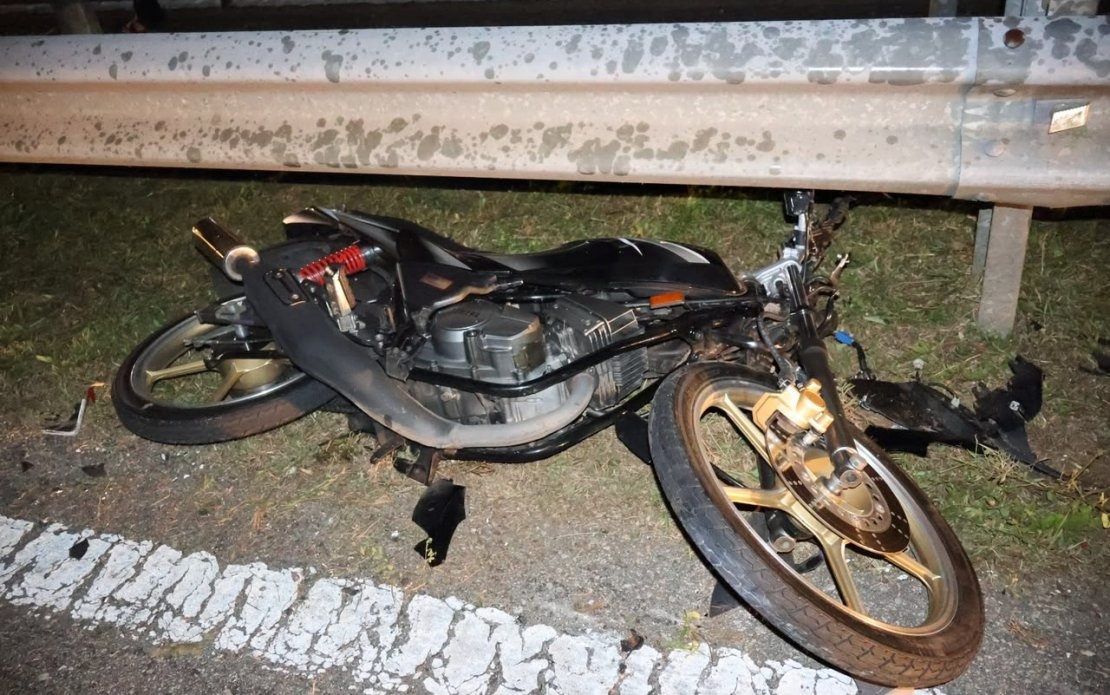
The director of Bukit Aman Traffic Investigation and Enforcement Department (JSPT), Datuk Seri Muhammed Hasbullah Ali, has highlighted a persistent challenge in Malaysia's road safety landscape: that legal penalties and traffic enforcement operations, while necessary, prove insufficient when confronting the deeper cultural and psychological factors that drive dangerous behaviour on the nation's highways. His remarks came in the wake of a serious incident on the East Coast Expressway (LPT) early today that resulted in four motorcyclists losing their lives and a further 20 people sustaining injuries.
The tragedy underscores a broader problem that enforcement agencies across the country have struggled to address. Muhammed Hasbullah emphasised that reversing the trend of road accidents requires a fundamentally different approach—one that mobilises parents, schools, community organisations, and families to instil responsible attitudes among drivers and riders from an early stage. This preventative framework, he suggested, should sit alongside rather than replace traditional enforcement mechanisms.
Two-wheeler riders present a particular concern in Malaysia's accident statistics. Muhammed Hasbullah pointed out that motorcycle-related collisions often stem not from ignorance of traffic rules but from deliberate violations rooted in individual psychology and social pressure. Riders frequently engage in risky behaviour to gain peer approval or satisfy personal desires for excitement and recognition, motivations that no amount of traffic police presence can directly counter. The challenge, in other words, is behavioural and attitudinal rather than merely legal.
Despite ongoing enforcement campaigns by JSPT and partner agencies, dangerous riding practices persist across Malaysia's road network. High-speed reckless riding, participation in illegal street racing, and performance of hazardous stunts on major highways continue to claim lives and injure innocent road users. These infractions represent a conscious decision by riders to disregard established safety protocols, suggesting that awareness of the law is not the limiting factor but rather the willingness to comply.
The incident on the East Coast Expressway this morning illustrates the cascading consequences of such behaviour. Beyond the immediate loss of four lives, the accident has exposed other road users to elevated risks of injury, vehicle damage, and psychological trauma. Muhammed Hasbullah framed this issue in terms of shared responsibility: highways and roads function as public spaces where every user—whether driver, motorcyclist, or pedestrian—bears an obligation to conduct themselves with due care and consideration for others.
The statement reflects an emerging consensus among Malaysian traffic and safety authorities that the road safety problem cannot be solved through enforcement budgets and operational intensity alone. While Muhammed Hasbullah confirmed that JSPT will continue to pursue strict action against those caught riding recklessly, racing illegally, or endangering other motorists, he acknowledged that this reactive posture addresses only symptoms rather than root causes. To achieve meaningful reductions in accident rates and fatalities, interventions must target the attitudes and values that precede dangerous behaviour.
Educational institutions play a critical role in this preventative framework. Schools and universities can embed road safety awareness into their curricula and reinforce the concept that responsible road use is a civic duty rather than an optional consideration. Parents and family units similarly possess the capacity to model safe behaviour and establish household norms that prioritise safety over thrill-seeking or status games. Community organisations, whether neighbourhood associations or motorcycle clubs, can leverage their influence to reshape the social incentives that currently reward reckless riding.
From a practical standpoint, this multi-stakeholder approach offers potential advantages over enforcement-heavy strategies. Behavioural change rooted in personal conviction and social normalisation tends to demonstrate greater durability than compliance motivated by fear of punishment. Furthermore, education campaigns can reach far broader audiences than enforcement operations, establishing safety consciousness across demographic groups before high-risk behaviours become entrenched.
For Malaysian road users and policymakers, the implications are significant. The country's traffic fatality rates, among the highest in Southeast Asia, suggest that current enforcement-centric approaches have reached a plateau of effectiveness. Transitioning toward a framework that emphasises shared responsibility, community engagement, and early intervention through education may offer a more sustainable pathway to reducing accidents and saving lives. The challenge will lie in building institutional commitment and public participation for what is inherently a long-term cultural initiative with benefits that accumulate gradually rather than yielding immediate measurable results.
Muhammed Hasbullah's remarks, delivered in the immediate aftermath of a tragedy that has affected dozens of families, carry an implicit message to policymakers and the public alike: that Malaysia's road safety depends not solely on police resources and legislative frameworks but fundamentally on the collective commitment of citizens to view the highway as a shared space requiring mutual respect and responsibility. Whether this message gains sufficient traction to catalyse genuine behavioural change across the riding and driving population remains an open question.

