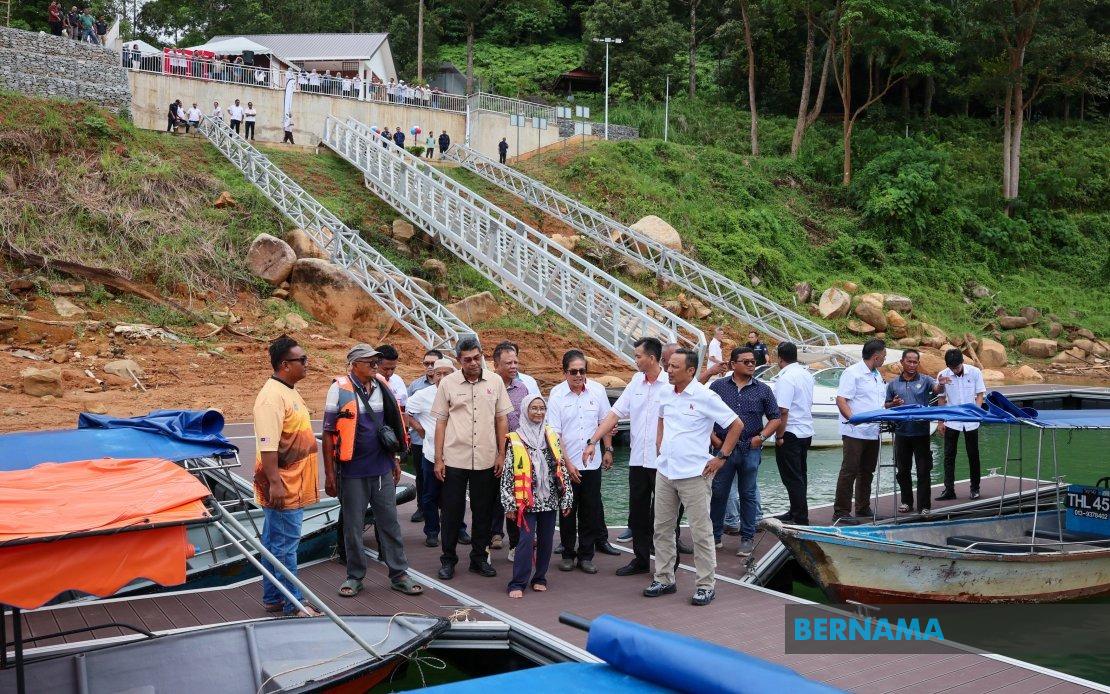
Tasik Kenyir's tourism infrastructure received a significant boost this year with the opening of a RM8.7 million jetty development project designed to reshape how visitors interact with Malaysia's largest artificial lake. The facility, which became operational on July 6, represents a coordinated effort to transition the destination from informal, dispersed operations towards a consolidated, professionally-managed maritime hub. Terengganu Tengah Development Authority (KETENGAH) chairman Datuk Rozi Mamat unveiled the project as a transformative step for the lake's competitive positioning within Southeast Asia's growing ecotourism marketplace.
The jetty development emerged from Malaysia's 11th Malaysia Plan (RMK-11) under its Third Rolling Plan framework, indicating government recognition of Tasik Kenyir's strategic importance to regional economic development. Construction commenced in 2023 and proceeded through to completion this year, creating infrastructure capable of accommodating more than 80 houseboats and speedboats simultaneously. This capacity expansion directly addresses longstanding operational challenges, particularly the historically disorganised boat berthing that characterised the Pengkalan Gawi area, where vessels previously clustered without systematic arrangement or comprehensive support services.
Beyond mere berthing capacity, the facility represents a holistic upgrade to operational standards and visitor experience. The jetty incorporates fully-serviced houseboat berthing positions equipped with dedicated electricity and water supplies, eliminating reliance on improvised or inadequate connections that previously constrained operator flexibility and visitor comfort. A 600-metre pedestrian walkway facilitates safe, scenic movement throughout the facility, while 86 parking bays address a persistent visitor challenge at Malaysia's ecotourism sites. Complementary infrastructure includes modern public toilet facilities, a security guard post, dedicated electrical substations, pump houses, and systematic waste disposal arrangements—elements collectively absent from the previous informal setup.
Datuk Rozi's emphasis on safety, cleanliness, and operational efficiency reflects the subtle but crucial distinction between mere tourism activity and professional destination management. Tasik Kenyir possesses inherent appeal as one of Malaysia's unique ecotourism destinations, featuring diverse attractions from wildlife sanctuaries to botanical gardens. However, infrastructure quality fundamentally shapes visitor perception and willingness to recommend destinations to international networks. The jetty project positions the lake to capture higher-spending international tourists who demand contemporary facilities and seamless operational experiences—a market segment increasingly driving tourism revenue across Southeast Asia's adventure and nature-based sectors.
The development authority's broader investment strategy deserves attention. KETENGAH received RM48.36 million in development allocations for the current year to implement 28 separate programmes and projects across its jurisdictional areas encompassing Dungun, Hulu Terengganu, and Kemaman districts. Six initiatives specifically target Tasik Kenyir, demonstrating concentrated focus on transforming the lake into a cohesive, multi-faceted tourism destination. These complementary projects include upgrading works at the Sungai Petang Kelah Sanctuary Complex—critical for wildlife-based tourism appeal—alongside slope repairs at existing tourist attractions to enhance visitor safety and accessibility.
Additional Tasik Kenyir projects within the current development cycle encompass redevelopment of tourism facilities at Pulau Petang, construction of a public mini park at Gawi Point to create additional recreational spaces, and comprehensive redevelopment of facilities at the Herbal Park. Collectively, these investments signal systemic enhancement rather than isolated improvements, positioning Tasik Kenyir for integrated destination development where multiple attractions and facilities reinforce visitor experience quality across the entire lake environment. This approach aligns with contemporary global best practices in ecotourism management, where successful destinations cultivate interconnected attractions and services rather than standalone facilities.
For Malaysian tourism strategists, Tasik Kenyir represents significant potential within the domestic and regional market. The lake's positioning as an ecotourism destination carries particular importance given growing consumer preference for nature-based experiences and environmental sustainability across Asian tourism markets. International visitors increasingly research destination infrastructure quality before committing to bookings, particularly for adventure and houseboat tourism where safety standards directly influence purchasing decisions. The jetty project's comprehensive approach—combining professional berthing with modern amenities and supporting infrastructure—addresses precisely these decision factors.
Terengganu's tourism economy stands to benefit substantially from enhanced Tasik Kenyir competitiveness. The state currently competes with established destinations across Malaysia and throughout Southeast Asia for tourist attention and spending. Improvements to Tasik Kenyir's operational framework and physical infrastructure enhance Terengganu's broader tourism offering, creating demonstration effects for other potential investments and signalling state-level commitment to hospitality industry development. This matters particularly for attracting boutique tourism operators and houseboat proprietors seeking quality infrastructure that justifies premium pricing and attracts discerning travellers.
The resolution of previous berthing disorganisation around Pengkalan Gawi carries subtle but important implications for local community relations and environmental stewardship. Unregulated boat concentrations typically generate environmental challenges including fuel spillage, inadequate waste management, and habitat disruption affecting the lake's delicate ecosystems. Professional berthing facilities incorporate environmental safeguards through systematic waste disposal and controlled refuelling operations. This infrastructure-first approach to environmental management ultimately serves conservation objectives that ecotourism fundamentally depends upon—maintaining the natural attractions that draw visitors in the first place.
Looking forward, the jetty project's success will depend substantially on operational management, maintenance standards, and responsive service delivery. Modern infrastructure requires professional oversight, regular maintenance cycles, and willingness to adapt services based on operator and visitor feedback. KETENGAH's capacity to manage these ongoing operational requirements will significantly influence whether the RM8.7 million investment achieves its projected tourism growth outcomes. Similarly, coordinating the jetty facility with the six complementary Tasik Kenyir projects will be essential for creating the integrated destination experience that justifies premium positioning within regional tourism markets.

