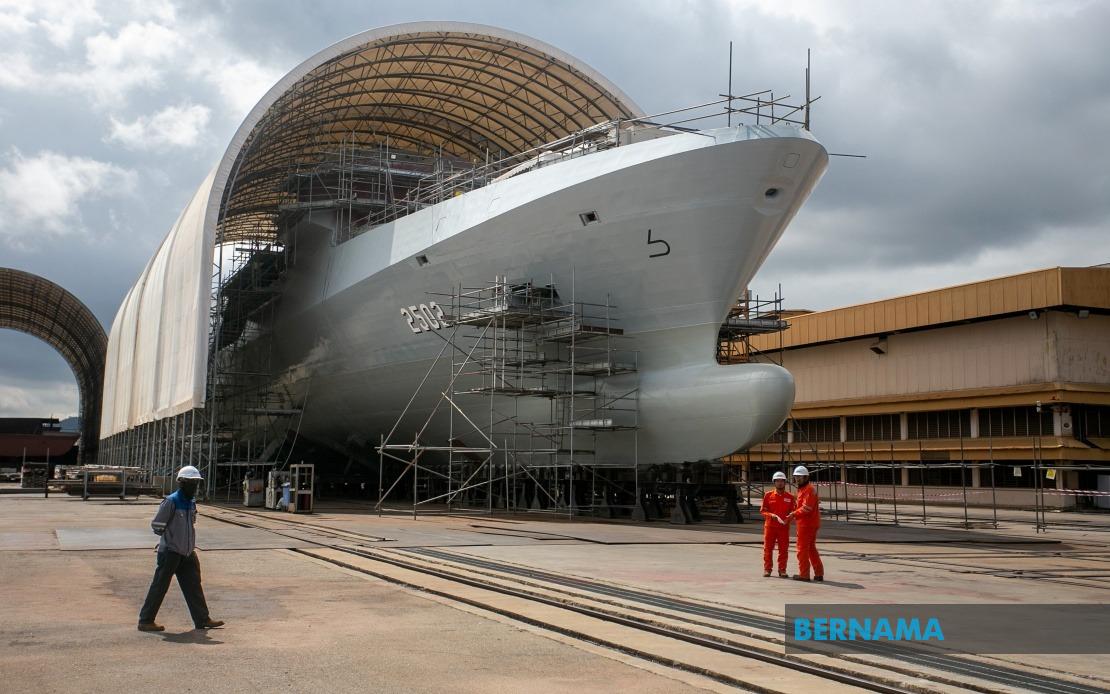
The Malaysian Ministry of Defence has moved to dispel concerns over the RM571.9 million payment made to a Norwegian defence contractor for the Naval Strike Missile anti-ship system destined for the Royal Malaysian Navy's Littoral Combat Ships, insisting that the funds were released in strict accordance with contractual milestones rather than as an upfront advance. The clarification, delivered through Parliament, directly addresses accusations that the government had released the full amount prematurely and without adequate safeguards, allegations that gained traction following Norway's revocation of the export licence for the weaponry earlier this year.
According to MINDEF's parliamentary statement, the RM571.9 million transfer occurred only after the Norwegian supplier had completed manufacturing all NSM systems destined for the Malaysian vessels and following successful validation by the Royal Malaysian Navy. This staging of payment reflects a standard contractual approach in large defence acquisitions, where disbursements are typically linked to tangible deliverables and verification milestones rather than orders placed. The ministry stressed that the timing and conditions of the payment aligned precisely with the contract's predetermined terms, a critical distinction in defence procurement where advance payments without corresponding physical progress represent genuine financial risk to the purchasing government.
The response directly counters previous parliamentary questions from Hassan Abdul Karim of Pasir Gudang, who had raised concerns that Malaysia released the entire contract value too expeditiously and that the procurement agreement lacked protective mechanisms for the government's interests. MINDEF's rebuttal emphasises that the contract itself contains substantial protective provisions designed to safeguard Malaysia's position in the event of supplier non-performance or breach of obligations, a standard feature in international defence contracts but one that has clearly become a point of political contention.
The Norwegian export licence revocation, which occurred after Malaysia's payment had already been made, represents a significant complication that sits beyond the responsibility of either the Malaysian government or the Norwegian supplier, according to MINDEF's characterisation. This diplomatic and regulatory action by the Norwegian authorities, likely stemming from concerns about end-use and potential regional tensions, created the precise scenario that such contractual protections are designed to address. The ministry has consequently initiated contractual mechanisms to pursue recovery of the payment and claim damages related to the licence cancellation, essentially treating this as a breach of the supplier's obligations to deliver.
From an operational perspective, MINDEF has sought to reassure both Parliament and the Malaysian public that the NSM system's unavailability has not compromised the Royal Malaysian Navy's ability to defend the nation's maritime interests. The RMN maintains existing weapons systems and other operational assets that continue to fulfil the service's core responsibility of protecting Malaysia's sovereign waters and maritime boundaries. This messaging reflects the delicate balance required when addressing defence procurement failures, where acknowledging capability gaps must be tempered with assurances about national security readiness.
The procurement setback has prompted the RMN to actively evaluate alternative missile systems that could potentially fulfil the same role that the NSM was intended to serve aboard the Littoral Combat Ships. This reassessment process is particularly significant given that the LCS programme itself has already experienced multiple delays and budget overruns since its inception, making the quest for a replacement system yet another complication in what has become one of Malaysia's more challenging modern defence acquisition projects. The evaluation timeline and specifications for potential alternatives remain unclear, but such assessments typically consume months of technical analysis and may involve diplomatic consultations with potential supplier nations.
The LCS acquisition programme has long represented a cornerstone of Malaysia's naval modernisation strategy, with the vessels intended to enhance the country's ability to project power in Southeast Asian waters and conduct extended maritime operations. The integration of advanced anti-ship missile systems like the NSM was central to the platform's tactical concept, providing the ships with standoff strike capability against maritime threats. The loss of this capability through the export licence revocation thus represents not merely a financial loss but a degradation of the intended operational profile for these vessels.
The Norwegian decision to revoke the export licence reflects broader geopolitical tensions and strategic considerations within the Indo-Pacific region, though Norwegian authorities have not publicly detailed their specific rationale. Norway's defence export policies have increasingly emphasised concerns about regional stability and the potential for weaponry to be used in ways inconsistent with the supplier nation's foreign policy objectives. Malaysia's regional relationships, particularly with neighbouring countries and great powers, may have factored into such deliberations, though this remains speculative without official Norwegian statements.
For Malaysia's defence procurement apparatus, the NSM episode underscores persistent vulnerabilities in acquiring advanced Western military technology. Unlike purchases from suppliers with more permissive export regimes or from regional manufacturers, acquisitions from strict Western exporters like Norway carry inherent political and regulatory risks that are often difficult to fully mitigate through contractual mechanisms alone. The incident may prompt Malaysian defence planners to reconsider supplier diversification strategies and the relative merits of acquiring systems from vendors with fewer geopolitical constraints.
The parliamentary exchange also highlights the political dimensions of defence spending in Malaysia, where opposition lawmakers scrutinise large defence expenditures and seek to hold the government accountable for financial prudence. The questions from both Pasir Gudang and Kinabatangan reflect legitimate oversight interests, though the technical details of international defence contracts and the complexities of contractual performance mechanisms are not always readily apparent to public scrutiny. MINDEF's detailed parliamentary response appears designed to establish that procurement protocols were followed correctly and that the government's position is being actively protected through available contractual remedies.

