Petaling Jaya is set to gain a new recreational hub as the local council moves forward with plans to develop a RM400,000 park on vacant land along Jalan PJS1/30 in the Taman Medan area. The project marks part of a wider push by Selangor's municipal authorities to inject new life into underutilised urban spaces and strengthen the township's environmental credentials ahead of the coming decade.
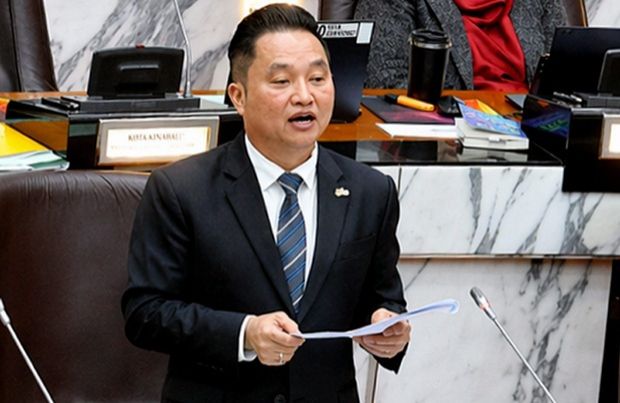
Datuk Ng Suee Lim, chairman of Selangor's local government and tourism committee, revealed the park's specifications and timeline during the state assembly sitting at Bangunan Dewan Negeri Selangor in Shah Alam on August 10. According to his statement, Petaling Jaya City Council (MBPJ) expects to commence construction next year, provided the funding allocation receives approval in the council's annual budget cycle. This contingency underscores how municipal development remains tethered to fiscal planning and competing priorities within local government frameworks.
The envisioned park represents more than a simple recreational amenity. Officials framed the initiative as a multifaceted urban intervention designed to elevate public safety within the locality while fostering a more accessible and welcoming environment for residents. By converting neglected green space into functional parkland, the project aims to tackle lingering concerns about security and maintenance in overlooked areas whilst simultaneously advancing broader municipal sustainability objectives.
Ng's remarks came in response to Dr Afif Bahardin, the Perikatan Nasional assemblyman for Taman Medan, who raised questions during the sitting regarding MBPJ's pipeline of new parks and the council's aspirations to transform the Sungai Klang riverbank corridor into a linear recreational pathway. This line of inquiry reflects growing constituent interest in urban amenities and environmental quality within the district, signalling that residents increasingly view park development as a barometer of municipal performance.
The Taman Medan project slots into a comprehensive planning framework known as the Damansara Damai People's Park Landscape Masterplan, which MBPJ formulated in alignment with the overarching Petaling Jaya Strategic Plan 2030. This long-term vision identifies five distinct urban parks for phased development across the township, with each facility designed to address specific community and environmental needs. The masterplan approach signals a departure from ad-hoc park creation towards coordinated, strategy-driven urban design—a methodology gaining traction across Malaysia's metropolitan areas as councils grapple with managing rapid urbanisation whilst preserving liveable neighbourhoods.
Among the planned facilities, Taman Damai Belantara (designated Urban Park 3) will emphasise nature education and experiential outdoor learning. The park's design incorporates an urban farming zone where residents can engage in small-scale cultivation, an amphitheatre serving as a community gathering venue, and an information gallery providing environmental and ecological insights. This pedagogical dimension reflects evolving municipal thinking about parks as educational platforms rather than merely passive recreational grounds—a philosophy increasingly adopted in Southeast Asia as cities seek to deepen environmental awareness among urban populations.
Parallel development at Taman Damai Setia (Urban Park 1) has already commenced this year, with upgrades continuing in phases throughout next year. This facility will feature a dedicated family recreation zone, a multipurpose hall enabling diverse community activities, bioswales designed for stormwater management and naturalised drainage, a composting centre supporting waste reduction initiatives, and operational space for informal traders or food vendors. The inclusion of bioswales and composting infrastructure reveals MBPJ's attempt to embed sustainability and circular economy principles into recreational design rather than treating parks as isolated leisure zones divorced from broader environmental management.
The transformation of Sungai Klang's riverbank presents an ambitious longer-term undertaking. Officials plan to leverage reserve zones along both the Sungai Klang and Sungai Penchala to establish green corridors and recreational spaces based on the Petaling Jaya Landscape Masterplan. Constructed walkways will eventually link these riverine areas with nearby commercial and residential precincts, creating integrated urban networks that blend economic vitality with environmental amenity. For Malaysian readers, this aligns with national initiatives like the Sungai Klang cleaning and beautification projects, reflecting a confluence of federal and local environmental priorities.
However, officials emphasised that these park initiatives remain long-term commitments dependent upon MBPJ securing adequate budgetary resources and maintaining development priorities amid competing municipal demands. This caveat reflects fiscal realities facing Malaysian local authorities, many of which struggle with revenue constraints, competing infrastructure needs, and maintenance backlogs. Petaling Jaya, despite being one of Malaysia's wealthier municipalities, still navigates resource competition between essential services and quality-of-life amenities.
The planning approach demonstrated through these park projects carries implications beyond Petaling Jaya itself. As Malaysia's metropolitan areas confront mounting urbanisation pressures, questions about integrated green space development, community engagement, and sustainable urban design grow increasingly urgent. Petaling Jaya's masterplan strategy—combining recreation, environmental education, biodiversity conservation, and climate resilience within a coordinated framework—potentially offers a template for other municipalities wrestling with similar challenges.
Moreover, the timeline and budget constraints reveal ongoing tension between aspirational municipal vision and implementation capacity. Many Malaysian council developments experience delays due to funding delays, changing political priorities, or competing claims on limited resources. The Taman Medan park and broader park network represent genuine attempts to enhance urban liveability, yet their realisation will ultimately depend upon consistent political commitment and reliable resource allocation over multiple budget cycles—a test that many ambitious municipal initiatives struggle to sustain.

