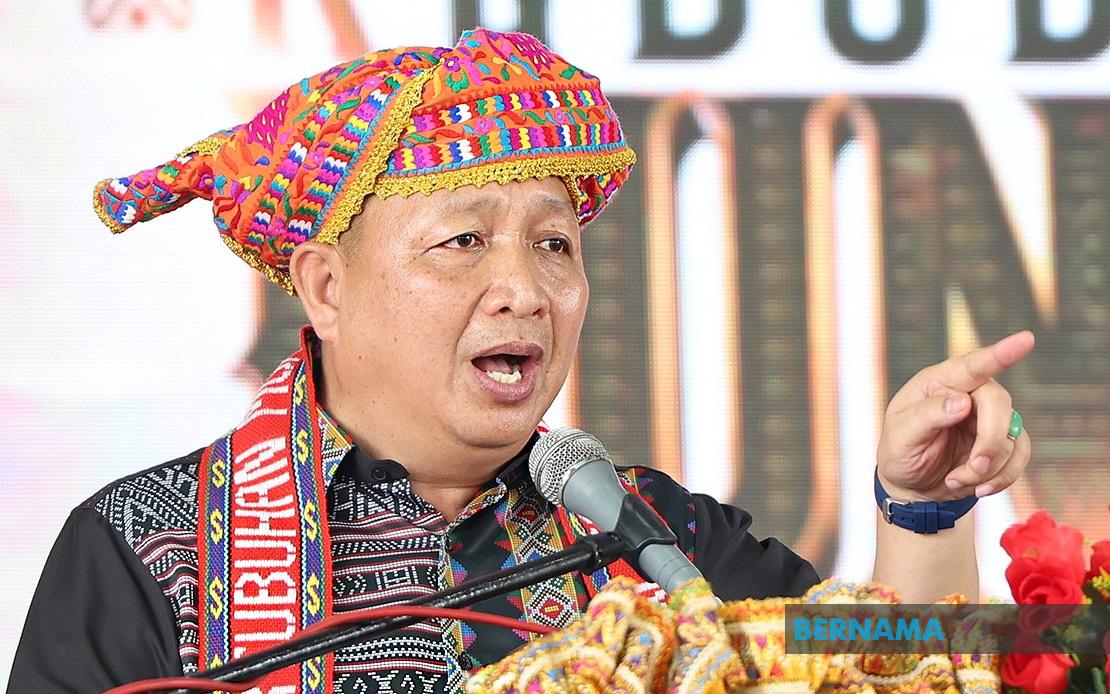
The Malaysian Federal government's commitment to upgrading rural water infrastructure in Sabah took concrete form when Deputy Prime Minister Datuk Seri Dr Ahmad Zahid Hamidi announced a RM4.06 billion allocation for the Rural Water Supply (BALB) project during the Rungus Cultural Festival in Kudat. The substantial funding represents a significant investment in addressing one of the region's most pressing development challenges, as many rural communities across Sabah continue to grapple with inconsistent access to clean water supplies.
Kota Marudu Member of Parliament Datuk Wetrom Bahanda, who also leads the Malaysian Momogun Rungus Association, emphasised that this initiative reflects broader Federal government priorities to strengthen basic infrastructure across Malaysia's less developed regions. The announcement carries particular significance for Sabah, where geographic isolation and dispersed settlement patterns have historically complicated water supply management. By channelling resources directly to the state government rather than maintaining centralised ministry control, the approach acknowledges that local administrators possess superior knowledge of their communities' actual requirements and constraints.
The decision to devolve implementation responsibility to Sabah's state government represents a meaningful shift in Federal-state cooperation on rural development. Conventionally, such projects have been managed through the Rural and Regional Development Ministry in Putrajaya, a structure that often created administrative delays and disconnects between planners and beneficiaries. Wetrom highlighted that the Rural and Regional Development Ministry (KKDW) recognised this limitation and took the initiative to transfer greater autonomy to state authorities, enabling more responsive project design and execution tailored to Sabah's specific geographic and demographic characteristics.
Beyond water supply, the Federal government's support extends to complementary road infrastructure that rural communities depend upon for economic participation and access to essential services. Multiple road construction and upgrade projects are receiving active funding, including the Sonsogon-Megandai and Mangin routes, which will enhance connectivity for interior settlements. Additional projects targeting Jalan Rendemon, Jalan Teringai, Jalan Sembayan, and the corridor extending to Pampang Poring from Jalan Raritiden underscore a comprehensive approach to rural infrastructure modernisation across the Kota Marudu and Kudat districts.
These investments carry broader development implications for Sabah's interior communities. Road improvements directly correlate with economic opportunity, enabling smallholder farmers and artisans to access wider markets and reducing transportation costs that have traditionally squeezed rural incomes. Similarly, reliable water supply removes a fundamental constraint on agricultural productivity and public health, reducing waterborne illness and improving overall quality of life. For districts like Kota Marudu and Kudat, historically counted among Malaysia's poorest regions, such infrastructure investments provide tangible pathways toward sustainable economic advancement.
Wetrom's emphasis on upgrading Matunggong subdistrict to full district status reflects recognition that administrative reorganisation can catalyse development by improving local governance capacity and resource allocation. District status typically brings greater budgetary autonomy, enhanced planning authority, and improved access to state-level development programmes. This administrative elevation, coupled with water and road infrastructure investments, signals a multi-layered strategy to overcome the structural disadvantages that have constrained rural Sabah's development trajectory.
From a regional perspective, Sabah's infrastructure challenges mirror patterns across much of Southeast Asia, where dispersed rural populations and difficult terrain create persistent development bottlenecks. Malaysia's approach to these challenges—combining substantial capital allocation with devolved implementation and complementary infrastructure investment—offers lessons for neighbouring countries wrestling with similar rural-urban disparities. The emphasis on state-government implementation rather than centralised delivery reflects growing recognition that development effectiveness improves when decision-making authority aligns with local knowledge and accountability structures.
The RM4.06 billion allocation also reflects the Federal government's broader strategy to reduce regional inequality, a long-standing policy objective in Malaysia. Sabah's economy has historically lagged Peninsular Malaysia across most development indicators, and targeted investments in basic infrastructure represent an acknowledgment that sustained growth requires foundational public goods. Water supply and road connectivity are fundamental inputs that enable private economic activity and improve human capital development through reduced health burdens and improved educational access.
Implementation success will depend on state government capacity to manage complex procurement, project management, and maintenance arrangements. Sabah has previously faced challenges in executing large infrastructure programmes, including issues with contractor performance and sustainability of completed projects. The scale of the RM4.06 billion allocation means that governance frameworks and institutional arrangements will significantly influence whether communities ultimately benefit from improved water access or face costly service disruptions.
The timing of this announcement reflects political attention to East Malaysia, a region where the Federal government has pursued renewed engagement following periods of relative neglect. As Sabah navigates shifting political alignments and competing state-level development priorities, Federal support for basic infrastructure strengthens communal services that transcend partisan divisions. Water supply and roads benefit all residents regardless of political affiliation, making such investments politically sustainable and broadly beneficial.
For Malaysian policymakers, the Sabah water supply initiative provides a template for addressing infrastructure gaps across other underdeveloped regions. The combination of substantial funding, devolved implementation, and complementary sectoral investments—water, roads, administrative reorganisation—suggests an evolved approach to rural development that moves beyond traditional top-down models. Whether this approach proves effective will become evident as projects advance and communities experience tangible improvements in water access and connectivity.

