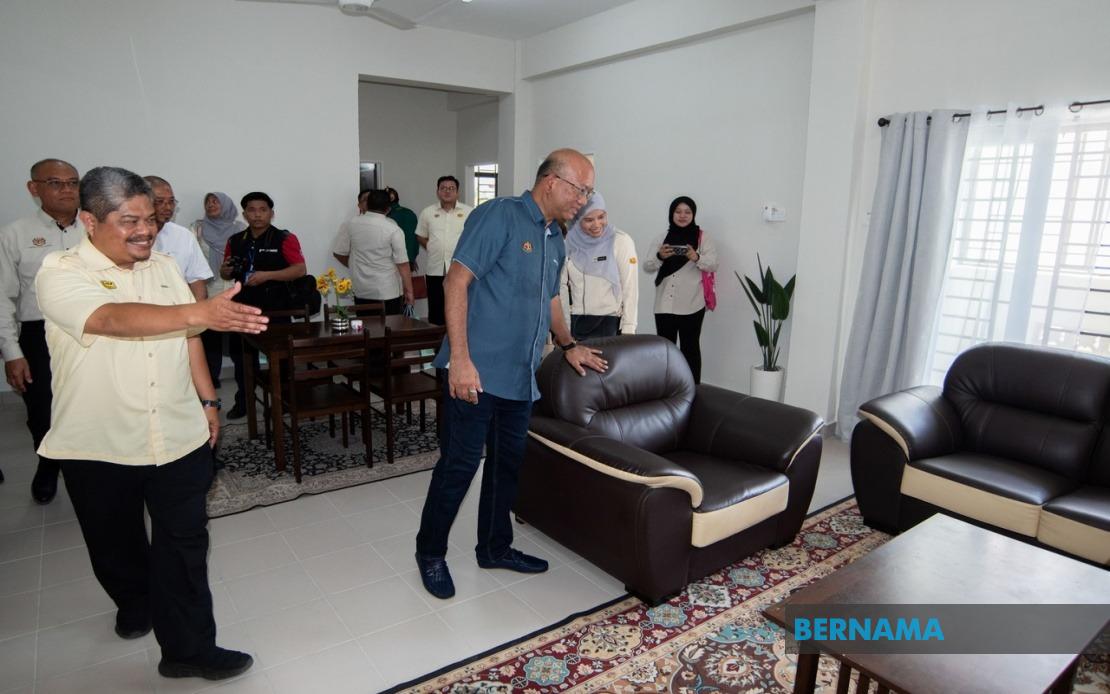
The Industrial Training Institute at ADTEC Labuan Campus has marked a significant infrastructure milestone with the handover of its RM25.8 million staff quarters project, completed on schedule and meeting all quality benchmarks. Labuan Public Works Department director Mohd Faizul Mohd Ali Hanapiah formally transferred the project to ADTEC Labuan director Imalistyahusnanjaya Mat Hussin during a ceremony witnessed by Human Resources Ministry secretary-general Datuk Azman Mohd Yusof. The completion signals a boost to the federal territory's commitment to enhancing its technical education facilities, which have become increasingly central to Malaysia's vocational training strategy.
Constructing large-scale infrastructure projects on Labuan presents unique logistical complexities that differ markedly from mainland operations. Island-based developments require careful coordination of material transport, workforce scheduling, and supply chain management, factors that can easily derail timelines and inflate costs. Mohd Faizul emphasised that despite these inherent challenges, the project team maintained rigorous adherence to deadlines through meticulous planning and continuous oversight. The Public Works Department deployed dedicated monitoring teams throughout construction to enforce compliance with technical specifications, safety protocols, and quality assurance standards. This disciplined approach reflects broader improvements in Malaysian government project management, where accountability and transparency have become increasingly prioritised following decades of infrastructure delivery concerns.
The completed facility comprises two four-storey residential blocks housing 32 individual units, accompanied by a comprehensive suite of supporting amenities designed to foster community living and recreational engagement. Beyond basic accommodation, the development includes dedicated field and playground facilities, acknowledging that student welfare extends beyond classroom and workshop environments. This holistic approach to campus infrastructure recognises that residential accommodation serves purposes beyond mere shelter, functioning as part of the broader ecosystem that nurtures technical competencies and personal development. For ADTEC Labuan, which draws trainees from across Malaysia and increasingly from neighbouring countries through regional cooperation frameworks, quality on-campus housing has become essential to institutional competitiveness and student retention.
A notable achievement underlying the project's successful delivery was the simultaneous submission of three critical documentation bundles: the Certificate of Practical Completion, as-built architectural drawings, and SOFA compliance documentation. This three-in-one accomplishment streamlines administrative processes and reduces bureaucratic delays that typically follow project handovers. The coordination required to prepare these parallel documentation streams demands sophisticated project management protocols, suggesting the Public Works Department employed contemporary construction administration practices that Malaysian public sector agencies are increasingly adopting. Such efficiency gains, while appearing technical, carry real implications for fiscal management and resource allocation within government development budgets.
The construction period achieved an impressive safety record, recording zero workplace accidents and zero lost-time injuries across the entire project duration. In Malaysia's construction sector, where occupational hazards remain a persistent challenge despite regulatory frameworks, this outcome represents a genuine accomplishment reflecting investment in worker safety culture and preventive measures. The project also maintained strict control over variation orders, the contractual changes that frequently cause cost overruns and schedule slippages in government works. Both achievements indicate professional contract administration and suggest the delivery model employed may offer lessons for other federal territory development initiatives and potentially for state-level infrastructure projects.
The accommodation project addresses a strategic need within Labuan's technical education ecosystem. ADTEC Labuan, functioning as the federal territory's principal vocational training institution, draws students pursuing certificates and diplomas in manufacturing, engineering, hospitality, and information technology disciplines. Quality on-campus housing directly influences the institution's ability to attract talent from across the country and supports the Malaysian government's broader objective of expanding vocational education capacity as an alternative to university-focused pathways. The new facilities enhance the campus's proposition to potential trainees while improving retention and academic outcomes among current cohorts.
Mohd Faizul characterised the completed quarters as providing modern, secure, and comfortable residential environments that promote organised community living. The design emphasis on conducive accommodation reflects contemporary understanding that student accommodation quality correlates with academic performance and institutional reputation. For ADTEC Labuan, opening these facilities strengthens its competitive position relative to other technical institutes nationwide while supporting the larger federal territory development agenda. Labuan has pursued diversification beyond its oil and gas heritage through financial services and education sectors, positioning skills-intensive technical training as part of this broader economic transition.
The completed project is expected to substantially benefit resident welfare while reinforcing ADTEC Labuan's capacity to deliver quality technical and vocational education. The project documentation explicitly links improved accommodation to enhanced learning outcomes, reflecting modern institutional thinking that views campus infrastructure as integral to educational quality rather than peripheral to it. For trainees, residing in modern, well-maintained facilities contributes to dignity, security, and focus on their studies, factors that collectively influence completion rates and graduate employability.
The handover ceremony brought together representatives from multiple government levels, including federal ministry and technical department leaders, underscoring the significance attributed to the project within Malaysia's technical education and infrastructure development frameworks. Such high-level witness to project completion reflects commitment to vocational training expansion as a national priority, particularly as Malaysia confronts emerging skills mismatches in its labour market and seeks to position itself as a regional technical education hub. The successful delivery of ADTEC Labuan's quarters project demonstrates that complex island-based public infrastructure can be delivered to schedule and quality when rigorous management disciplines are applied, offering valuable precedent for future federal territory development initiatives.

