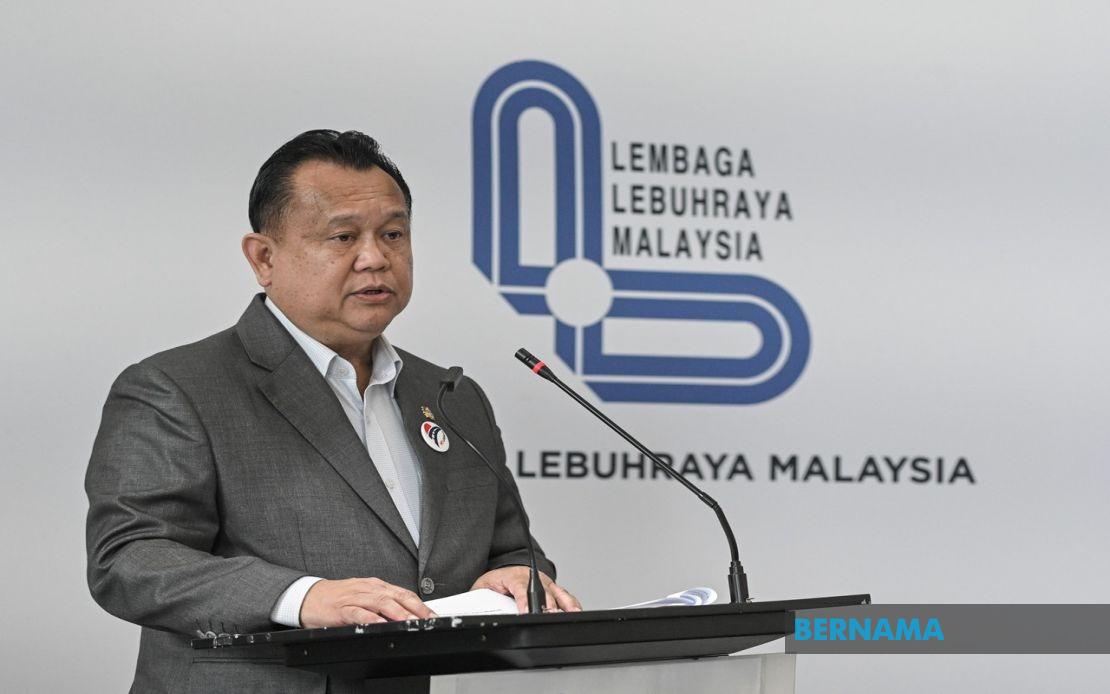
The Malaysian government has greenlit an initial RM25.2 million investment to equip 32 accident-prone stretches of the nation's highway network with solar-powered LED street lighting, marking a significant step in the administration's road safety agenda. Works Minister Datuk Seri Alexander Nanta Linggi announced that the infrastructure rollout, executed under the MADANI Monitoring programme, will see 3,000 light poles erected at strategically identified danger zones across the country to substantially improve visibility and reduce collision risks for night-time travellers.
The project represents a coordinated effort between three key government entities: the Works Ministry, the Finance Ministry, and the Malaysian Highway Authority (LLM). It was initiated directly in response to Prime Minister Datuk Seri Anwar Ibrahim's budget announcement last October, when he first signalled the government's intention to tackle the persistent challenge of highway fatalities through targeted infrastructure improvements. The decision reflects growing recognition within policy circles that poor lighting at vulnerable road sections contributes measurably to accident statistics.
Originally, the government had earmarked RM30 million for this comprehensive safety initiative. The current allocation of RM25.2 million represents the first deployment phase, with Nanta confirming that authorities will disburse remaining funds incrementally as they assess ongoing requirements across the highway system. This phased approach allows the Works Ministry to evaluate the effectiveness of the initial installations and identify additional problem zones requiring treatment before committing the full budget.
The selection of solar-powered LED technology carries multiple strategic advantages beyond immediate safety considerations. The renewable energy system eliminates dependency on grid electricity, reducing operational costs over the long term and making the solution particularly suitable for remote highway sections where conventional power infrastructure may be sparse or unreliable. LED technology delivers superior brightness efficiency compared to traditional sodium vapour lamps while consuming significantly less energy, creating a compound benefit for the nation's sustainability goals.
Highway safety remains a pressing concern across Malaysia. Night-time accidents disproportionately affect Malaysia's road toll, with inadequate lighting identified in numerous traffic safety studies as a contributing factor to collision severity and frequency. The targeted approach of concentrating resources at the 32 most dangerous locations reflects data-driven policy-making, though it underscores the broader reality that Malaysia's highway network contains numerous other sections requiring safety upgrades.
The contracting process has now advanced to the implementation stage, with the Letter of Acceptance (SST) formally handed to the selected contractor. This development clears the pathway for immediate commencement of site works, allowing crews to begin pole installation and electrical integration without bureaucratic delay. The ministerial announcement of this handover signals genuine momentum on what has traditionally been a slower-moving category of infrastructure project.
Nanta provided a completion timeline of November this year for the full project, setting a relatively compressed six-month construction window. Meeting this deadline would require efficient project coordination across multiple site locations, particularly given Malaysia's tropical weather patterns that can cause delays during monsoon seasons. The aggressive schedule suggests the government views this initiative as politically significant and operationally urgent.
For Malaysian road users, particularly those frequently travelling during evening and night hours, the implementation carries immediate practical significance. Commercial drivers, night-shift workers, and long-distance travellers navigating these 32 identified corridors should see material improvements in visibility conditions, potentially translating to fewer accidents and safer journeys. The psychological dimension of better-lit highways also influences driver behaviour, with research consistently showing that improved lighting reduces speed and increases alertness.
The initiative integrates into Malaysia's broader MADANI Monitoring framework, which emphasises proactive government intervention in addressing systemic safety and welfare issues. By combining this project with the government's wider safety agenda, the Works Ministry positions highway lighting not as an isolated infrastructure upgrade but as part of comprehensive national risk management strategy. This positioning may justify future requests for funding expansion if initial results prove encouraging.
For the highway technology and renewable energy sectors, the project represents a significant tender opportunity and validation of solar-powered public infrastructure applications. Successful completion could establish a model for similar installations elsewhere across Southeast Asia, where highway safety remains inconsistent and night-time accident rates elevated. The project's visibility may also stimulate private-sector interest in solar street lighting solutions for commercial applications.
Looking forward, authorities will need to establish maintenance protocols ensuring that the LED and solar panel systems remain functional over extended periods. Tropical weather conditions in Malaysia, including heavy rainfall and salt spray in coastal areas, can degrade outdoor electrical equipment if inadequately protected. The contractor selection and project specifications should account for these environmental realities to ensure the investment delivers long-term safety benefits.
The project reflects a measured but meaningful response to Malaysia's persistent road safety challenges. While RM25.2 million represents meaningful government commitment, observers familiar with Malaysia's accident statistics note that comprehensive highway safety improvement would require substantially larger sustained investment across a wider geographic scope. Nevertheless, this initiative demonstrates governmental willingness to deploy innovative infrastructure solutions to address documented danger zones, potentially saving lives and reducing injury rates on some of the nation's busiest and most hazardous traffic corridors.