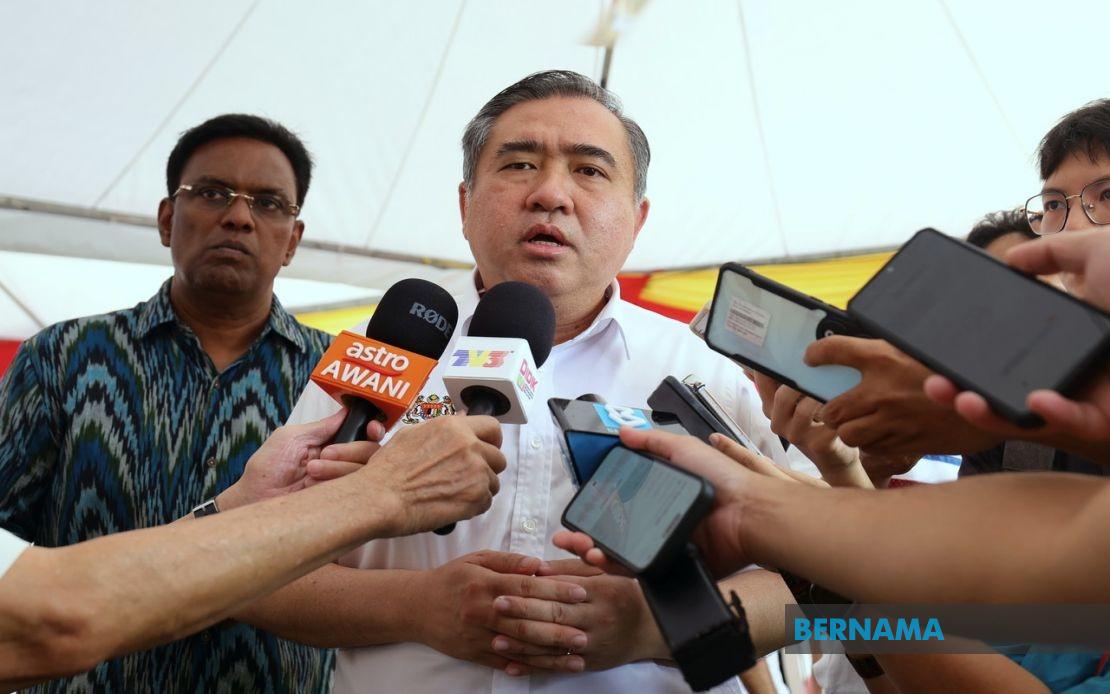
Transport Minister Anthony Loke has unveiled a RM100,000 investment package for Kampung Bukit Temiang in Seremban, marking another phase of the government's MADANI Adopted Village Programme. The allocation represents a combined effort between the Railway Assets Corporation (RAC), a Transport Ministry agency that contributed RM50,000, and Loke's personal allocation as the Seremban Member of Parliament, which accounts for the remaining RM50,000. This dual-source funding model demonstrates how federal agencies and elected representatives are coordinating efforts to reach underserved communities across the country.
The development strategy emphasises community-driven planning rather than top-down project implementation. Loke stressed that engagement with residents preceded any allocation decisions, ensuring that infrastructural improvements directly address genuine local needs. The proposed upgrades identified through consultation include rehabilitating the community hall, patching damaged roofs on residential properties, enhancing the village's drainage infrastructure, and addressing other facility requirements highlighted by inhabitants. This consultative approach signals a shift in how government initiatives are being rolled out at grassroots level, particularly within the Seremban constituency.
Implementation of these projects will proceed through the Federal Village Development and Security Committee (JPKK), which will coordinate the work in manageable phases. The committee's role extends beyond merely distributing funds; it will oversee how improvements are executed, whether through direct RAC undertaking or by mobilising community participation through gotong-royong activities and appointing local contractors. This flexibility allows villages to choose implementation methods that best suit their circumstances, potentially generating employment for local tradespeople while building community cohesion through shared responsibility.
Loke positioned the MADANI Adopted Village Programme within a broader government philosophy aimed at fostering direct ministry engagement with local communities. The initiative reflects a commitment to understanding community challenges at source rather than administering solutions from federal headquarters. By embedding ministries within village structures, the government seeks to create feedback loops that inform policy refinement and resource allocation. This architectural change in governance delivery holds implications for how similar initiatives might be scaled across Malaysia's rural areas.
Beyond Kampung Bukit Temiang, Loke highlighted complementary developments within the transport sector through the National MADANI Taxi Renewal Programme. An additional RM10 million allocation announced in early July aims to boost awareness and participation among taxi and hire car operators in government initiatives. This injection reflects encouragement from initial uptake of RM10 million allocated under Budget 2026, indicating that demand for vehicle replacement assistance among taxi drivers exceeds preliminary estimates. The top-up signals the government's willingness to expand programmes demonstrating traction and addressing genuine economic pressures faced by transport operators.
The taxi renewal initiative transcends simple vehicle replacement financing and encompasses a comprehensive vision aligned with Prime Minister Anwar Ibrahim's broader MADANI framework. Programme participants receive structured briefings on available benefits, including driver-friendly financing arrangements, income-enhancement opportunities, social protection coverage, permit application guidance, and modernisation incentives. This holistic approach acknowledges that upgrading vehicle fleets alone cannot sustainably improve taxi driver welfare without addressing broader industry challenges including regulatory barriers, income volatility, and social security gaps that have long characterised the sector.
A significant philosophical shift underpins the government's stance on competition between traditional taxi services and e-hailing platforms. Rather than viewing them as competitors, the Transport Ministry frames them as complementary components within an integrated public mobility ecosystem. This positioning requires strategic partnership between established taxi operators and ride-sharing platforms, each contributing distinct advantages to the transportation market. For Malaysia's transport sector, this represents a pragmatic middle path between protectionism and unfettered platform capitalism, attempting to preserve livelihoods while acknowledging technology's role in service delivery.
The implementation machinery involves coordination across multiple agencies and stakeholders. The Transport Ministry, the Land Public Transport Agency (APAD), taxi associations, financial institutions, automotive manufacturers, and e-hailing operators must function as a coordinated system to ensure programme success. Loke's emphasis on collaborative frameworks suggests that previous implementation failures stemmed partly from siloed agency operations and insufficient stakeholder alignment. Building institutional relationships across traditionally separate sectors—government regulation, financial services, vehicle manufacturing, and digital platforms—represents an organisational challenge as significant as securing funding allocations.
For Malaysian policymakers observing these initiatives, the Seremban efforts offer a microcosm of how MADANI principles translate into local-level action. The combination of targeted village development funding, community consultation mechanisms, and phased implementation creates a model replicable across other constituencies and states. Similarly, the taxi renewal programme demonstrates how broad policy objectives can be operationalised through specific sectoral interventions, though success ultimately depends on effective inter-agency coordination and genuine stakeholder buy-in beyond formal announcements.
The RM100,000 Kampung Bukit Temiang allocation and expanded taxi renewal funding reflect the government's attempt to demonstrate tangible commitment to previously marginalised communities—rural villagers and informal transport workers—who have historically received limited direct policy attention. Whether these investments generate sustained improvements or remain symbolic gestures will depend on implementation fidelity, adequate funding continuity, and the government's willingness to modify approaches based on field-level feedback. For Southeast Asian observers, Malaysia's evolving approach to rural development and informal sector integration offers instructive lessons in reimagining state-community relationships within middle-income development contexts.

