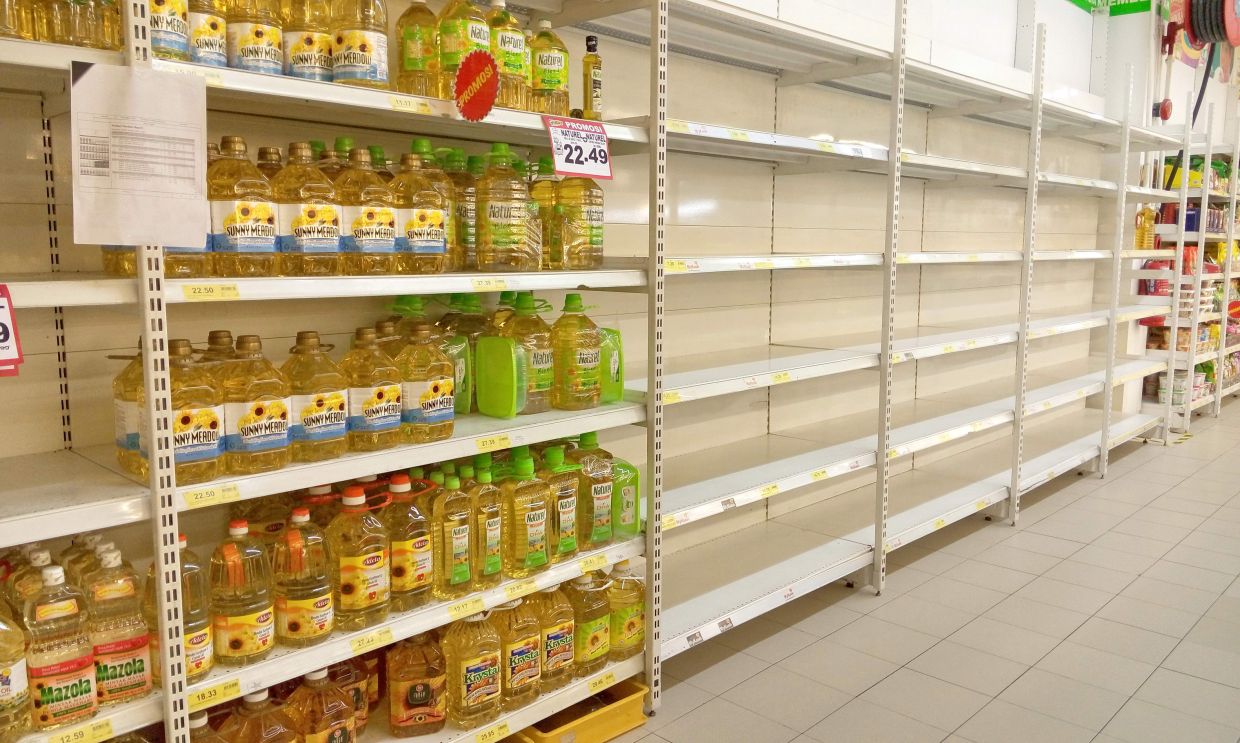
Malaysia's Public Accounts Committee has exposed a troubling disconnect between government policy and implementation: RM10.879 billion in cooking oil subsidies disappeared from the programme between 2019 and February 2025 without reaching the households they were meant to support. The revelation cuts to the heart of how effectively Kuala Lumpur manages one of its most visible welfare commitments, particularly at a time when successive administrations have championed subsidy rationalisation as essential to fiscal sustainability and targeted assistance delivery.
The scale of the leakage demands scrutiny precisely because current subsidy architecture was designed to be more efficient than its predecessor. Over the past decade, Malaysia has repeatedly shifted toward means-tested and targeted subsidy models, moving away from blanket price controls that benefited all consumers regardless of income. The cooking oil subsidy programme, in particular, has been presented as a carefully calibrated mechanism to shield lower-income households from price volatility while encouraging market discipline. Yet the PAC findings suggest that between intention and execution lies a chasm that neither market monitoring nor enforcement mechanisms have been able to bridge effectively.
The disappearance of nearly RM11 billion raises uncomfortable questions about where the money went. In subsidy programmes, there are typically several failure points: leakage through market diversion, where subsidised commodities are siphoned into black markets or exported; administrative loss through poor tracking and verification systems; and corruption within the distribution chain. Malaysia's experience with petroleum subsidies in previous decades demonstrated how sophisticated diversion networks can become, with truckers and retailers finding ways to exploit price differentials between subsidised domestic markets and higher international prices. Without clear public detail from authorities, there is no way for citizens to understand whether the same patterns are repeating.
The fact that shelves remained empty of subsidised cooking oil even as the government poured resources into the programme points toward a systemic breakdown that goes beyond simple accounting errors. When citizens cannot find the subsidised product they are supposedly entitled to, the programme loses both its practical purpose and public legitimacy. This disconnect has real consequences: households forced to buy unsubsidised oil at market rates, small traders unable to access the programme reliably, and public confidence in government's ability to deliver on welfare commitments eroded. For lower-income Malaysians already managing tight household budgets, this failure translates directly into higher living costs.
Accountability becomes the central issue. When RM10.879 billion vanishes from a government programme, citizens deserve to know who bears responsibility and what consequences follow. In parliamentary systems like Malaysia's, the Public Accounts Committee plays a crucial oversight role, but its revelations are only meaningful if they trigger institutional accountability and corrective action. Without visible consequences for officials or agencies that failed to prevent the leakage, the report risks becoming merely another document in the archives of governance failures without catalysing meaningful reform.
The government's own rhetoric around subsidy rationalisation makes this particularly problematic. Officials have argued that moving toward targeted subsidies would improve efficiency and reduce waste compared to universal subsidy regimes. If a more targeted system is losing nearly RM11 billion to leakage between 2019 and early 2025, it suggests that either the targeting mechanism is fundamentally flawed, or that enforcement capacity has not kept pace with the complexity of the distribution system. Neither scenario is reassuring for policymakers attempting to design more sophisticated welfare instruments.
From a Southeast Asian perspective, Malaysia's experience carries lessons for the region. Several neighbouring countries—Thailand, Indonesia, and the Philippines—operate large subsidy programmes for essential commodities and have grappled with similar challenges of preventing diversion and ensuring delivery. The visibility of Malaysia's PAC findings means that Malaysian policymakers face pressure to demonstrate that they can solve these problems better than their regional counterparts. Conversely, if accountability remains weak and subsidy leakage continues, it sends a signal that even middle-income Southeast Asian states struggle with subsidy programme management.
The path forward requires moving beyond diagnosis toward systemic correction. Stronger supply chain tracking through digital systems, improved verification of recipient eligibility, enhanced coordination between pricing agencies and enforcement bodies, and clearer penalties for diversion would all address different components of the problem. However, these technical solutions depend on political will and institutional capacity. If the officials and agencies responsible for subsidy oversight face no meaningful consequences for allowing RM10.879 billion to leak, incentives to improve remain weak.
Public transparency about remedial measures will be essential. Malaysians need to understand not just that the problem exists, but how government intends to fix it. This includes explaining specifically where the money went, identifying any criminal or administrative wrongdoing, and laying out measurable targets for recovering control over the subsidy programme. Without such transparency, subsequent announcements of subsidy improvements risk being dismissed as superficial responses to parliamentary embarrassment rather than genuine reform.
The broader implication extends to government's credibility on economic management more widely. If major welfare programmes leak resources on this scale, it undermines confidence in other government commitments, from infrastructure spending to public service efficiency. The cooking oil subsidy programme failure becomes emblematic of a larger question: can Malaysian institutions successfully manage complex economic interventions, or are there structural weaknesses that persist regardless of policy design? Answering that question convincingly requires accountability that matches the scale of the failure revealed.

