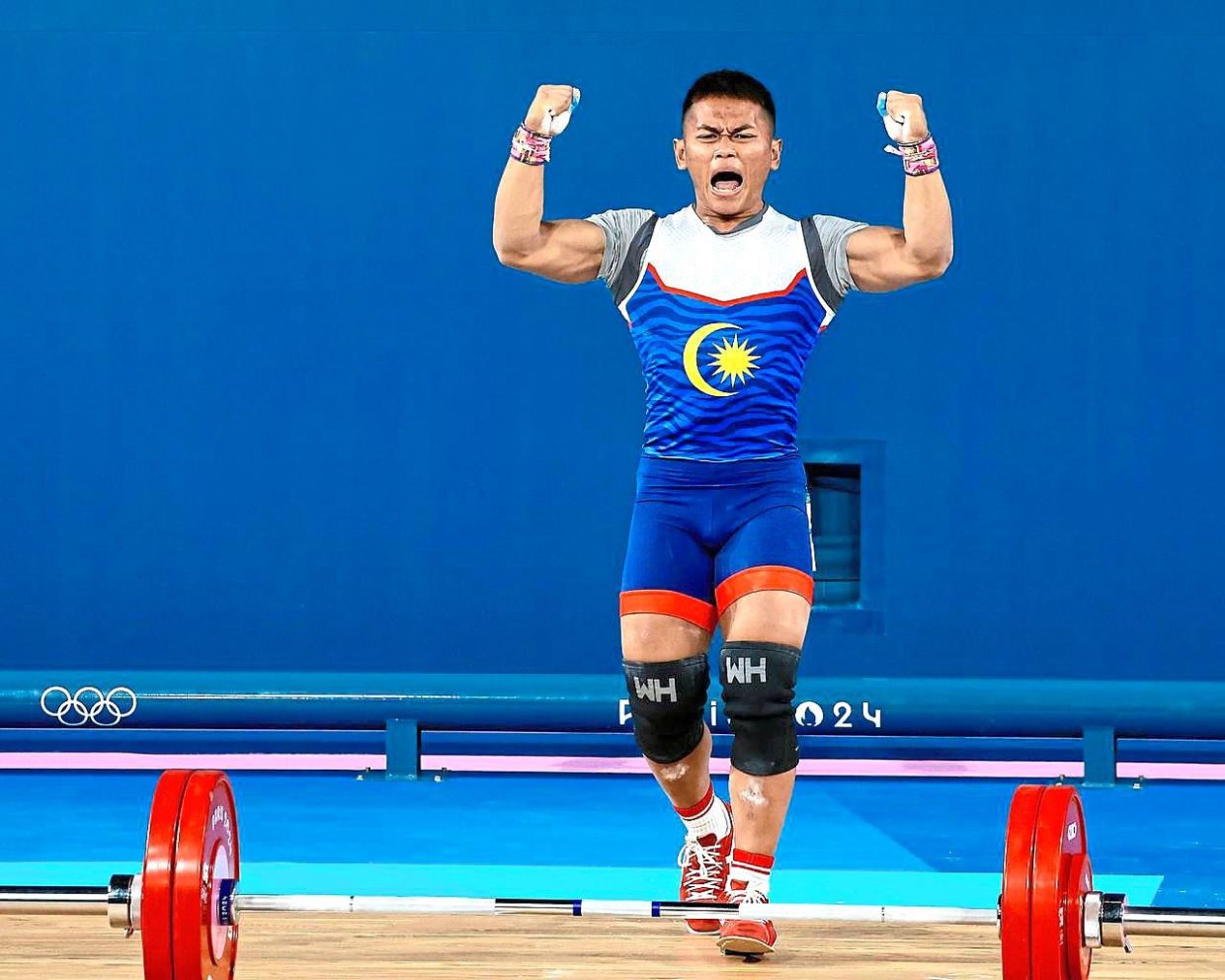
Malaysia's weightlifting contingent has secured a significant financial lifeline following their exceptional medal haul at last month's Glasgow Commonwealth Games, with the Youth and Sports Ministry committing an extra RM1 million towards the sport's long-term development. The announcement represents one of the most substantial recent investments in a single sporting discipline and underscores the government's confidence in weightlifting's capacity to generate future Olympic and Commonwealth glory. Minister Dr Mohd Taufiq Johari disclosed that the funding decision emerged from collaborative discussions between the ministry, the Malaysian Weightlifting Federation (MWF), and the National Sports Council (NSC), all of which recognised the urgent need to consolidate momentum and build institutional capacity across the sport.
The Glasgow Games proved transformative for Malaysian weightlifting, with the national squad returning home with five gold medals, one silver, and one bronze—a combined tally that positioned weightlifters as Malaysia's most prolific medal contributors to the entire Games medal count. This outsized contribution relative to team size is notable: while Malaysia concluded the fortnight with an overall haul of eight golds, three silvers, and five bronzes, the weightlifting discipline alone accounted for more than half the gold medal inventory. The performance vindicated long-held assertions from federation leadership that the sport possessed latent potential to compete at the highest levels, provided adequate resources and institutional support were mobilised. The Glasgow results have fundamentally shifted perceptions of weightlifting within Malaysian sports policy circles, transforming it from a fringe pursuit into a legitimate medal-winning platform.
Beyond the cash allocation, the ministry has endorsed a comprehensive facility upgrade centred on Rompin's existing weightlifting training hub. The facility will be progressively developed into a designated Sports Centre of Excellence—a classification that typically signals enhanced investment in coaching, equipment, and athlete support infrastructure. This institutional redesignation carries substantial implications for athlete recruitment and retention, as centres of excellence typically receive priority when national sports funding is distributed across disciplines. The upgrade constitutes recognition that Malaysia's weightlifting programme cannot compete internationally without world-class training environments comparable to those available in rival nations across the Commonwealth and broader Asian region.
Among the most strategically significant commitments is the appointment of a dedicated full-time coach to be permanently stationed at Rompin, with an explicit mandate to develop female weightlifters. This decision addresses a critical gap that has historically constrained Malaysian weightlifting's performance ceiling. Women's weightlifting has expanded dramatically across the Commonwealth and internationally in recent years, yet Malaysia has struggled to develop female talent pools comparable to those in rival nations. The dedicated coaching position signals intent to rectify this imbalance systematically, recognising that future Commonwealth and Olympic medal opportunities increasingly depend on mobilising female athlete potential. Dr Taufiq's specific mention of female athlete development suggests the ministry views gender-balanced performance as essential to sustained competitive success.
The allocation framework also includes provisions to expand weightlifting athlete quotas within the National Sports Council's development programme following the conclusion of this year's Malaysia Games (Sukma). However, the ministry has stipulated that expanded quotas will be subject to merit-based selection criteria, with preference extended to athletes demonstrating both exceptional technical aptitude and alignment with long-term succession planning objectives. This conditional expansion approach reflects bureaucratic caution about unbounded spending commitments while simultaneously signalling genuine intent to broaden the talent pipeline. The timing—linking quota increases to the Sukma cycle—allows federation officials and NSC administrators to evaluate newly emerging talent across the domestic circuit before finalising selections for the intensified development pathway.
Dr Taufiq articulated the broader strategic rationale underpinning these investments, characterising the Glasgow medals as evidence that weightlifting possesses sustained potential for competitive excellence rather than representing a statistical anomaly. His comments signal confidence that the discipline has moved beyond volatile performance cycles and can become a reliable contributor to Malaysia's future Commonwealth Games delegations and, potentially, Olympic teams. The minister's framing positions the additional funding not merely as reward for past achievement but rather as foundational investment in what officials believe will become an increasingly potent sporting asset. This reorientation from reactive to proactive funding posture represents meaningful shift in how weightlifting is conceptualised within national sports planning hierarchies.
For Malaysian weightlifting stakeholders, the announcements resolve immediate uncertainty about resource continuity while establishing infrastructure platforms necessary for systematic athlete development. The Rompin facility upgrade and permanent coaching position create operational stability that enables federation officials to commit to multi-year athlete development timelines without concern that support might evaporate following an unfavourable Games cycle. This institutional durability proves crucial in weightlifting, where technical mastery requires years of structured progression and coaching continuity. The RM1 million allocation, while meaningful in absolute terms, becomes most valuable when understood as component of a wider ecosystem redesign rather than as isolated cash injection.
Within the broader Southeast Asian competitive context, Malaysia's weightlifting investment signals determination to strengthen positions against increasingly competitive regional rivals. Nations including Indonesia, Thailand, and Vietnam have progressively enhanced weightlifting infrastructure investments, recognising the discipline's reliable capacity to generate Commonwealth and Asian Games medals. Malaysia's Glasgow performance demonstrated that systematic investment yields measurable returns, justifying policy prioritisation alongside more traditionally dominant sports. The ministry's commitment suggests policymakers recognise that comprehensive approach to facility modernisation, coaching quality, and talent pipeline development will determine whether Malaysian weightlifting sustains competitive momentum or gradually loses ground to better-resourced regional programmes.
The decision also carries implications for how Malaysian sports administration conceptualises investment prioritisation going forward. Weightlifting's success challenges presumptions that only high-profile, mass-participation sports merit substantial resource commitments. The discipline's demonstrated ability to generate outsized medal returns relative to expenditure suggests that strategic targeting of sports with genuine competitive advantages—rather than diffuse funding allocation—produces superior outcomes. This principle, if consistently applied across Malaysian sports policy, could trigger broader reallocation patterns favouring disciplines where the nation possesses particular technical or demographic advantages. Weightlifting's Glasgow vindication may thus catalyse more rigorous cost-benefit analysis across the entire Malaysian sports portfolio.
Looking forward, the success of these initiatives will depend substantially on implementation quality and sustained commitment beyond the initial RM1 million and facility upgrades. The appointment of Rompin's full-time coach will prove decisive: this individual must possess both technical expertise and ability to identify and nurture emerging female talent with discipline and consistency. Federation leadership will need to navigate the challenge of maintaining athlete motivation and performance standards as the sport becomes progressively more professionalised and competitive selection becomes more stringent. The Malaysian Weightlifting Federation and NSC must also ensure that expanded development quotas translate into structured pathways rather than merely proliferating athlete numbers without meaningful progression frameworks. Success requires not just money and facilities, but sophisticated human resource management and institutional coordination sustained across multiple years and potentially multiple Government administrations.

