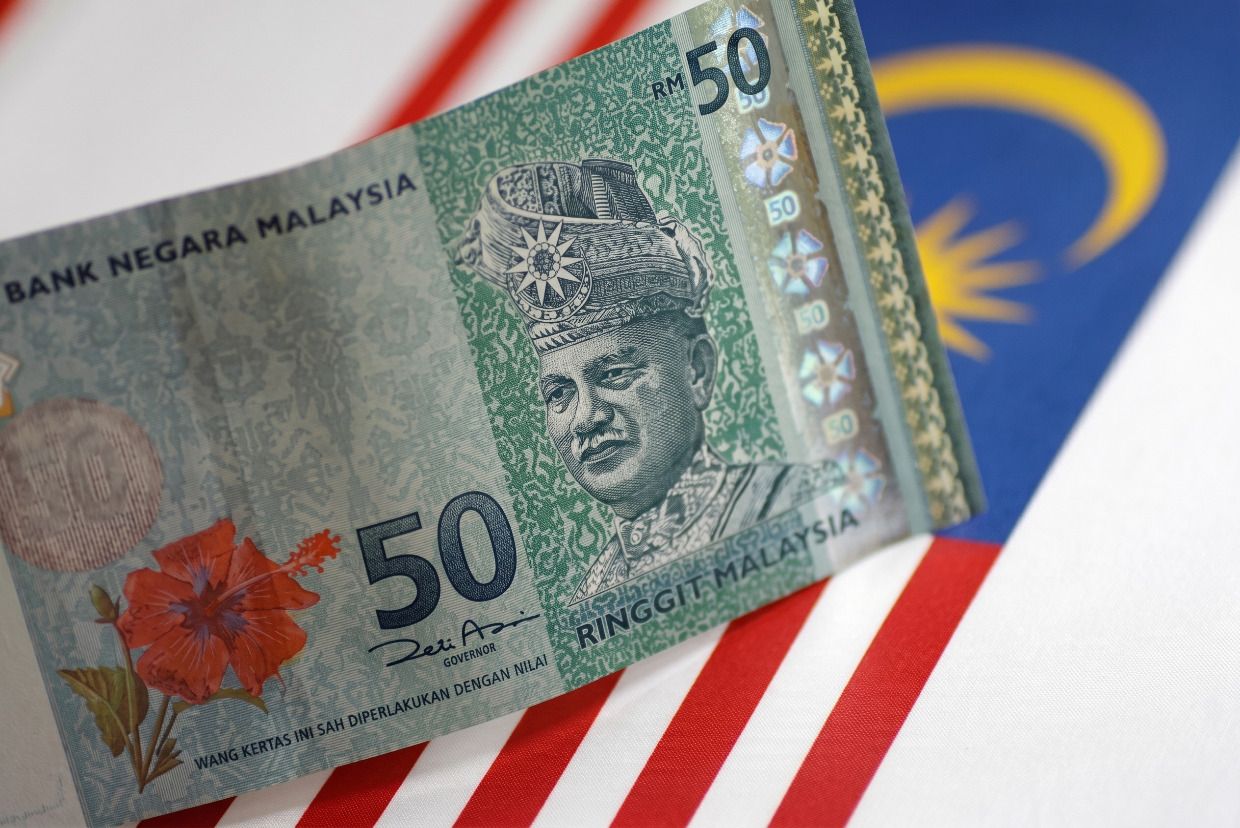
Malaysia's currency is positioning itself for a meaningful recovery after posting its weakest performance across Asia in June, underpinned by fresh policy measures and a resilient economic environment that analysts believe will sustain capital inflows through the remainder of the year. Bank Negara Malaysia's commitment to intensifying efforts aimed at encouraging companies to repatriate and convert their overseas earnings has emerged as a critical catalyst for ringgit strength, with leading financial institutions revising their forecasts upward in response to both policy action and underlying fundamentals.
Royal Bank of Canada has projected the ringgit will trade at 3.95 per dollar by the year's close, representing meaningful appreciation from recent levels. Australia & New Zealand Banking Group holds an even more bullish view, forecasting the currency could strengthen to 3.80 against the greenback—a level not seen since 2015. The ringgit has already begun responding positively to these developments, closing Friday's trading session 0.2% higher at 4.0722 per dollar, suggesting market participants are pricing in the potential for further gains as policy measures take effect.
The credibility of these forecasts rests substantially on the track record of similar interventions undertaken by Bank Negara. During 2024, when the central bank implemented comparable initiatives to boost foreign-exchange inflows, the ringgit rebounded sharply after depreciating to its weakest level against the dollar in 26 years. That recovery proved durable, allowing Malaysia to claim the title of Asia's strongest-performing currency for the entire year. This historical precedent provides investors confidence that current measures will prove equally effective in supporting the currency's recovery trajectory.
Beyond policy support, Malaysia's trade performance has reached remarkable heights, with May exports surging 45 percent year-on-year and the monthly trade surplus climbing to a record 40 billion ringgit, equivalent to approximately $9.8 billion. These figures underscore the country's competitive position in global markets and its capacity to generate the foreign-exchange earnings necessary to support currency strength. The nation has proven particularly adept at capitalizing on structural shifts in global commerce, notably the artificial intelligence boom, which has driven substantial investment in Malaysian data centre infrastructure and generated robust international demand for the country's electrical and electronics sector.
The influx of foreign capital into ringgit-denominated assets has accelerated noticeably, with global investors channelling approximately $2.1 billion into Malaysian bonds through 29 June alone. This rate of inflow positions the bond market to record its largest monthly intake since May 2025, signalling the depth of international appetite for Malaysian fixed income securities and the confidence foreign funds are placing in ringgit stability. Abbas Keshvani, a macro strategist at Royal Bank of Canada's Singapore office, emphasized that the conversion of trade surpluses into ringgit demand represents a crucial mechanism linking Malaysia's external sector performance to currency appreciation.
Bank Negara's current push to encourage foreign-exchange conversion reflects a sophisticated understanding of how corporate financial decisions can amplify currency strength. When multinational companies and exporters hold substantial dollar balances overseas, those funds remain outside Malaysia's financial system and cannot directly support ringgit demand. By incentivizing the repatriation and conversion of these holdings, the central bank aims to redirect capital flows toward the domestic currency while simultaneously bolstering Malaysia's foreign-exchange reserves. Kausani Basak, an FX analyst at Australia & New Zealand Banking Group, noted that corporate foreign currency deposits have already begun increasing during the March-to-May period, suggesting Bank Negara's policy framework is resonating with business decision-makers.
The broader economic context supporting ringgit appreciation extends beyond commodity exports and manufacturing. Foreign direct investment inflows have remained resilient, with multinational corporations maintaining their confidence in Malaysia's business environment and growth prospects. This sustained FDI, combined with portfolio inflows into bonds and equities, creates a self-reinforcing dynamic where ringgit strength attracts additional foreign capital seeking exposure to Malaysian assets, while capital inflows support further currency appreciation. The diversification of inflow sources—spanning trade surpluses, FDI, and portfolio investment—provides multiple pillars of support for the ringgit rather than reliance on any single factor.
However, the path forward is not entirely without obstacles. The international policy environment presents emerging headwinds, with the Federal Reserve adopting an increasingly hawkish monetary stance that may limit the relative attractiveness of ringgit assets compared to dollar-denominated instruments. A stronger dollar globally could constrain regional currency appreciation, even as Malaysia-specific factors remain supportive. Additionally, domestic political developments will warrant close attention from international investors monitoring Malaysia's trajectory. Upcoming state elections will serve as a barometer of political support for Prime Minister Anwar Ibrahim and his governing coalition ahead of the next national elections, with any unexpected outcomes potentially affecting investor sentiment regarding policy continuity and economic management.
Despite these considerations, the convergence of supporting factors appears sufficiently robust to underpin the optimistic forecasts offered by major financial institutions. Malaysia's exceptional trade performance, combined with the central bank's targeted policy interventions, structural demand from the artificial intelligence sector, and sustained foreign capital inflows creates an environment where ringgit strength appears more likely than weakness through the balance of 2025. The currency's recent outperformance relative to regional peers following Bank Negara's June 24 policy announcement provides further evidence that markets are responding positively to official efforts to boost foreign-exchange inflows.

