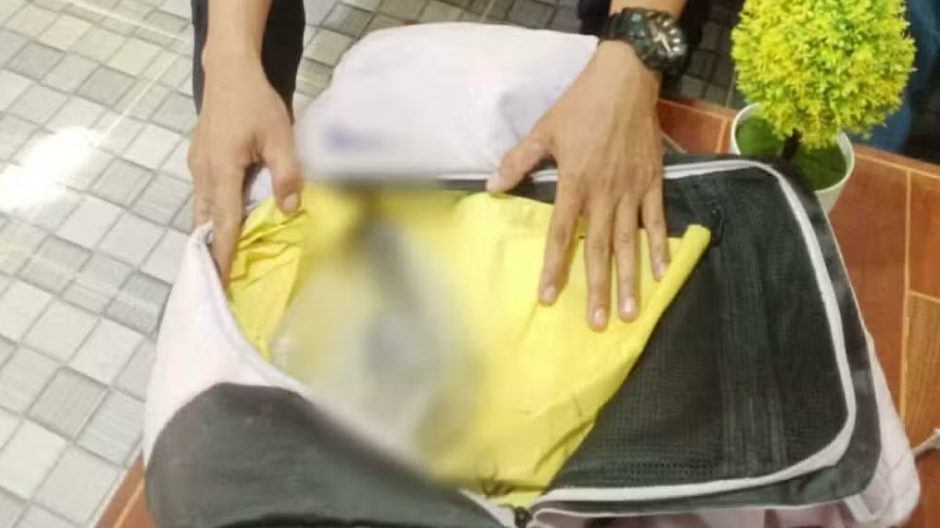
A loaded firearm was discovered in the school bag of a 14-year-old student at a school in Pinamungajan, Cebu on Thursday, August 20, during an unannounced inspection of student belongings. The weapon, identified as a .357 Smith & Wesson Magnum revolver, turned up when a teacher conducting the precautionary safety check opened the minor's bag at approximately 3.50pm. The immediate discovery prompted school officials to contact local police, who secured the firearm and initiated documentation procedures.
Investigations revealed that the revolver belonged to the student's grandfather and had been stored in a cabinet at their family residence. The teenager apparently accessed the weapon from the cabinet and transported it to school on the morning of the incident. At the time, the student's parents were working outside their municipality, leaving the minor under the supervision of his grandparents—a circumstance that investigators said created the opportunity for unsupervised access to the firearm. The weapon was recovered without ammunition, though authorities have not disclosed whether rounds were stored separately or had been removed prior to transport.
Following established protocols for cases involving minors, the 14-year-old was transferred to the custody of the Municipal Social Welfare and Development Office pending the arrival of his parents or legal guardian. As of Friday, August 21, authorities continued their investigation while coordinating appropriate interventions through the welfare office and the child's family. The handling of the case underscores the sensitive balance required when addressing school security threats involving juveniles who may themselves be at risk.
The incident arrived amid heightened scrutiny of school safety across the Cebu region. Just weeks earlier, a shooting inside a senior high school in Zamboanga had left two people dead, prompting provincial authorities to reassess security protocols. Following that tragedy, Cebu Governor Pamela Baricuatro issued directives to the provincial police director and municipal police chiefs, ordering them to intensify protective measures at both public and private educational institutions throughout the province. The recommendations included expanded police presence on school grounds, regular security inspections similar to the one that uncovered this weapon, and improved communication channels between law enforcement and school administration.
In direct response to the governor's mandate, the Cebu Police Provincial Office, under Provincial Director Police Colonel Abubakar Udang Mangelen Jr, implemented a one-police-to-school deployment scheme coordinated with local government units and individual school administrators. This initiative represents a substantial shift in resource allocation, stationing dedicated officers at educational facilities across the province. The approach reflects broader regional concerns about campus security, particularly in light of firearms-related incidents affecting student safety across the Philippines.
The recovery of an operational firearm from a young student's possession carries significant implications for how Filipino communities view juvenile access to weapons. The incident demonstrates vulnerabilities in household storage practices, where firearms kept by one family member can become accessible to younger household members through negligence or curiosity. The grandfather's cabinet storage method, while perhaps intended to be secure, ultimately failed to prevent the teenager's access, highlighting a critical gap between assumed and actual safety practices in many Filipino households.
Law enforcement authorities have used the incident to reinforce public messaging about responsible firearm ownership. Police officials stressed the necessity for gun owners to employ genuinely secure storage methods, particularly in homes where children and adolescents reside. Recommendations emphasize using lockboxes, safes, and other tamper-resistant containers, combined with ammunition stored separately and also under lock. Such messaging is especially pertinent in communities where firearms ownership remains common but safety consciousness may lag behind the prevalence of weapons.
The timing of this discovery—occurring during a period of heightened school security awareness—demonstrates both the effectiveness of increased vigilance and the ongoing nature of threats to student safety. The teacher's decision to conduct an inspection, rather than treating the bag check as routine formality, resulted in the prevention of a potentially dangerous situation. Whether the student intended to use the weapon, show it to peers, or had other motivations remains unclear from available information, but the mere presence of an operational firearm in a school environment represents an acute risk.
For Malaysian readers and broader Southeast Asian audiences, this incident reflects challenges common across the region regarding adolescent access to weapons and institutional responses to emerging security threats. While the Philippines experiences higher rates of civilian firearm ownership than most ASEAN nations, the underlying issues—family negligence in storage, inadequate youth supervision, and the difficulty of preventing determined individuals from accessing weapons—resonate across borders. Schools throughout Southeast Asia have increasingly adopted similar inspection and monitoring protocols in response to both regional and global security trends.
The case also illustrates how educational institutions have evolved their role beyond academics to encompass student welfare and safety management. Teachers conducting bag inspections, police stationed at campuses, and coordination between schools and welfare agencies represent a comprehensive approach to protecting younger populations. However, such measures remain reactive rather than preventive, addressing symptoms of broader societal challenges rather than root causes. Sustainable solutions would require changes in household practices, community awareness programs, and potentially stronger legal frameworks governing firearm storage in residential settings where minors are present.
Authorities in Cebu continue to monitor the situation while the investigation proceeds. The focus now turns to understanding how a young student came to view bringing a firearm to school as acceptable behavior, and what interventions might address whatever underlying motivations contributed to his actions. The case serves as a reminder that security protocols in schools can only do so much; lasting change requires engagement with families and communities to reshape attitudes toward firearm handling and storage.

