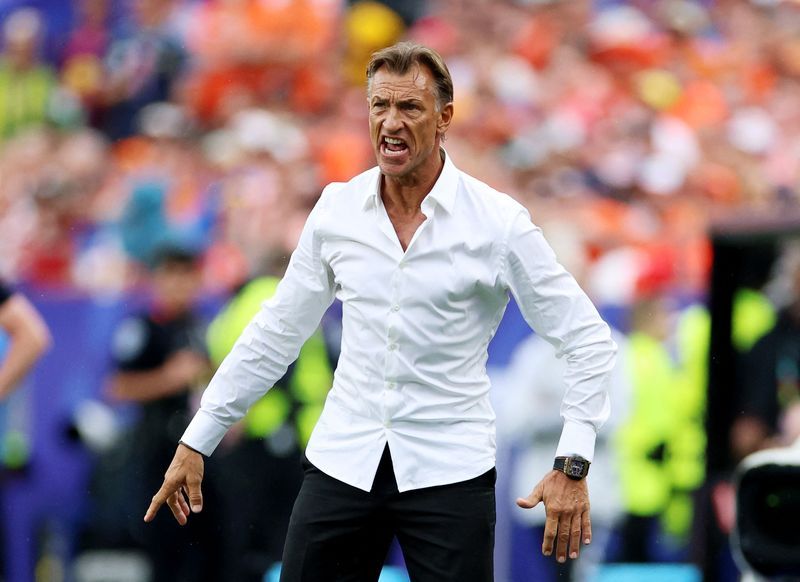
Hervé Renard has brought his brief spell as Tunisia's head coach to an end, announcing his departure through social media on Saturday following the team's elimination from the World Cup group stage. The 57-year-old French tactician, who took charge mid-tournament after predecessor Sabri Lamouchi's dismissal, conveyed his decision publicly on Instagram, expressing gratitude to the Tunisian Football Federation for the opportunity to represent the nation on sport's grandest stage. Renard characterised his experience as an honour that would remain permanently etched in his memory, despite the ultimately disappointing results.
Tunisia's World Cup campaign represents one of international football's most dramatic collapses in recent memory. The North African representatives arrived in Qatar having completed their qualifying campaign with a remarkable defensive record, keeping clean sheets throughout their path to the tournament. This exceptional preparation suggested the team possessed the structural foundation for a competitive group-stage campaign. However, the reality proved starkly different, with Tunisia's defence crumbling spectacularly once the competition began.
The unravelling commenced immediately in Tunisia's opening fixture, when Sweden inflicted a crushing 5-1 defeat that exposed fundamental defensive vulnerabilities. The severity of this result prompted swift administrative action, with the Tunisian Football Federation moving to replace Lamouchi after a single match. Renard's appointment was intended to provide tactical recalibration and restore stability, yet this intervention failed to reverse the alarming trajectory. Tunisia's second group encounter against Japan resulted in a 4-0 humiliation, a scoreline that left Renard feeling deeply ashamed and signalling further deterioration rather than improvement.
The final nail in Tunisia's World Cup coffin came via a 3-1 loss to the Netherlands in their concluding group match, confirming their exit without securing a single victory across three games. This winless campaign proved historically damaging in terms of defensive record-setting. Tunisia conceded 12 goals during the group stage of the expanded 48-team format, establishing an unwanted World Cup record for most goals surrendered by any team in the group phase. The previous record belonged to Costa Rica, who conceded 11 goals during the 2022 tournament in Qatar, meaning Tunisia surpassed this negative benchmark by a single goal.
The contrast between Tunisia's qualifying form and their tournament performance raises profound questions about the factors contributing to such dramatic underperformance. Maintaining an unblemished defensive record across an entire qualifying campaign represents extraordinary achievement, yet this foundation proved unable to translate into competitive group-stage football. The transition from continental competition to World Cup football exposed either tactical limitations, psychological factors, or both. Analysts across the region will scrutinise whether the expanded tournament format, which affected group dynamics and scheduling, played any role in Tunisia's collapse.
Renard's departure marks another chapter in Tunisia's turbulent recent coaching history. His decision to step down voluntarily rather than await potential dismissal reflects the professional grace expected of a coach of his experience and stature. The veteran tactician has previously achieved success across African football, winning the Africa Cup of Nations with Zambia in 2012 and guiding Ivory Coast to the continental championship in 2015. However, even his considerable pedigree could not remedy the fundamental issues that plagued Tunisia's squad during this tournament.
The timing of the coaching change during the tournament, rather than implementing fresh leadership before World Cup preparations commenced, appears to have compounded rather than resolved Tunisia's difficulties. Renard inherited a demoralised squad already reeling from the Sweden defeat, making his task of stabilising performances nearly impossible within the compressed timeframe of a tournament schedule. The decision to persist with mid-tournament managerial changes, a tactic that rarely succeeds in modern football, proved ineffective in Tunisia's case.
Looking ahead, Tunisia's football federation faces crucial decisions regarding long-term strategic direction and coaching philosophy. The team's qualifying campaign demonstrated competitive capacity at continental level, yet their World Cup experience exposed significant gaps requiring systematic attention. Whether these shortcomings stem from individual player performance, tactical systems, mental preparation, or squad depth will require comprehensive post-tournament analysis. The federation must determine whether to pursue continuity with an existing coach or seek external expertise to rebuild confidence and credibility.
For regional football observers, Tunisia's World Cup experience offers cautionary lessons about the unpredictable nature of tournament football and the importance of establishing robust mental and tactical frameworks before major competitions commence. The gap between impressive qualifying campaigns and World Cup performance remains one of international football's most confounding phenomena. Tunisia's case exemplifies how swiftly situations can deteriorate and how previous achievements provide no guarantee of future success. The squad's challenge moving forward involves rediscovering the resilience and organisation that characterised their qualifying campaign while addressing the defensive frailties exposed on the World Cup stage.

