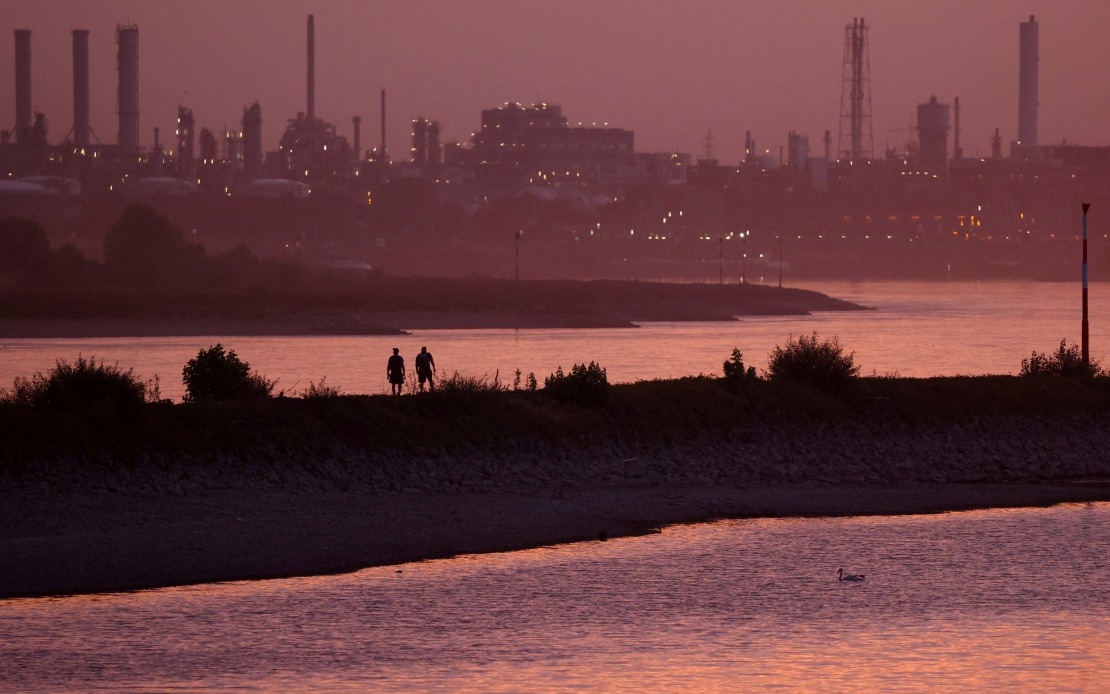
German bomb disposal teams were mobilised on Thursday to neutralise a substantial World War II ordnance that surfaced near Cologne, the consequence of an extraordinary drought that has brought one of Europe's most vital waterways to its lowest level in decades. The discovery underscores how climate-driven environmental stress continues to unearth dangerous legacies from the continent's most destructive conflict, creating immediate risks for civilian populations even eight decades after hostilities ceased.
The unexploded munition, a United States-manufactured aerial bomb weighing 500 kilograms, came to light on Wednesday evening at Rheinpark, a location adjacent to Cologne's urban centre. The timing of its emergence reflects the region's ongoing climatic crisis. The Rhine's water gauge in Cologne dipped to just 67 centimetres on Thursday, matching a record minimum achieved only days before, with forecasts indicating further deterioration to 66 centimetres later that same day. Such measurements highlight the severity of the hydrological emergency affecting this crucial commercial artery.
Authorities initiated immediate evacuation protocols affecting approximately 360 individuals residing or employed within a 400-metre safety perimeter around the bomb site. The population subject to displacement encompasses residents of a retirement home and employees working at nearby RTL television studios, one of Germany's major broadcasting facilities. The evacuation order reflects standard precautionary procedures adopted by German authorities when handling potentially unstable wartime ordnance, where detonation risks remain unpredictable despite the passage of time. At the time of reporting, officials had not disclosed the precise scheduling for the defusing operation, suggesting ongoing technical assessments of the device's condition.
The Rhine's dramatic water recession has become emblematic of the broader environmental pressures reshaping continental Europe. Prolonged heat waves coupled with minimal precipitation have transformed the waterway from a reliable transportation corridor into a bottleneck constraining commerce. Inland vessels operating along this fundamental trade route have been compelled to significantly reduce cargo loads, diminishing operational efficiency and imposing economic costs across multiple industrial sectors dependent on rapid water transport. The crisis has exposed not merely contemporary infrastructure vulnerabilities but also the persistence of historical hazards previously sealed beneath the river bed.
This discovery of unexploded ordnance is neither isolated nor unprecedented. The Rhine's low-water episodes periodically unearth dangerous remnants from World War II bombing campaigns and subsequent military operations. When water levels recede, previously submerged territories become accessible, revealing bombs, mines, and other weaponry that survived seventy-plus years beneath sediment and water. German authorities maintain sophisticated bomb disposal capabilities refined through decades of post-war reconstruction, yet each discovery poses fresh operational challenges given the unpredictable deterioration of explosive compounds over extended periods.
The hydrological situation affecting the Rhine carries broader implications for Southeast Asian observers and policymakers. Rivers throughout the region—including the Mekong, the Irrawaddy, and crucial Malaysian waterways—face comparable pressures from changing precipitation patterns, upstream dam construction, and industrial demand. The German experience demonstrates how climate volatility can trigger cascading effects encompassing commerce, civilian safety, and environmental archaeology. As global temperatures rise and weather patterns destabilise, nations must anticipate similar disruptions to river-dependent economies and infrastructure.
Water level recovery prospects appeared dim according to official assessments. Meteorological forecasts indicated only modest improvement in coming days, with no substantial rebound anticipated in the near term. This sustained low-water condition perpetuates operational constraints on shipping while maintaining the exposure of submerged hazards. The Rhine situation illustrates the manner in which climatic stress converts environmental management into a multifaceted challenge encompassing commerce, public safety, and heritage preservation simultaneously.
The intersection of wartime legacies and contemporary environmental crises reveals how historical conflicts continue generating present-day complications. Germany, like much of Europe, remains dotted with unexploded ordnance from World War II despite decades of systematic clearance operations. The Rhine's periodic exposure of buried weapons serves as an unwelcome reminder that even well-developed nations with advanced technological capabilities must maintain constant vigilance against dangers inherited from past conflicts. This particular discovery and its attendant evacuation exemplify the practical costs imposed by wartime destruction extending far beyond the conflict itself.
For Malaysia and regional neighbours, the Rhine episode offers instructive lessons regarding climate resilience and disaster preparedness. As Southeast Asian rivers face mounting environmental stress from multiple sources, policymakers must develop comprehensive frameworks addressing not only contemporary hazards but also latent dangers buried within riverine ecosystems. The swift German response—including expert mobilisation, civilian evacuation protocols, and media communication—demonstrates institutional capacity that developing nations might emulate when confronting similar emergencies.

