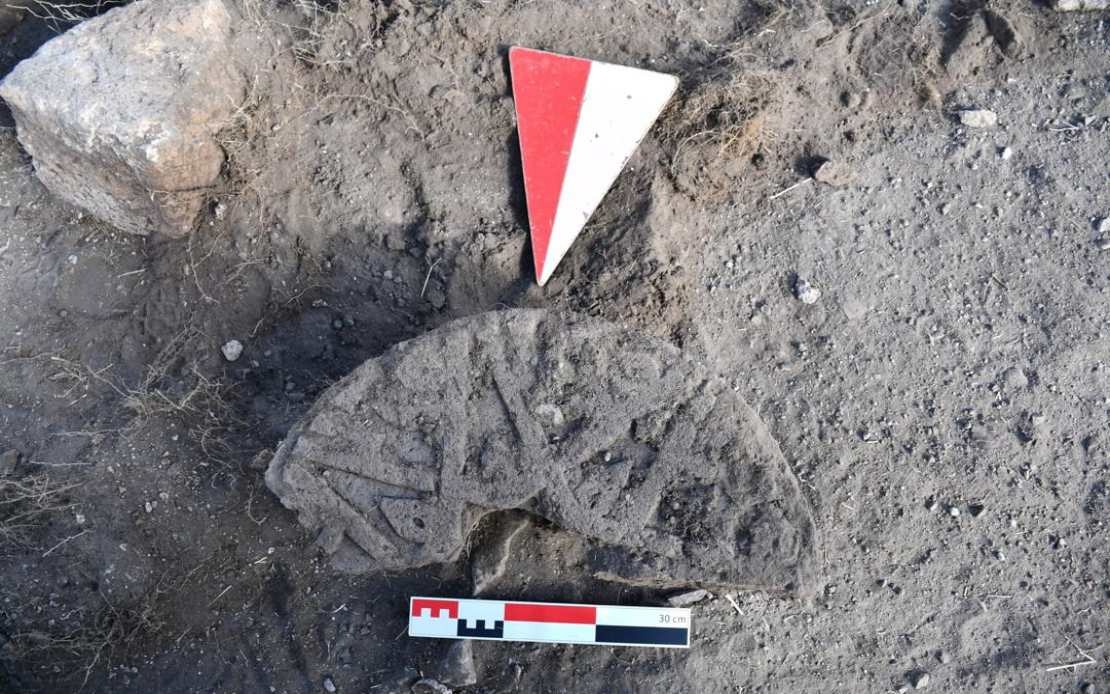
Turkish Culture and Tourism Minister Mehmet Nuri Ersoy announced Monday the discovery of an extraordinary stone artefact at Ani, the historic archaeological site in Kars province near the Turkish-Armenian border. The artefact bears the name of Prophet Muhammad inscribed in Kufic script—the earliest standardised form of Arabic calligraphy—appearing six times across its surface and offering archaeologists valuable new evidence about the religious and cultural landscape of medieval Anatolia.
The inscribed stone emerged during ongoing excavations at a Seljuk-era cemetery that research teams have been systematically investigating since 2021. According to Ersoy's statement shared on social media, the artefact is believed to originate from a Seljuk tomb tower, suggesting it held significance in burial practices and commemorative traditions of the period. The minister highlighted the artistic execution of the inscriptions, noting that three of the six instances appear within an intricately carved decorative band that frames an eight-pointed star—a motif commonly associated with Islamic geometric design and Seljuk architectural ornamentation.
Ani holds immense historical weight as a crossroads settlement along the ancient Silk Road, the vast network of trade routes connecting East and West. During its prominence in the tenth and eleventh centuries, the city functioned as the capital of the Bagratid Armenian kingdom, a period of considerable cultural and commercial flourishing. The strategic location transformed Ani into a cosmopolitan hub where merchants, pilgrims, and scholars intersected, facilitating the exchange of goods, ideas, and religious traditions. Following the Bagratid era, the site experienced successive periods of Byzantine, Seljuk, and Ottoman governance, with each empire leaving architectural and cultural imprints that complicate and enrich the archaeological record.
The Seljuk period, which lasted roughly from the eleventh to thirteenth centuries in Anatolia, marked a pivotal transformation in the region's religious demography and cultural expression. The discovery of this inscribed stone contributes to scholarly understanding of how Islamic devotional practices and artistic traditions became embedded in the physical landscape during this transitional phase. The prominence of Quranic calligraphy and prophetic names in funerary monuments reflected broader patterns of Islamic religious expansion and consolidation across Anatolia, a process that reshaped local identity and social hierarchies.
For regional specialists and museum professionals across Southeast Asia and beyond, such discoveries illuminate the interconnected histories of the Islamic world and demonstrate how material culture preserves evidence of religious syncretism and cultural adaptation. The Ani site itself represents layers of competing imperial claims and religious transformations, making each artefact potentially revelatory about coexistence, conversion, and community identity during periods of significant historical change. The careful documentation and contextualisation of finds like this inscribed stone contribute to a more nuanced understanding of how communities navigated religious and political transitions.
Ani's recognition as a UNESCO World Heritage Site in 2016 reflected international acknowledgement of its exceptional universal value and vulnerability. The site contains the remains of churches, mosques, fortification walls, and domestic structures spanning centuries, creating an open-air museum of architectural styles and building techniques. However, the border location and geopolitical tensions surrounding Turkish-Armenian relations have complicated conservation efforts and scholarly access, making each authorised excavation campaign a significant opportunity for data collection and preservation. The Seljuk cemetery project represents one of the more recent systematic efforts to document and interpret the site's archaeological riches within internationally recognised frameworks.
The Kufic script itself merits consideration as a historical marker. Employed primarily between the seventh and eleventh centuries, Kufic represents the earliest codified system of Arabic writing and appears predominantly in Quranic manuscripts, architectural inscriptions, and funerary monuments. Its presence on this Anatolian artefact confirms the rapid dissemination of standardised Islamic material culture into newly Islamicised territories, testifying to the administrative and religious infrastructure that Seljuk rulers established as they consolidated power. The specificity of having Prophet Muhammad's name repeated six times suggests both devotional intent and possibly functional purposes—such identification might have served apotropaic functions or marked ritual significance within the tomb structure.
For Malaysian and Southeast Asian audiences, the discovery resonates with broader narratives about Islamic historical geography and the remarkable reach of medieval Islamic civilisation. While Southeast Asia's Islamic heritage developed through maritime trade networks and gradual conversion patterns rather than Seljuk military expansion, understanding how Islam manifested materially in different regions and periods enriches appreciation of the faith's historical diversity. The artistic integration of prophetic names within geometric and architectural frameworks represents aesthetic traditions that later influenced decorative practices throughout the Islamic world, including in Malaysia and the broader region.
The ongoing excavations at Ani underscore the importance of sustained, disciplined archaeological work in documenting cultural heritage before sites face further degradation from environmental factors, conflict, or development pressures. Turkish authorities' investment in these investigations and their transparency in sharing findings with international audiences demonstrates commitment to knowledge production and heritage stewardship. Each artefact recovered contributes incremental but essential data points that specialists use to reconstruct daily practices, religious devotions, and social structures of medieval populations, slowly assembling a richer historical narrative from fragmentary material remains.

