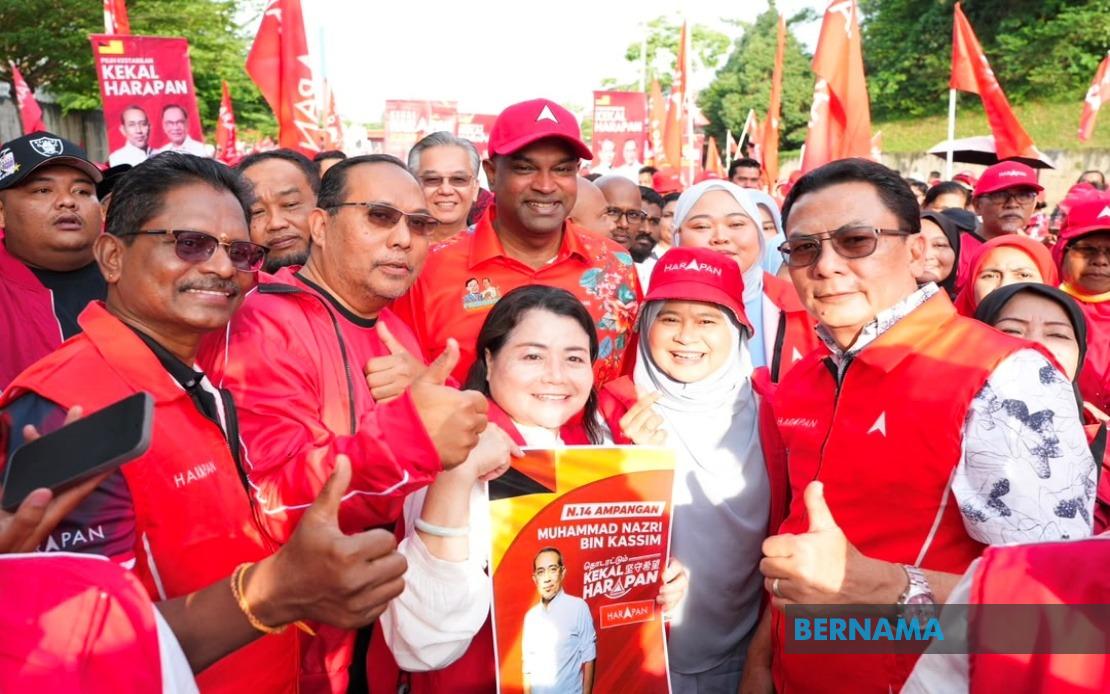
The Pakatan Harapan coalition demonstrated its electoral machinery and organisational readiness in Negeri Sembilan yesterday as senior party figures converged at nomination centres to publicly endorse their slate of candidates for the state election. Datuk Seri R. Ramanan, the PKR vice-president and Sungai Buloh Member of Parliament, led the high-profile showing of support at the Seremban City Council Building, where six candidates submitted their nomination papers ahead of the three-week campaign period.
Ramanan's presence at the nomination centre, flanked by DAP deputy secretary-general Steven Sim and other coalition representatives, underscored the importance PH places on retaining control of the 36-seat Negeri Sembilan State Legislative Assembly. The visible turnout of party machinery and grassroots supporters sent a signal to voters and rival coalitions alike that the ruling coalition intends to mount a vigorous campaign to defend its incumbency in the state. Such public shows of unity at nomination proceedings have become standard practice for major coalitions, serving both to energise party members and to project confidence to the electorate.
The six candidates receiving backing at the event represented PH's diverse multi-ethnic composition. Nor Azman Mohamad, Datuk Muhammad Nazri Kassim, Zarinna Abu Zarin, Chew Seh Yong, J. Arul Kumar, and Ho Weng Wah are contesting the Sikamat, Ampangan, Lenggeng, Lobak, Nilai, and Temiang seats respectively. This geographic spread across the state's constituencies reflects PH's strategy to contest widely, though the coalition will face challenges in several traditionally competitive heartland areas. The nomination of these candidates came after Negeri Sembilan's state assembly was dissolved on June 5, triggering the election process.
Ramanan's remarks at the nomination centre emphasised the importance of party grassroots mobilisation during the campaign phase. He noted that the size and enthusiasm of supporters present reflected deeper commitment within PH ranks to defend the state's administration. The PKR vice-president stressed that sustained engagement with voters and methodical constituency-level organising would be central to PH's election strategy. Such messaging is standard for ruling coalitions seeking re-election, but it also reflects genuine concerns about voter fatigue and the effectiveness of campaign machinery in translating organisational strength into actual votes.
The official campaign period commenced immediately following the conclusion of nominations, giving PH and its opponents roughly three weeks to contest for voter support. The Election Commission has scheduled early voting for July 28, with the main polling day set for August 1. This condensed timeframe means campaigns must move quickly from initial candidate launches to substantive policy messaging and ground-level voter contact. For regional observers, the Negeri Sembilan election serves as an important bellwether for how Malaysian voters are responding to the current PH administration's performance, particularly on economic management and service delivery issues that resonate across Southeast Asia's middle-income states.
The timing and location of party leaders' presence at nomination centres carries symbolic weight in Malaysian politics. By appearing personally to support candidates, senior figures like Ramanan demonstrate confidence in their electoral prospects while also providing a morale boost to campaign volunteers and supporters. For the DAP, represented by Steven Sim's attendance, the show of solidarity reinforces the coalition's commitment to defending seats in Negeri Sembilan, where the party holds parliamentary representation but faces varying levels of support across state constituencies.
Negeri Sembilan's political landscape presents distinct challenges for any governing coalition. The state has historically been competitive, with voter preferences shifting based on bread-and-butter issues including employment, local infrastructure, and cost of living concerns. The 36-seat assembly means that PH's path to victory does not require commanding majorities in most constituencies, but rather efficient allocation of campaign resources to target winnable seats while defending existing strongholds. Ramanan's emphasis on constituency-level machinery strength directly addresses this requirement for granular electoral performance.
For Malaysian voters and the broader Southeast Asian audience, state elections like Negeri Sembilan's provide important signals about coalition stability and voter sentiment between federal election cycles. PH's continued viability in state-level contests affects the coalition's prospects for the eventual federal election, while also influencing intra-coalition dynamics between PKR, DAP, and other member parties. The visible cooperation between PKR and DAP at the nomination centre suggests cohesion, though internal coalition tensions over portfolio distribution and policy direction have surfaced periodically since PH's 2018 federal victory and subsequent challenges.
The emphasis on party machinery and grassroots support reflects an understanding that modern Malaysian elections, though featuring significant media coverage and national-level narratives, are ultimately decided through sustained contact between voters and campaign representatives at the local level. The degree to which PH's coalition partners can effectively mobilise supporters across diverse urban, suburban, and rural constituencies in Negeri Sembilan will significantly influence the election outcome. Ramanan's call for tireless engagement throughout the campaign period underscores this reality.
Looking forward, the Negeri Sembilan election will test PH's ability to maintain voter confidence amid broader economic uncertainties affecting Malaysia and the wider region. The state's mixed urban-rural character and its strategic location in Malaysia's central corridor make it an important electoral battleground. Success for PH would reinforce the coalition's electoral viability and provide momentum heading into future electoral contests, while any setbacks could invite questions about voter confidence in the administration's handling of national challenges.

