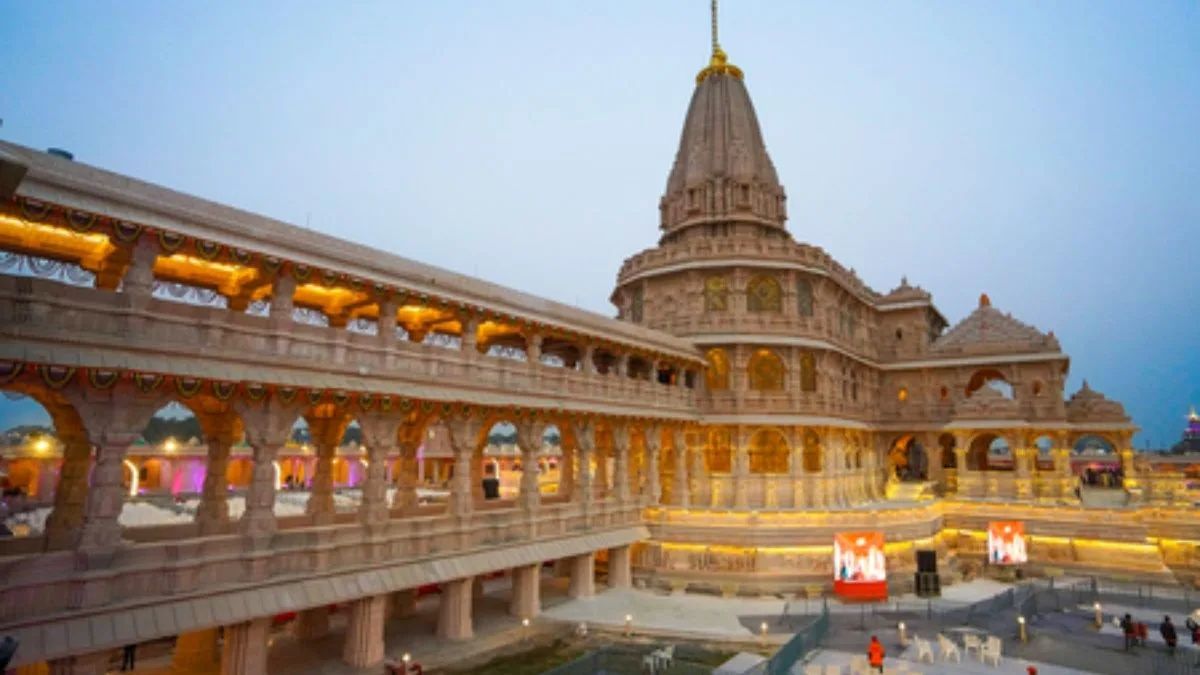
A significant twist has emerged in the Ram Temple donation scandal unfolding in India's Uttar Pradesh. Investigators are now considering the possibility that perpetrators melted stolen gold ornaments and jewellery into gold biscuits as part of an elaborate scheme to obliterate evidence and prevent authorities from matching recovered metal against the original devotional offerings. This investigative angle gained traction after exhaustive searches failed to locate the missing valuables, prompting authorities to reassess how the accused may have disposed of their purloined goods.
The suspicion centres on the conversion of identifiable artefacts into anonymous bullion. When precious ornaments remain in their original form, they retain distinguishing characteristics that can be traced back to specific donors and documented temple records. However, once melted down into standardised biscuits or ingots, the metal becomes virtually impossible to differentiate from legitimately acquired precious metals. This operational approach would have allowed the accused to process stolen items through official channels without triggering suspicion, transforming traceable religious offerings into indistinguishable commodity bullion that could be sold or transferred without arousing scrutiny.
The Special Investigation Team has substantially broadened its investigative remit in response to these developments. Beyond pursuing evidence of missing cash, the SIT has pivoted toward comprehensively documenting the journey of precious metals through the temple's acquisition, storage and processing systems. During an on-site visit to the Ram Temple complex, investigators performed prayers at the Ram Lalla shrine before conducting formal questioning of temple in-charge KD Babu regarding the institutional procedures governing how ornaments and valuable devotional contributions were initially received, subsequently stored and systematically documented throughout the administrative chain.
The investigation has extended into examining the temple trust's official documentation and institutional records. Specifically, the SIT has demanded comprehensive files detailing precious ornaments, monetary donations and all financial transactions conducted with India's government-operated Printing and Minting Corporation of India, commonly referred to as the Mint. This documentary review aims to reconstruct the complete audit trail of gold and silver that was transferred to banking institutions and the Mint facility, thereby enabling investigators to comprehend exactly how precious metals underwent processing and accounting procedures within the institutional framework.
A critical oversight has apparently surfaced within the temple trust's internal review mechanisms. According to sources providing information to investigators, the Shri Ram Janmabhoomi Teerth Kshetra Trust demonstrated consistent attention to scrutinising cash donations and revenue streams during regular quarterly administrative meetings. Conspicuously absent from these deliberations, however, were substantive examinations addressing the physical stock, current valuation assessments and comprehensive inventory accounting of accumulated gold, silver and supplementary valuable religious offerings. This administrative gap may have created opportunities for diversion or misappropriation to proceed without adequate institutional oversight or detection.
Examining historical records reveals quantifiable discrepancies that deepen the investigation's scope. Documents under SIT review indicate that during the temple's construction commencement period, the institutional trust transferred 9.44 quintals, equivalent to 944 kilograms, of silver to the government-managed Mint specifically for metallurgical testing and processing designed to verify the quality and quantity of precious metals received through devotional contributions. Earlier statements provided by Champat Rai, the trust's former general secretary, indicated that devotees had contributed approximately 13 quintals of silver alongside roughly 20 kilograms of gold. These mathematical variances between stated donations and processed quantities have become central to the SIT's investigative focus.
The investigation's subsequent phase will encompass a comprehensive financial audit addressing the temple trust's fiscal accounts spanning the previous five years. This retrospective review will encompass detailed analysis of expenditures connected to temple construction while simultaneously examining documentation related to gold, silver, jewellery and supplementary valuable religious offerings. This financial dimension represents a logical progression that will either validate institutional accounting integrity or reveal systematic financial manipulation spanning the institution's operational period.
Eight individuals currently face legal proceedings in connection with this scandal, with all having been taken into custody following formal charges. The First Information Report was formally registered at Ayodhya Kotwali police station on June 25, initiated through a complaint submitted by Krishna Mohan, an elected member of the Shri Ram Janmabhoomi Teerth Kshetra Trust board. The accused encompass a cross-section of institutional personnel and external associates, including Ramshankar Yadav; trust employees Anukalp Mishra, Lavkush Mishra, Manish Yadav, Karunesh Pandey, Ramashankar Mishra and Avinash Shukla; alongside Subhash Srivastava, a retired banking sector professional.
The investigation's initiation followed preliminary findings presented by a three-member Special Investigation Team that identified alleged procedural violations operating across multiple institutional levels within the temple administration. These systemic irregularities suggested organisational dysfunction extending beyond isolated individual misconduct, indicating instead structural vulnerabilities that may have facilitated or enabled the unauthorised diversion of valuable religious contributions. This institutional dimension adds gravity to the allegations and suggests potential failures in governance and internal control mechanisms.
As investigative activities have progressed, the SIT has conducted formal questioning of several high-ranking figures including Champat Rai, the departed trust general secretary; Anil Mishra, a former trustee; and Gopal Rao, an operational temple official. The gravity of the allegations has prompted institutional consequences, with both Rai and Mishra submitting formal resignation letters awaiting formal consideration during a scheduled trust meeting originally projected for July 6. These resignations reflect the reputational damage and institutional fallout triggered by the scandal's emergence.

