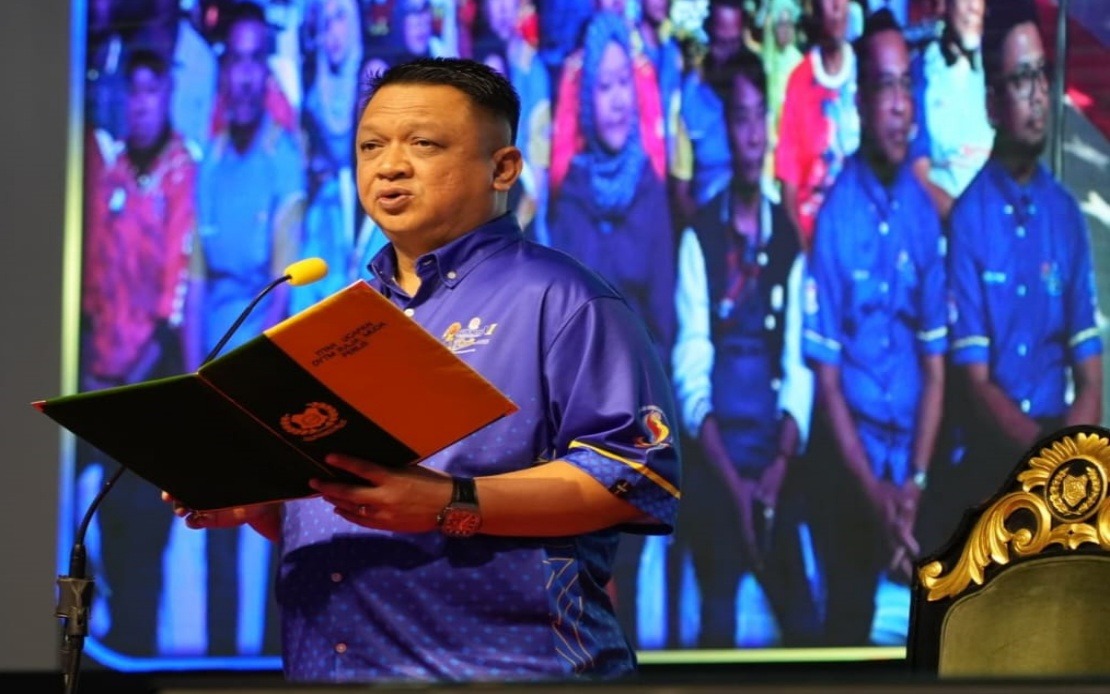
Tuanku Syed Faizuddin Putra Jamalullail, Raja Muda of Perlis, has laid out an ambitious strategic blueprint for Majlis Amanah Rakyat (MARA) that signals the agency's commitment to reinvention in an era of rapid technological disruption. Speaking at the official opening of the 11th Sukan MARA Se-Malaysia (SUKMAS) in Kangar on August 30, the royal patron articulated three interconnected thrusts designed to reorient MARA's operations and mindset as it navigates an increasingly complex economic landscape.
The first pillar of this vision centres on technological embrace, with particular emphasis on artificial intelligence. Rather than positioning MARA as a passive respondent to technological change, Tuanku Syed Faizuddin Putra urged the agency's personnel to adopt a proactive stance—becoming architects of innovation rather than merely observers of it. This distinction carries significant weight, particularly for an institution tasked with developing Malaysia's entrepreneurial talent. By advocating for AI integration across MARA's functions, the Raja Muda signalled recognition that competitive advantage in the 21st century will increasingly depend on organisations that harness computational capabilities for enhanced efficiency, creative problem-solving and strategic foresight.
The implications of this technological push extend beyond operational efficiency. MARA's roughly 3,000 employees nationwide must fundamentally reconceptualise their relationship with digital tools. For an agency historically focused on business skills training and financial support, the integration of AI represents not merely an operational upgrade but a philosophical shift. MARA personnel must become comfortable translating emerging technologies into practical business applications that their clients—predominantly small and medium-sized enterprises—can adopt. This requirement for technological fluency among MARA staff will likely necessitate comprehensive retraining programmes and a cultural transformation within the organisation.
The second strategic thrust addresses MARA's core mandate: nurturing Malaysian entrepreneurship with global ambitions. Tuanku Syed Faizuddin Putra emphasised the imperative to develop entrepreneurs characterised by innovation, resilience and international market penetration capabilities. This orientation acknowledges a persistent challenge in Malaysia's entrepreneurial ecosystem—the tendency for successful local businesses to remain primarily domestic-focused. By actively cultivating entrepreneurs equipped with the knowledge, networks and confidence to compete internationally, MARA positions itself as instrumental in Malaysia's economic diversification and value-chain advancement. The focus on building globally competitive enterprises carries particular relevance for Southeast Asia, where regional integration through frameworks like ASEAN continues to create cross-border commercial opportunities.
The cultivation of internationally ambitious entrepreneurs requires MARA to fundamentally recalibrate its support structures. Beyond conventional business training and microfinance, this implies facilitating export competitiveness, supporting participation in regional and international trade mechanisms, and fostering partnerships with multinational supply chains. The challenge is particularly acute given Malaysia's competitive positioning within ASEAN, where Singapore's established financial hubs and Thailand's manufacturing prowess create formidable competition. MARA's role in identifying and nurturing Malaysian ventures capable of competing at scale therefore assumes heightened strategic importance for national economic resilience.
The third strategic axis addresses organisational leadership and decision-making architecture. Tuanku Syed Faizuddin Putra called for MARA personnel capable of bold leadership, rapid decision-making and strategic conceptualisation—qualities increasingly essential in rapidly evolving markets. This emphasis on transformational rather than merely transactional leadership reflects awareness that yesterday's best practices often become tomorrow's competitive liabilities. Future MARA leaders must possess not only the authority to implement decisions swiftly but also the strategic intelligence to anticipate market shifts and position the organisation ahead of disruption. The distinction between leaders who merely respond to change and those who catalyse transformation is particularly apposite for an institution serving as an economic development arm of the Malaysian state.
Implementing this leadership vision will require deliberate succession planning, executive development programmes, and organisational structures that empower decision-making at multiple hierarchical levels. The bureaucratic constraints that often characterise government agencies must be thoughtfully balanced against the agility required to serve dynamic entrepreneurial communities. This tension—between institutional accountability and operational flexibility—will likely define MARA's success in executing the Raja Muda's strategic vision.
Whilst the strategic directives emphasise forward-looking organisational transformation, the SUKMAS tournament itself serves a complementary institutional purpose. The biennial sporting event, which ran through September 3 and featured 15 different sporting disciplines, drew 3,000 athletes and officials from MARA's 14 state-level teams across Malaysia. Beyond the surface-level recreational benefits, such gatherings function as vital institutional bonding mechanisms, particularly within sprawling government organisations spanning multiple states and operating environments. By bringing together MARA personnel from diverse geographical locations, departmental backgrounds and organisational ranks, SUKMAS creates informal networking and trust-building opportunities that often translate into enhanced inter-departmental collaboration and institutional cohesion.
The presence of Raja Puan Muda of Perlis Tuanku Dr Hajah Lailatul Shahreen Akashah Khalil and MARA Director-General Datuk Seri Zulfikri Osman underscored the political and administrative priority accorded to this institutional renewal agenda. The multisectoral attendance reflected recognition that MARA's evolution carries implications extending beyond the agency itself—affecting Malaysia's entrepreneurial ecosystem, employment generation, regional competitiveness and ultimately, national economic trajectory.
MARACould's strategic repositioning as outlined by Tuanku Syed Faizuddin Putra reflects broader patterns within Southeast Asian institutional landscapes, where traditional development agencies are increasingly pressured to demonstrate relevance within technologically disruptive environments. MARA's embrace of artificial intelligence, emphasis on global entrepreneurial ambitions, and commitment to transformational leadership collectively signal institutional maturation and adaptive capacity. The success with which these strategic thrusts translate into tangible changes in how MARA operates, whom it recruits and develops, and what outcomes it achieves will substantially influence not only the agency's institutional trajectory but also Malaysia's competitive positioning within an increasingly technology-driven regional economy.
The coming years will reveal whether MARA can effectively bridge the conceptual chasm between its traditional institutional identity—focused on providing financial and training support to budding entrepreneurs—and its reimagined role as a catalyst for technological adoption and global competitiveness. This transformation requires not merely policy reformulation but fundamental shifts in organisational culture, workforce capabilities and strategic priorities. The Raja Muda's vision provides the aspirational blueprint; implementation will determine whether MARA genuinely emerges as an institution capable of shaping Malaysia's economic future rather than simply adapting to forces beyond its control.

