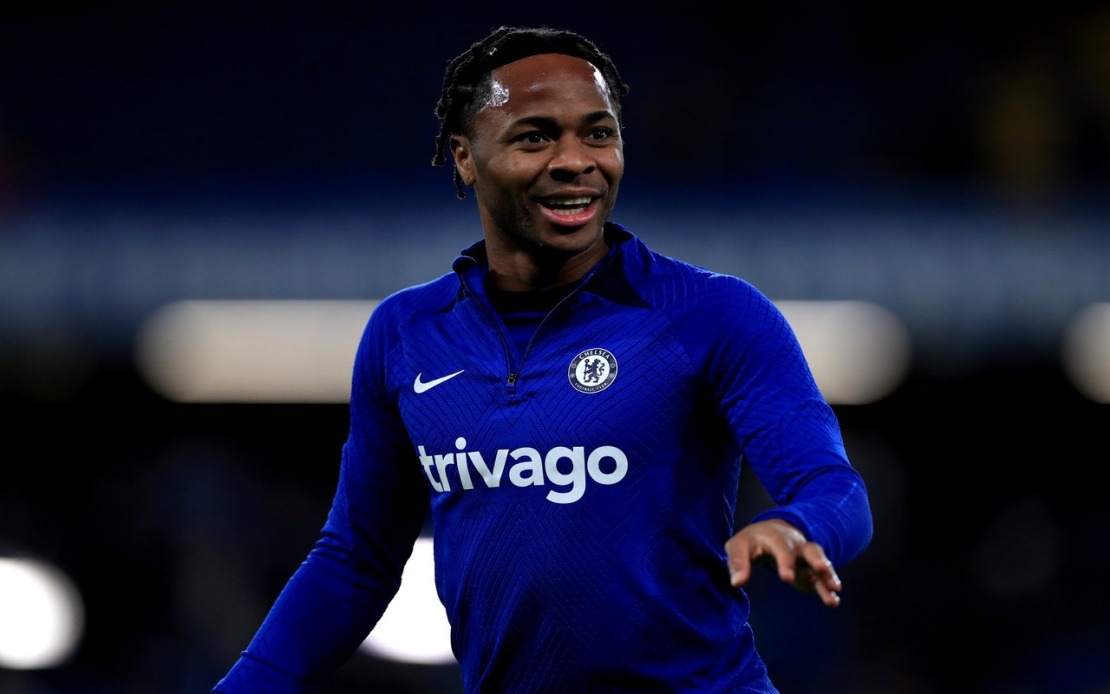
Raheem Sterling, the accomplished England international and former Manchester City forward, now faces serious motoring charges stemming from a highway collision that occurred on the M3 motorway in southern England. Hampshire and Isle of Wight Constabulary announced that Sterling has been charged with dangerous driving, possession of nitrous oxide for inhalation purposes, and failing to provide a specimen following the single-vehicle accident that took place on May 28 near the Minley interchange on the M3 southbound.
The 31-year-old footballer from Berkshire is scheduled to appear before Basingstoke Magistrates' Court on September 15 to address these charges. According to police records, the collision involved only Sterling's vehicle with no other cars and no injuries reported at the scene. The charges represent a significant development for the prominent athlete, who has maintained a high public profile throughout his professional career both on and off the pitch.
Sterling's trajectory through English football has been marked by considerable achievement and notable controversy. Beginning his career at Queens Park Rangers' academy system, he progressed to Liverpool where he established himself as a professional footballer. His move to Manchester City in 2015 proved to be a pivotal moment, establishing him as a central figure in the club's dominant period during the late 2010s and early 2020s. At the Etihad Stadium, Sterling accumulated four Premier League titles, five League Cups, and won the FA Cup in 2019, becoming one of English football's most decorated players of his generation.
At international level, Sterling earned 82 caps for England and scored 20 goals, playing instrumental roles in two major tournament campaigns. He featured prominently in Gareth Southgate's squad that reached the semifinals of the 2018 World Cup in Russia and was a key contributor to England's remarkable run to the Euro 2020 final, which took place in 2021 following postponement due to the pandemic. These achievements cemented his status as one of modern England's important attacking talents.
However, Sterling's career trajectory in club football has become less straightforward in recent years. He relocated to Chelsea in 2022, a move that represented one of the summer's significant transfers. His time at Stamford Bridge proved disappointing relative to expectations, with the forward struggling to command regular starting opportunities. This lack of consistent playing time prompted Chelsea to arrange a loan move for the 2024-25 season, with Sterling joining Arsenal to seek competitive football and rebuild his confidence.
More recently, Sterling embarked on a short-term arrangement with Dutch Eredivisie side Feyenoord, bringing his experience to continental football. This peripatetic phase of his career contrasts sharply with his settled years at Manchester City, raising questions about his trajectory as he enters the later stages of his playing career.
Beyond his on-field accomplishments, Sterling has gained recognition for his contributions to social causes, particularly his sustained advocacy against racial discrimination in sport. In the 2021 Queen's Birthday Honours, the footballer was appointed Member of the Order of the British Empire (MBE) in recognition of his services to racial equality in sport. This honour reflected Sterling's lengthy and vocal campaign against racism and discrimination, campaigns that have been particularly visible during matches when England players have undertaken the knee gesture as a statement against intolerance.
Sterling's advocacy work came against a backdrop of significant controversy surrounding fan behaviour at English football matches. His efforts to combat discrimination intensified during a period when certain England supporters drew criticism for booing players taking the knee, an anti-racism gesture that became a flashpoint in broader societal discussions about tolerance and inclusion in sport. Sterling's willingness to speak publicly and forcefully on these matters established him as one of the most prominent athlete voices in British football addressing racial justice.
The current legal matter represents an unexpected development in Sterling's public narrative, introducing a dimension quite distinct from his celebrated sporting career and social activism. The charges he faces carry potential legal ramifications that extend beyond the football pitch, with dangerous driving charges representing serious traffic offences in the United Kingdom's legal system. The involvement of nitrous oxide, commonly associated with recreational drug use, adds another dimension to the case that could affect his public standing and sponsorship relationships.
For Malaysian and Southeast Asian sports enthusiasts, this situation underscores how even globally recognised athletes face serious legal consequences for traffic violations. The case also illustrates how quickly athlete reputations can shift when off-field issues emerge, particularly in an era of heightened media scrutiny and social media commentary. Sterling's position as an MBE holder and celebrated advocate for social justice adds complexity to the public reception of these charges.
The September 15 court appearance will prove a critical juncture in Sterling's immediate future, both legally and professionally. The outcome of proceedings could have significant implications for his remaining playing career, his endorsement portfolio, and the broader narrative surrounding one of England's most accomplished contemporary footballers. The case will likely draw considerable attention given Sterling's profile and his previous prominence in discussions about player welfare, governance, and social responsibility in modern football.

