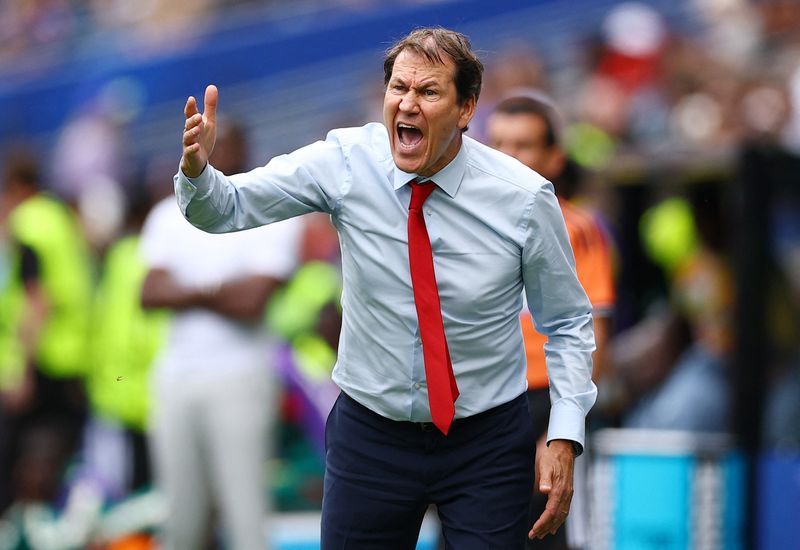
Controversy erupted at the World Cup when Belgium coach Rudi Garcia characterised Senegal as one of "those teams" prone to losing tactical structure late in matches, sparking renewed examination of how racially coded commentary permeates football discourse at the sport's highest level. The controversy highlights a persistent problem: language framed as technical analysis often reproduces centuries-old stereotypes that portray Black athletes and African teams as naturally gifted physically but tactically unsophisticated and emotionally unstable under pressure.
Garcia made his comments following Belgium's dramatic comeback victory over Senegal on Wednesday. Two days later, he issued a clarification on social media, stating his remarks concerned teams inexperienced at managing leads in major tournaments and could apply to any regional squad. Yet critics contend his framing drew directly from a well-documented historical pattern that casts African footballers through a lens of primitivism and instinct rather than intellect and preparation. This interpretive framework, scholars argue, extends far beyond football commentary into broader social and economic structures affecting Black athletes' opportunities and advancement.
Ben Carrington, professor of journalism and sociology at USC Annenberg, contextualises Garcia's language within colonial frameworks that have historically projected "animalistic tendencies" onto Black populations. Carrington's research explores how such stereotypes become embedded in supposedly neutral sports analysis. "It is deeply racist in terms of the reproduction of racialized stereotypes about those teams, those African teams who lack the ability to control a game, to control themselves," he explained, tracing these characterisations to entrenched power dynamics rather than observable reality.
Peter Alegi, a history professor at Michigan State University specialising in African football, emphasised that such commentary threatens to undo decades of progress by African nations in reshaping their continental image. He warned that a single match, if interpreted through the lens of outdated stereotypes, could reverse the goodwill and accomplishments African teams have built. The hosting of the 2010 World Cup in South Africa, he noted, demonstrated African capacity to organise and elevate the global game, yet casual commentary can quickly resurrect tired narratives of African inferiority.
Academic research substantiates these concerns about disparate coverage. A 2018 World Cup study by researchers at Leicester and Coventry universities found that 70 percent of praise directed at Black players emphasised physical attributes such as speed and power, compared to just 18 percent for white players. Conversely, less than 20 percent of commentary on Black players focused on learned skills, character, or cognitive abilities, whilst 73 percent of white player praise centred on these dimensions. Matthew Hughey, a sociology professor at the University of Connecticut specialising in race and sport, traces these patterns to "racial essentialism"—the false belief that race is a biological category with inherent traits—and "biological determinism," the notion that these traits predetermined outcomes. Such stereotypes intensified during the twentieth century as Black athletes began achieving sporting success, coinciding with intense resistance to racial integration.
The World Cup has witnessed multiple such incidents. German pundit Bastian Schweinsteiger remarked before a Germany versus Ivory Coast match that the Germans must prepare for Ivorian "African football," described as "unorthodox," "wild," and less tactical than European approaches. Ivory Coast coach Emerse Fae labelled the comments racist, though Schweinsteiger defended himself as merely analysing playing style. Similarly, Serbian commentator Rade Bogdanovic apologised after questioning the focus and stamina of Belgium's Black players during a June 21 match against Iran, effectively attributing technical shortcomings to racial characteristics.
Leon Mann, founder of Black Collective Media in Sports, an organisation advising broadcasters on diversity and mentoring underrepresented individuals entering the industry, described Schweinsteiger's remarks as "ignorant and based on stereotypes" yet argued such controversies should catalyse meaningful change in coverage practices. Mann emphasised the material consequences of such language: "People are not being given jobs because of terms like 'wild' and 'unsophisticated', not being placed in leadership positions, not being given jobs to feed their families, because of these ingrained views." The problem extends beyond commentary into hiring, promotion, and career advancement across sports organisations.
Briana Scurry, the legendary American goalkeeper whose penalty save in the 1999 Women's World Cup final inspired generations of female players, now sits on FIFA's 16-member Players' Voice Panel combatting racism. Scurry recalled that 1990s media coverage of her performance focused overwhelmingly on her athleticism and physical strength rather than her technical skill, positioning and tactical intelligence. She observes the same pattern persisting in contemporary coverage of Black players, describing it as fundamentally demeaning: "It's a kind of conversation around Black players that does not give them the credit of the fact that they have intelligence and skill." Her experience demonstrates how these stereotypes have shaped Black athletes' professional narratives for decades.
FIFA has introduced various anti-racism initiatives in recent years, including penalising racist conduct, establishing educational programmes, and convening an advisory panel of ethnically diverse former players. However, scholars and advocates emphasise the inadequacy of current efforts. Carrington argues that meaningful change requires sustained commitment: "We need to have constant forms of anti-racism education and campaigns to make sure the beautiful game really is beautiful, not just a slogan that FIFA likes to use for marketing purposes, but a beautiful game in which diverse populations, different countries come together to celebrate sport and football."
For Malaysia and Southeast Asia, where football remains a dominant cultural force and international teams increasingly feature players of diverse ethnicities, these patterns carry particular relevance. As regional leagues develop and Malaysian players compete internationally, understanding how media narratives shape athlete perception and opportunity becomes crucial. The persistence of such stereotypes threatens to limit career prospects for talented players and perpetuate hierarchies in how different playing styles and nationalities are valued. Regional broadcasters and commentators bear responsibility for interrogating inherited assumptions about different football cultures and ensuring coverage reflects technical competence rather than racial stereotypes, ultimately enriching football discourse across Asia.

