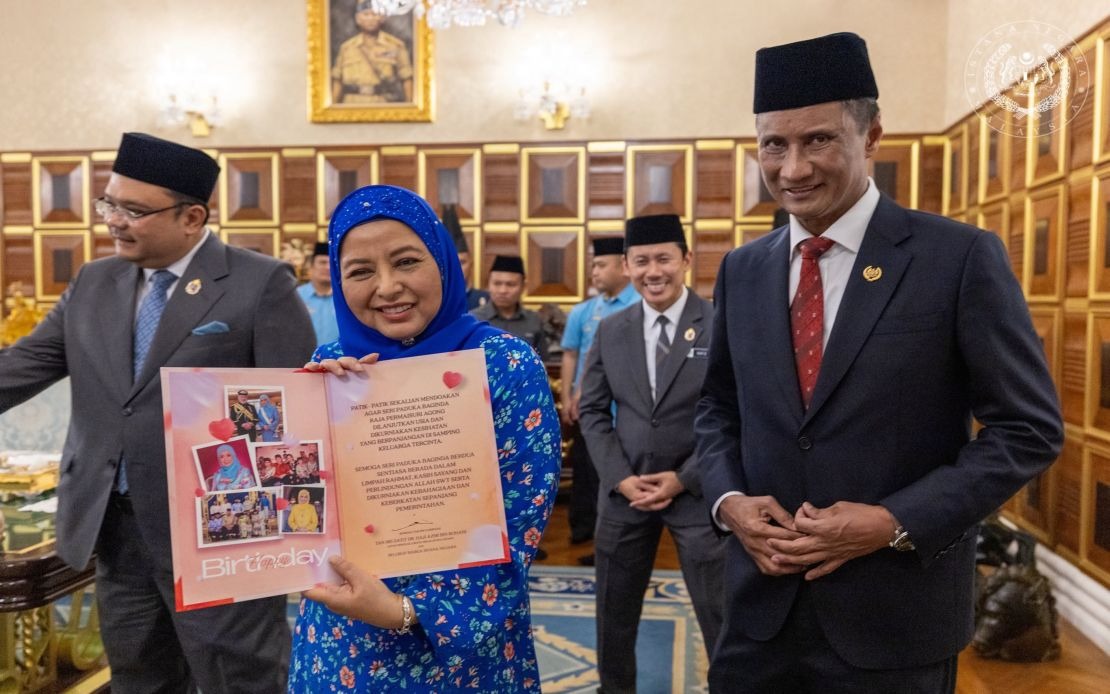
Her Majesty Raja Zarith Sofiah, Queen of Malaysia, received a formal courtesy call from high-ranking Istana Negara officials today to mark her birthday, underscoring the ceremonial traditions that remain central to Malaysia's constitutional monarchy. The meeting at Istana Bukit Serene in Johor saw the participation of Tan Sri Dr Azmi Rohani, the Comptroller of the Royal Household, alongside Datuk Paduka Maharaja Lela Datuk Azuan Effendy Zairakithnaini, who holds the position of Grand Chamberlain—one of the most senior administrative roles within the royal institution.
The announcement was shared through Sultan Ibrahim Sultan Iskandar's official Facebook page, reflecting the contemporary blend of traditional court protocols and modern communication channels employed by Malaysia's royal household. The venue selection of Istana Bukit Serene, the official royal residence in Johor, carries particular significance given that Sultan Ibrahim Sultan Iskandar holds the concurrent position of Sultan of Johor, making this state the geographic and ceremonial heart of Malaysia's federal monarchy system.
Accompanying the Comptroller on this formal visit was Puan Sri Dr Noor Azizah Abdul Latif, the wife of Tan Sri Dr Azmi Rohani, whose presence alongside her husband reflects the inclusive nature of such occasions within royal circles. The composition of the delegation itself demonstrated the deliberate representation of key institutional figures within the palace administration, suggesting that the visit carried the formal sanction and participation of the entire senior management apparatus of Istana Negara.
During the meeting, Her Majesty graciously accepted ceremonial gifts presented by the senior management and broader staff of Istana Negara, including a specially prepared cake and yellow glutinous rice. These gifts, while seemingly simple, represent important cultural and symbolic elements within Malaysian royal tradition—the glutinous rice in particular carries significance in Malay-Muslim ceremonial contexts, and the colour yellow itself holds royal connotations within traditional Malay custom and protocol.
On behalf of all members of the Istana Negara administration and support staff, Tan Sri Dr Azmi Rohani formally conveyed collective well-wishes for the Queen's good health, continued well-being, and happiness. Such ceremonial articulations serve both as personal expressions of respect and as formal institutional benedictions, emphasising the hierarchical yet familial relationship that characterises Malaysia's royal administration.
The birthday courtesy call tradition represents a significant component of Malaysia's constitutional monarchy framework, where formal acknowledgment of royal milestones through structured ceremonial visits reinforces both the symbolic authority of the institution and the devotion of state apparatus to the monarchy. These occasions provide opportunities for the palace administration to reaffirm its institutional unity and commitment to royal service.
Queen Raja Zarith Sofiah has served in her role as Malaysia's Queen since Sultan Ibrahim Sultan Iskandar ascended to the federal throne in 2023, following the completion of his predecessor's tenure. Her position within Malaysia's unique rotating monarchy system—where the throne passes among the hereditary rulers of the constituent states—represents a specific constitutional arrangement that distinguishes Malaysia from other monarchies in the Commonwealth and Asia more broadly.
The ceremonial importance of such birthday observances within palace circles cannot be understated, particularly in the Malaysian context where the institution of the monarchy remains central to questions of national identity and constitutional legitimacy. Birthday courtesy calls from senior officials constitute formal recognition of the Queen's position within the constitutional order and the nation's ceremonial hierarchy.
For Malaysian observers of royal protocol and those interested in the functioning of the federal monarchy, such occasions offer insight into the continuing relevance of formal court traditions in contemporary governance. While Malaysia has modernised substantially across institutional, technological, and democratic dimensions, the ceremonial framework surrounding the monarchy remains notably traditional in character, reflecting continuity with pre-colonial and colonial-era court practices.

