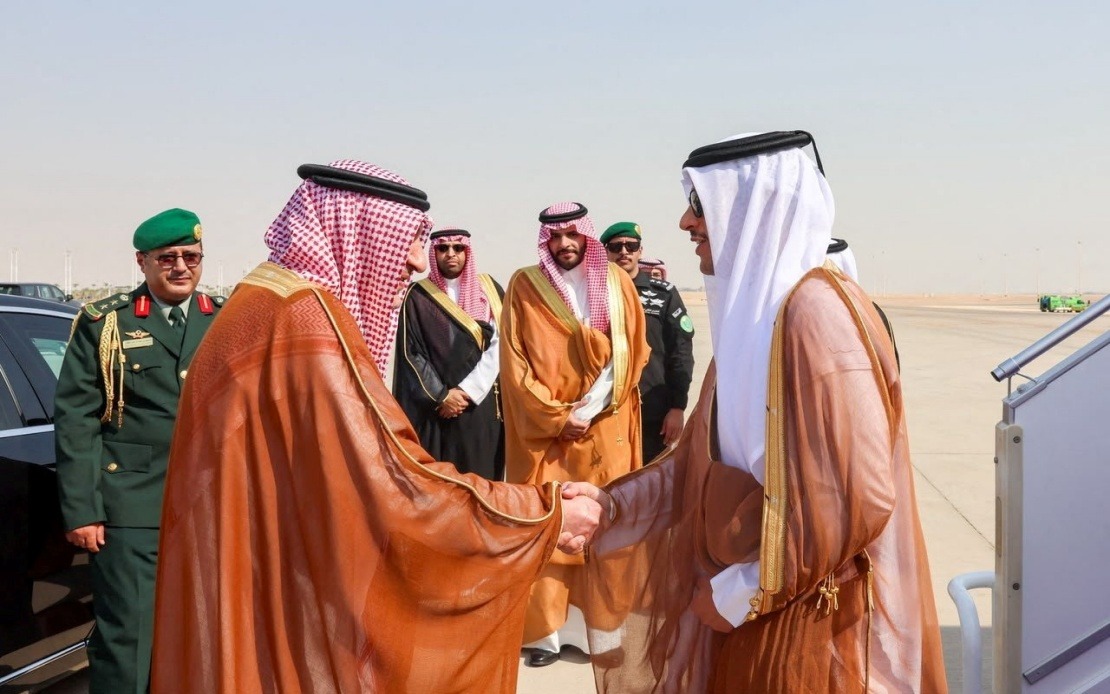
Qatar's Prime Minister Sheikh Mohammed bin Abdulrahman bin Jassim Al Thani travelled to Saudi Arabia this week for high-level discussions aimed at reducing tensions across one of the world's most volatile regions. The state visit to Riyadh underscores the renewed commitment by two major Gulf powers to address mounting security challenges through sustained diplomatic engagement rather than military escalation.
The visit carries particular significance given the turbulent geopolitical landscape surrounding the Gulf states. Sheikh Mohammed, who doubles as Qatar's foreign minister, held extensive talks with Saudi Arabia's Foreign Minister Faisal bin Farhan to explore avenues for defusing regional conflicts and strengthening bilateral cooperation. Both nations emphasised their dedication to resolving disputes primarily through dialogue rather than confrontation, signalling a shared preference for measured diplomatic responses to the complex challenges facing the broader Middle East.
A central theme of the discussions involved reinforcing mechanisms for regional stability. The two officials stressed the critical importance of safeguarding maritime navigation throughout the Arabian Gulf and the Red Sea, crucial waterways that handle substantial global trade volumes. Any disruption to these shipping lanes carries immediate consequences not just for the Gulf region but for international commerce, making their protection a mutual priority for Saudi Arabia and Qatar despite their historical differences.
The meetings also addressed the need for coordinated action among regional and international stakeholders to prioritise sustained dialogue over confrontational approaches. Both nations recognised that unilateral actions by individual states tend to intensify rather than resolve tensions, and that problems affecting Gulf security require collective problem-solving frameworks. This perspective reflects a maturation in how regional powers are approaching their security architecture following years of intra-Gulf friction.
The backdrop to these discussions involves the escalating tensions between Iran and the United States, a situation that directly impacts Saudi Arabia and its neighbours. As a longstanding American ally, Saudi Arabia faces particular pressure to balance its strategic relationship with Washington against its interest in maintaining relative stability within the broader region. Qatar's engagement in these discussions suggests both nations recognise they cannot afford to remain passive observers as external powers manoeuvre for influence across the Gulf.
Saudi Deputy Foreign Minister Waleed bin Abdulkarim Al-Khereiji formally received Sheikh Mohammed upon his arrival in Riyadh, demonstrating the ceremonial importance accorded to the visit. The official welcome protocol indicated that Riyadh viewed this engagement as substantially significant, contrary to the sometimes-brittle relations that have characterised Gulf state interactions in recent years. Such formal gestures serve important functions in diplomatic contexts, signalling to both domestic and international audiences the seriousness with which host and visiting nations regard their discussions.
The absence of announced details regarding the visit's precise duration suggests the discussions may extend beyond simple bilateral meetings. Extended visits typically indicate deeper engagement on complex issues that require sustained negotiation rather than quick ceremonial exchanges. This pattern suggests both nations intended to move beyond surface-level discussions to address substantive policy matters affecting their mutual interests and regional security architecture.
For Malaysia and other Southeast Asian nations with significant economic interests in Gulf stability, such diplomatic developments merit close attention. Any escalation of tensions in the Arabian Gulf would reverberate through global supply chains affecting energy prices, shipping costs, and trade flows that touch Malaysia's import-export dependent economy. Malaysian businesses operating in or trading with Gulf states also face heightened risks during periods of regional instability, making de-escalation efforts by major Gulf actors beneficial for Malaysian interests.
The emphasis on maritime security during these talks reflects growing international concern about the vulnerability of critical shipping corridors. Recent incidents and escalating rhetoric have raised concerns among shipping companies and energy traders about the physical safety of vessels transiting the region. Both Qatar and Saudi Arabia have substantial stakes in maintaining these sea lanes' security, given their dependence on global trade and energy exports that move through these waterways.
The diplomatic tone evident in official statements from both sides suggests a shared understanding that military posturing carries risks neither nation can comfortably absorb. Qatar's position as a neutral mediator in regional disputes, combined with Saudi Arabia's role as the de facto regional leader, creates a potential foundation for broader de-escalation efforts. When these two powers align on the desirability of dialogue and restraint, they send important signals to other regional actors about preferred approaches to conflict resolution.
Beyond the immediate bilateral relationship, these discussions contribute to broader patterns of engagement that could eventually reshape Gulf regional relations. The willingness of both nations to invest diplomatic effort in addressing tension suggests recognition that mutual security depends on restraint and communication rather than arms races or hostile posturing. Such patterns, when reinforced through repeated high-level engagement, can gradually shift regional dynamics toward greater stability.

