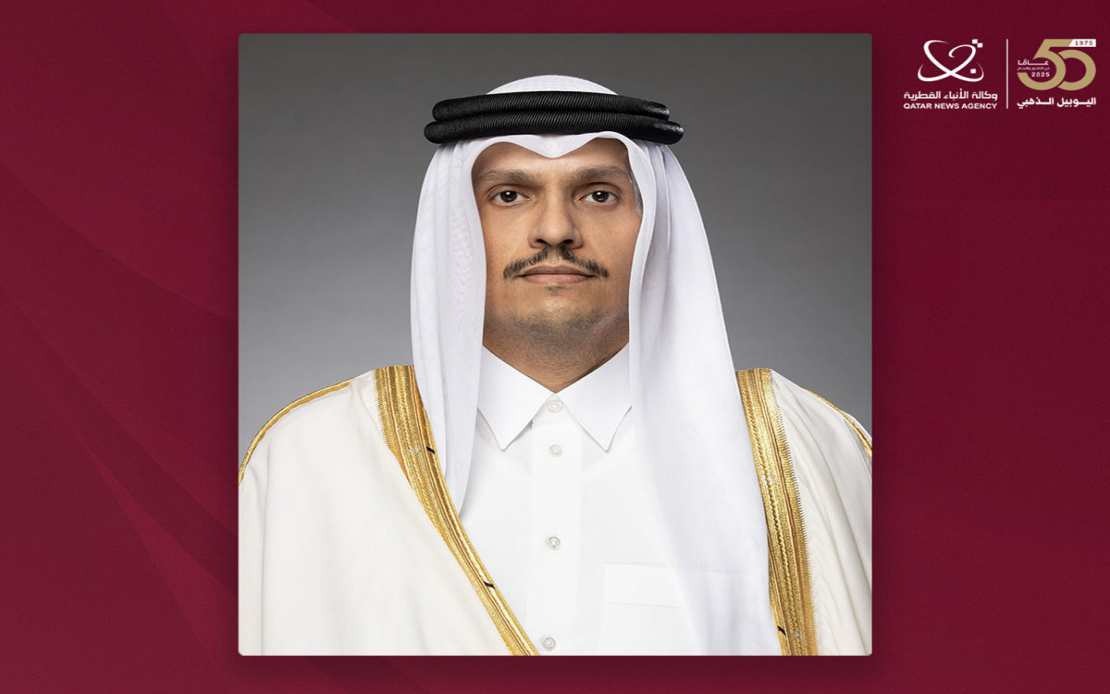
Qatar's top diplomat is heading to Tehran this week in what signals renewed regional mediation efforts to cool escalating tensions between the United States and Iran. Prime Minister and Foreign Minister Sheikh Mohammed bin Abdulrahman bin Jassim Al Thani will engage with senior Iranian officials to explore pathways toward reducing hostilities and creating space for meaningful dialogue, according to Qatar's Foreign Ministry spokesman Majed Al Ansari.
The visit comes at a particularly sensitive moment in the volatile Middle Eastern standoff. The two adversaries have engaged in tit-for-tat military operations in recent months, with the United States launching strikes on Iranian positions in late February and again in August, while Iran has responded by targeting American military installations in allied nations throughout the Arabian Peninsula. The cycle of retaliation has raised international concerns about broader regional destabilisation and the potential for miscalculation.
Central to Doha's diplomatic overture is the critical issue of maritime security and freedom of navigation through the Strait of Hormuz, one of the world's most strategically vital waterways through which approximately one-third of global seaborne oil passes. Qatar's envoy indicated that discussions would focus on restoring the shipping corridor to conditions that prevailed before 28 February, suggesting that Iranian actions or rhetoric since then have disrupted what previously existed as an established operational framework. The Strait remains a flashpoint where Iran has periodically threatened restrictions or taken provocative actions that unsettle global energy markets and international commerce.
This diplomatic mission underscores Qatar's established role as a neutral intermediary in Middle Eastern disputes. The Gulf state has cultivated relationships across the region's competing camps, positioning itself as a trusted interlocutor capable of communicating with both Washington and Tehran when direct channels prove insufficient. That credibility has been hard-won through years of patient engagement and demonstrated commitment to genuine resolution rather than one-sided advocacy.
The visit also represents Sheikh Mohammed's first trip to Iran's capital since Washington and Tehran escalated hostilities in late winter. The timing carries symbolic weight, suggesting that Qatari officials believe conditions have evolved sufficiently to warrant high-level engagement. Previous diplomatic architecture has already been tested through Doha's mediation channels, though with mixed results.
A significant backdrop involves the June memorandum of understanding that Pakistan, Qatar, the United States, and Iran negotiated jointly. That agreement, however, has stalled in implementation phases, with disagreements over Hormuz-related provisions preventing practical advancement. The accord demonstrated that common ground existed theoretically, but translating agreement into operational reality has proven substantially more difficult. Renewed talks may represent an attempt to unstick these negotiations by addressing the specific maritime grievances that have proven most contentious.
For Malaysia and the broader Southeast Asian region, these de-escalation efforts carry direct implications. Any further deterioration in the Gulf would inevitably affect energy security across Asia, where most nations depend heavily on Persian Gulf petroleum exports. Malaysia, as a significant energy importer and a maritime nation deeply invested in global shipping stability, has a material interest in seeing regional temperatures lower. Disruptions to the Strait would raise regional fuel costs and potentially trigger broader economic consequences throughout Southeast Asia's interconnected supply chains.
Qatar's mediation efforts also reflect the broader diplomatic architecture that has evolved post-2015 when the state endured a regional blockade. Having rebuilt relationships gradually, Doha has positioned itself as an essential bridge-builder in conflicts where traditional Western or Arab bloc alignments prove insufficient. This enhanced mediatory role represents a form of soft power that benefits Qatar's regional standing while addressing genuinely destabilising situations.
The Iranian government's receptiveness to such high-level dialogue, indicated by their willingness to receive the Qatari premier, suggests Tehran may also recognise the costs of continued escalation. Military exchanges, while strategically significant, exact economic penalties and risk international isolation—pressures that internal Iranian constituencies increasingly feel. A face-saving diplomatic off-ramp could appeal to decision-makers in Tehran seeking to demonstrate strength while avoiding further isolation.
Unfortunately, structural obstacles to sustainable de-escalation remain formidable. The underlying strategic competition between the United States and Iran extends far beyond maritime questions or even Gulf-specific concerns. It encompasses regional influence, nuclear proliferation, proxy warfare in Yemen and elsewhere, and fundamentally incompatible regional visions. No single mediation effort can resolve such deep-seated contradictions, though creating temporary breathing room has inherent value.
Qatar's initiative also occurs amid broader regional realignments. The Abraham Accords have reshuffled traditional alliances, with some Arab states normalising Israeli relations while others maintain complicated balancing acts. Qatar itself navigates these shifting dynamics carefully, maintaining ties across multiple camps. Whether such diplomatic entrepreneurship can translate into concrete progress on the ground remains uncertain, but the willingness of parties to engage through Qatari channels at least keeps dialogue channels open when they might otherwise close entirely.

