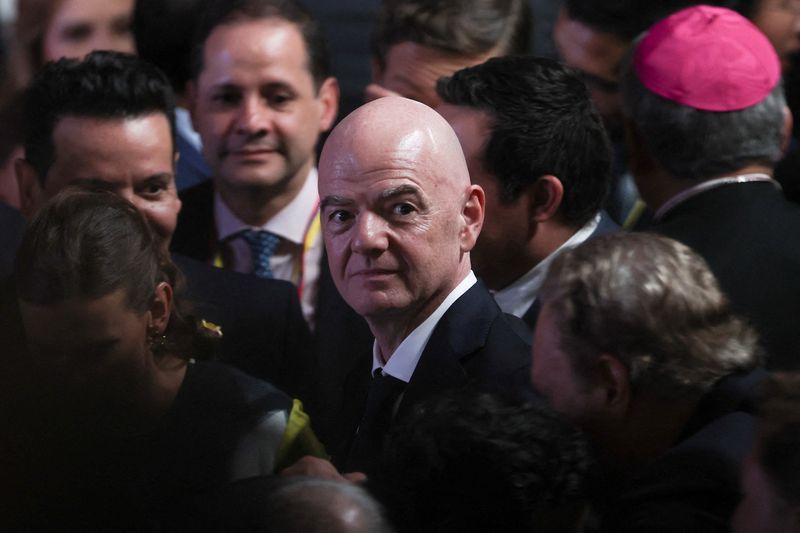
A fracture has opened within Asian football governance as Qatar publicly disputes the Asian Football Confederation's role in spearheading an international attack on FIFA President Gianni Infantino, exposing tensions that threaten to destabilize football's highest offices at a pivotal moment. The intervention marks an unusual departure from diplomatic norms in a region typically characterized by consensus-building, signalling deeper disagreements over Infantino's leadership and FIFA's strategic direction that extend well beyond the corridor politics of continental federations.
Qatar Football Association President Hamad bin Khalifa Al-Thani formally objected to the AFC's Monday open letter, which was issued jointly with UEFA and CONCACAF and accused Infantino of misconduct warranting his immediate resignation. In a carefully worded letter to AFC President Sheikh Salman bin Ibrahim Al Khalifa, Al-Thani asserted that neither he nor the QFA had received advance notice, been consulted informally or formally, or been afforded any opportunity to review and contribute to the statement before it was released under the AFC's banner.
The substance of Al-Thani's grievance centres on procedural legitimacy. He questioned the legal and institutional basis upon which the AFC could claim to represent the collective voice of its 47 member associations without first conducting genuine consultation. His language—"A collective view must first be ascertained; it cannot be presumed, and it cannot be brought into existence by declaration"—reflects a fundamental challenge to how the confederation exercises authority on behalf of its membership. This distinction between actual consensus and declared consensus carries significant implications for AFC governance going forward.
Infantino faces reelection next year amid what amounts to open rebellion from multiple continental confederations. His recent proposal to privatize commercial rights to the World Cup by selling a 20 percent stake to private investors—projected to raise approximately $4.2 billion—triggered the coordinated attack. The plan was subsequently abandoned following fierce backlash, yet the controversy has metastasized into a broader leadership crisis that threatens to reshape FIFA's political landscape.
The timing of Qatar's challenge proves strategically significant. Just days before the AFC's open letter, six heads of Arab national football associations, including Al-Thani, had publicly endorsed Infantino and praised his efforts to advance football globally. Among the six signatories were heads of the Egyptian, Moroccan, and Mauritanian football federations. Four of these individuals, including Al-Thani, hold FIFA Council seats, granting them direct influence over the organization's decision-making processes and internal politics.
Morocco's position deserves particular attention given its status as a co-host of the 2030 World Cup. The country's federation head, Fouzi Lekjaa, supported Infantino even as the AFC was preparing its damning statement, suggesting that Infantino retains meaningful backing among certain regional powerbrokers despite the confederations' formal opposition. This fragmentation indicates that the FIFA presidency dispute has become genuinely contested rather than a unified international pushback, complicating any attempt to dislodge the incumbent.
The AFC's decision to remain silent when contacted for response deepens the mystery surrounding the confederation's decision-making process. The lack of clarification from the AFC leadership suggests either an unwillingness to engage with Al-Thani's procedural objections or internal discomfort with how the open letter was orchestrated. Either scenario raises questions about whether the AFC genuinely speaks for its membership or whether a subset of powerful voices has captured the confederation's institutional machinery.
This schism within Asian football reflects broader regional dynamics. Southeast Asian nations, alongside Middle Eastern powers, have gained increasing influence within FIFA structures over the past decade. Qatar's assertive stance reflects both its confidence stemming from hosting the 2022 World Cup and its growing investment in football infrastructure and governance. The country's willingness to challenge the AFC directly signals that traditional hierarchies within continental football bodies are weakening in favour of more individualistic power plays.
The controversy also exposes how football governance intersects with international relations. The AFC encompasses enormously diverse economies and political systems, from developed democracies to authoritarian states, from wealthy petro-states to developing nations. Achieving genuine consensus on sensitive matters—particularly those touching on FIFA leadership—proves increasingly difficult as member associations pursue divergent strategic interests. Qatar's objection reflects not merely procedural punctiliousness but a genuine difference of opinion regarding whether Infantino's removal serves the region's footballing interests.
For Malaysian readers, these developments carry concrete implications. As an AFC member, Malaysia participates in confederational decision-making, yet the dynamics exposed here suggest that continental positions may be determined by a small group of powerful voices rather than through inclusive processes. Similarly, Malaysian football's commercial and competitive interests may be shaped by how FIFA resolves this leadership crisis, making the struggle between Infantino and his opponents consequential far beyond elite administrative circles.
The conflict also demonstrates how private investment proposals—ostensibly technical financial matters—become flashpoints for broader questions about football governance, democratic participation, and whose interests FIFA prioritizes. Infantino's failed privatization scheme revealed fault lines between confederations favouring aggressive commercialization and those preferring traditional structures, with emerging regional powers like Qatar and Morocco positioning themselves as swing votes capable of influencing outcomes.

