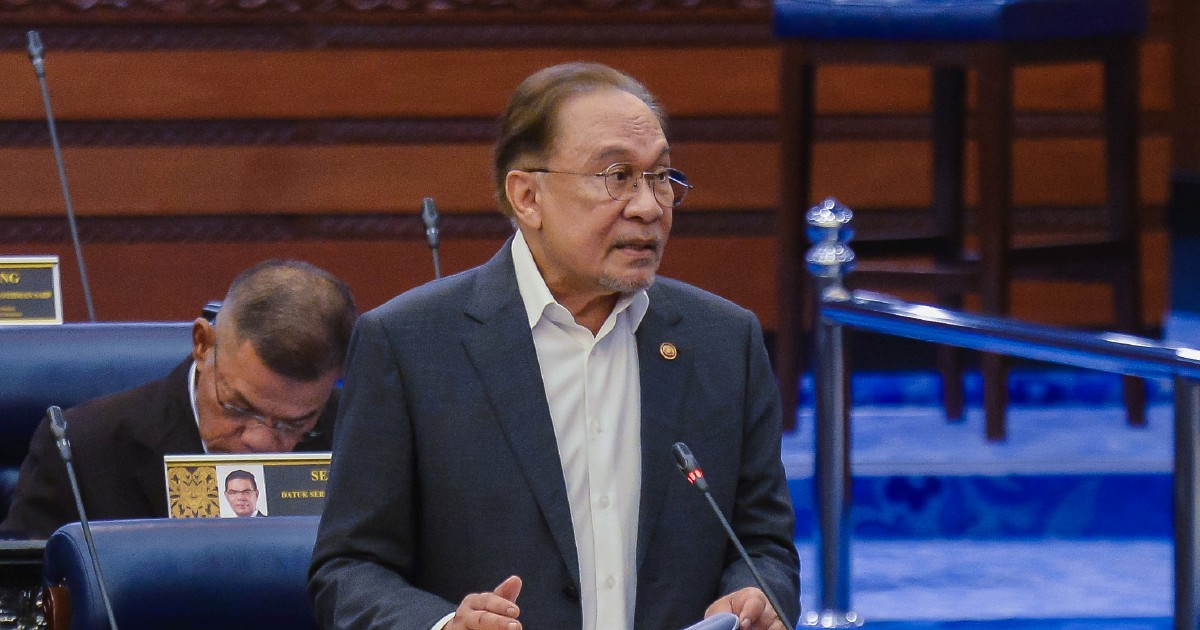
Putrajaya is actively engaged in discussions with Sarawak to raise the state's special grant allocation under the Malaysia Agreement 1963 (MA63), according to Prime Minister Datuk Seri Anwar Ibrahim. The disclosure signals the federal administration's commitment to addressing longstanding fiscal concerns in the East Malaysian state, which has maintained its claim for enhanced financial recognition since the historic constitutional arrangement.
The MA63, signed in 1963, established the constitutional framework through which Sarawak and Sabah joined the Malaysian federation. The agreement embedded specific provisions granting these states enhanced autonomy and financial arrangements distinct from peninsular Malaysia, reflecting the careful political negotiations that underpinned the formation of the modern nation-state. Sarawak's special grant represents one of the tangible economic components of this foundational compact, though the arrangement has evolved considerably across six decades.
Sarawak's leadership has periodically raised concerns about whether the state's share of federal resources adequately reflects either the letter or spirit of the original agreement. The state government, led by Chief Minister Datuk Patinggi Abang Johari Openg, has been particularly vocal about the need for fiscal recognition of Sarawak's contributions to national development and resource wealth. The current negotiation phase appears to represent a formal acknowledgment by the federal administration that these grievances warrant serious engagement at the highest political level.
The significance of these talks extends beyond simple budgetary mechanics. Sarawak's political alignment and electoral support remain consequential to federal coalition stability, particularly as Malaysia navigates post-election coalition dynamics. Any meaningful resolution regarding MA63 benefits could strengthen political cohesion between Kuala Lumpur and Kuching, potentially providing the foundation for deeper cooperation on development initiatives and economic projects spanning the next decade.
For Malaysian readers in peninsular states, the Sarawak negotiations illustrate the complex constitutional tapestry underlying Malaysian federalism. Unlike purely centralized systems, Malaysia's constitutional structure explicitly recognizes state-level autonomy, particularly in East Malaysia. Understanding these arrangements is essential for comprehending how national wealth distribution, infrastructure allocation, and economic policy are negotiated across the federation rather than simply imposed from the centre.
The grant discussions also carry implications for how Malaysia manages regional development disparity. Sarawak, despite possessing substantial natural resources and land area, has historically lagged peninsular Malaysia in terms of infrastructure development and per-capita income levels. Enhanced federal transfers, negotiated transparently through MA63 mechanisms, could accelerate investment in areas including digital connectivity, transportation networks, and educational facilities in the interior regions where development remains uneven.
Economists note that special grants, when structured effectively, function as instruments for reducing regional inequality while respecting constitutional federalism principles. Rather than imposing development programs top-down, grant mechanisms allow recipient states greater discretion in directing funds toward priorities reflecting local conditions and aspirations. For Sarawak, this flexibility proves particularly valuable given the state's diverse geography, spanning coastal zones, agricultural areas, and extensive interior indigenous territories with distinct development requirements.
The timing of these negotiations coincides with Sarawak's assertion of greater political independence within the Malaysian system. The state government has consolidated control over state-level politics, winning supermajority support in recent elections and demonstrating capacity to influence national coalition politics. This strengthened position has enabled Sarawak to negotiate from a position of greater leverage than at periods when its political representation was more fragmented across competing parties and coalitions.
Federal-state financial relations remain a perennial flashpoint in Malaysian politics, extending beyond Sarawak to encompass Sabah and various peninsular states managed by opposition coalitions. How successfully Putrajaya negotiates the Sarawak discussions may establish precedents affecting broader federal fiscal architecture. States watching these negotiations carefully will interpret outcomes as indicators of whether the federal government prioritizes accommodating regional political concerns through generous resource allocation or maintains restrictive fiscal policies.
The MA63 framework itself has triggered scholarly and political debate regarding its contemporary application. Some analysts argue that the agreement's original provisions, drafted in 1963 amid vastly different economic and geopolitical circumstances, require modernization to reflect present-day realities. Others maintain that the agreement's spirit mandates fuller recognition of East Malaysian interests than current arrangements provide. These intellectual debates underpin the practical negotiations between Putrajaya and Kuching.
For businesses operating across Malaysia, clearer resolution of MA63 arrangements could reduce political uncertainty affecting long-term investment planning in Sarawak. Stable federal-state relations, backed by satisfactory fiscal arrangements, create more predictable policy environments encouraging private sector participation in major development initiatives. This economic dimension connects constitutional politics directly to commercial confidence and investment flows.
International observers monitor Malaysia's handling of sub-national politics, as the country's ability to manage federal-state tensions peacefully distinguishes it from fractious neighboring systems. Successful negotiation of MA63 grant increases demonstrates Malaysia's capacity for incremental constitutional adjustment addressing regional grievances without destabilizing the broader political order. This stability remains a comparative advantage within the Southeast Asian region where secessionist tensions and federal breakdowns have disrupted other nations.
Government spokesman statements and Anwar Ibrahim's public confirmation of these negotiations signal that both parties view the discussions as substantive rather than ceremonial. The acknowledgment itself represents progress, moving MA63 concerns from the periphery of national discourse toward central government priority status. Whether these negotiations yield concrete outcomes affecting grant levels and allocation mechanisms will likely emerge through statements from both Putrajaya and the Sarawak state government in coming months.

