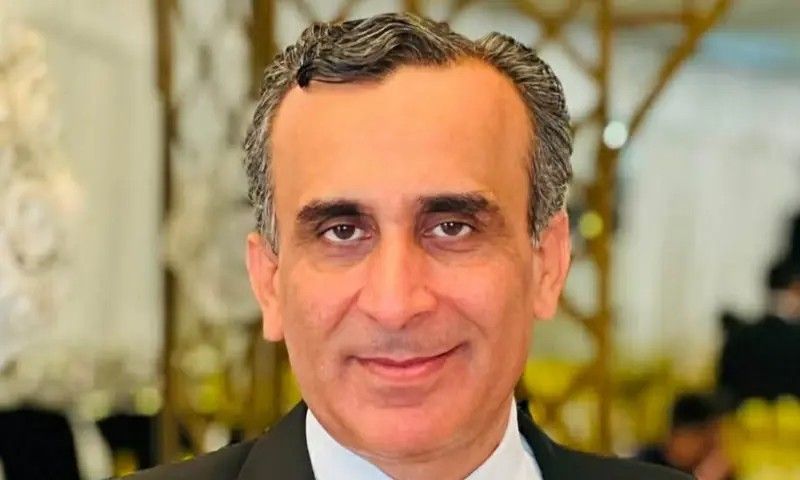
Punjab's provincial government has formally appointed Irfan Sadiq Tarar as the new Prosecutor General, a significant development in the province's legal establishment that underscores the government's effort to strengthen prosecutorial capacity at a time when criminal justice reform remains high on Pakistan's policy agenda. The announcement on Saturday came through official notification issued under the provisions of the Punjab Criminal Prosecution Service Act 2006, cementing Tarar's three-year tenure in what represents one of the province's most consequential law enforcement positions.
The appointment addresses a gap left by the departure of Farhad Ali Shah, whose recent elevation to the position of additional judge at the Lahore High Court represents the kind of judicial advancement that occasionally disrupts continuity in prosecutorial leadership. This transition pattern, while reflecting the legal profession's natural career progression, nonetheless highlights the structural challenges Punjab faces in maintaining stability within key institutional roles. Tarar's selection suggests the government believes his background and professional standing make him suitably equipped to navigate both the operational demands and the policy complexities inherent in leading the prosecution service.
Tarar brings substantial credentials from his previous roles within Punjab's legal fraternity. His tenure as vice chairman of the Punjab Bar Council and his service as vice president of the Lahore Bar Association indicate deep engagement with the broader legal community and an understanding of the profession's institutional dynamics. These positions typically require strong interpersonal skills and the capacity to mediate between competing interests—qualities that translate meaningfully to the prosecution role, where coordination with courts, law enforcement agencies, and the defence bar is continuous and essential.
The appointee's affiliation with the Ahsan Bhoon-led Independent group places him within a particular ideological space in Punjab's political and professional landscape, though the implications of this association for his prosecutorial independence deserve careful consideration. The Prosecutor General operates at the intersection of executive authority and judicial function, meaning political proximity can carry both advantages and risks. Observers will likely watch whether Tarar's tenure demonstrates institutional autonomy from political pressures or whether partisan considerations influence prosecutorial priorities.
Pakistan's prosecution service has long faced criticism for inconsistent case management, delayed trials, and alleged vulnerability to external interference. These systemic problems are particularly acute in Punjab, where the volume of criminal cases and the complexity of organised crime investigations place enormous pressure on prosecutorial resources. Tarar's appointment thus occurs against a backdrop of genuine institutional challenges that extend beyond any individual holder of the office. The Prosecutor General must grapple not merely with leading personnel and directing strategy, but with fundamental questions about case prioritisation, witness protection, and engagement with what remains a heavily overburdened lower court system.
The three-year tenure specified in the appointment provides a medium-term horizon for implementing reforms or consolidating prosecutorial strategy, though critics might note that such periods often prove insufficient for transformative institutional change. Pakistan's broader justice sector reform agenda, including ongoing debates about the National Accountability Bureau, prosecutorial independence, and procedural amendments, will inevitably intersect with Tarar's work. His decisions regarding resource allocation and case prioritisation will carry implications extending well beyond Punjab's borders.
For Malaysia and other Southeast Asian jurisdictions monitoring developments in South Asia's institutional health, Punjab's prosecutorial leadership carries indirect significance. Regional cooperation on cross-border crime, money laundering investigations, and transnational fraud increasingly requires functional partnerships with Pakistani law enforcement and prosecutorial counterparts. The quality of leadership in positions like the Prosecutor General's office thus affects the efficacy of regional security cooperation. A prosecution service hampered by political interference or institutional weakness complicates the work of neighbouring countries attempting to coordinate on mutual security challenges.
The appointment process itself reflects standardised administrative procedures, yet the relatively swift filling of this vacancy suggests the government prioritises maintaining prosecutorial continuity. This contrasts with some historical instances where vacant senior positions languish unfilled, creating operational vacuums. Whether Tarar's elevation will be accompanied by the resource augmentation necessary to address systemic prosecutorial challenges remains to be seen. Many observers argue that appointing capable individuals to positions with structural constraints yields limited impact unless matched by budgetary increases and procedural reforms.
Tarar's background in bar council work suggests familiarity with the concerns animating the legal profession more broadly—concerns that often diverge from executive priorities. Should he maintain this professional orientation while serving as Prosecutor General, his tenure might contribute to improved relations between the prosecution service and the legal community, a relationship that remains strained in many cases. The prosecution service's legitimacy partly depends on the respect it commands among peers in the legal profession, and leaders emerging from this community sometimes bring greater credibility to prosecutorial decisions.
As Tarar settles into his new role, multiple constituencies will assess his performance: criminal justice advocates demanding greater accountability, the judiciary expecting professional case preparation, political leadership expecting cooperation on priority matters, and the defence bar anticipating principled adherence to prosecutorial ethics. Navigating these competing expectations while managing the daily complexities of overseeing criminal prosecutions across Punjab represents a formidable undertaking. The coming months will indicate whether his appointment signals meaningful momentum toward prosecutorial reform or represents simply another administrative transition within a system facing deeper structural challenges.

