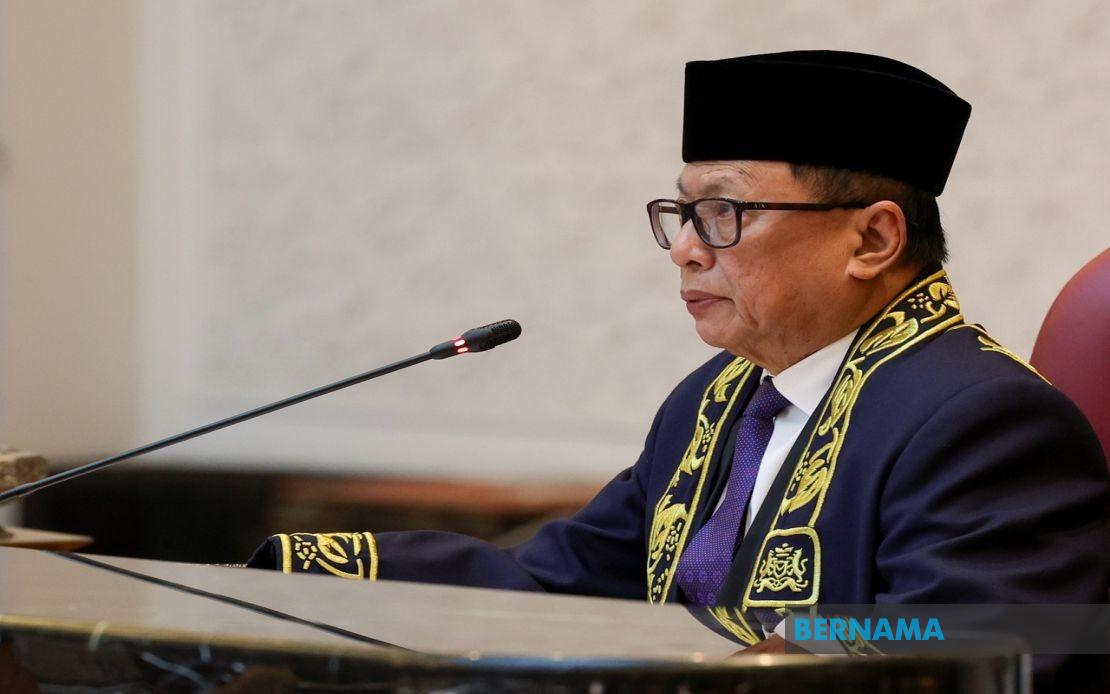
In a significant development for Malaysia's ruling coalition, Datuk Dr Mohd Puad Zarkashi, a member of UMNO's Supreme Council and incumbent Rengit state assemblyman, announced his immediate resignation from the party on June 25, 2026, marking another crack in the party's upper echelons ahead of forthcoming elections.
Through a Facebook statement, Puad Zarkashi articulated his decision as a deliberate move to exercise greater political freedom, declaring that his departure would liberate him from constraints typically imposed on party members who voice dissent. He framed the resignation as a proactive step rather than a reactive measure, suggesting that UMNO would be spared the procedural necessity of expelling him while simultaneously eliminating potential accusations that he was disloyal to party interests.
Central to Puad Zarkashi's grievances is his assertion that Johor UMNO has become dysfunctional under its current leadership. He employed the colloquial term "pak turut"—a Malay phrase denoting a yes-man or sycophant—to characterise the state party's chief, Onn Hafiz, suggesting that the leader lacks independent judgment or the capacity to chart an autonomous course for the organisation. This characterisation carries particular weight given Puad Zarkashi's standing within party machinery and his previous roles, which included serving as Johor State Legislative Assembly Speaker.
The former Batu Pahat Member of Parliament had previously signalled his discontent regarding irregularities in the Barisan Nasional candidate selection process for the Johor state election. His resignation appears to represent an escalation of those concerns, transforming private reservations into a public indictment of governance practices within the state party apparatus. By formally departing UMNO, Puad Zarkashi positions himself outside the party structure, allowing him to articulate criticism without the conventional restraints that bind active members.
Puad Zarkashi characterised his departure as an exercise in "political courage," framing it as a necessary intervention to expose what he describes as wrongdoing before such practices become entrenched or more severe. This rhetorical positioning transforms his resignation from a personal decision into a principled stand, suggesting that he views his actions as serving a broader purpose of accountability and institutional integrity.
Notably, Puad Zarkashi had earlier indicated that he would not seek re-election in the Rengit state seat, which he successfully defended in the 2022 Johor state election. His stated rationale at that time—advocating for opportunities to be extended to younger candidates—appeared reasonable and aligned with broader calls for generational renewal within UMNO. However, his subsequent resignation and public criticisms suggest deeper frustrations that transcend simple decisions about electoral candidacy.
The former official's political trajectory demonstrates considerable seniority within UMNO's establishment. Beyond his parliamentary and state assembly experience, Puad Zarkashi served as Deputy Education Minister between 2009 and 2013, and later as Director-General of the Special Affairs Department from March 2015 to April 2018. These federal positions underscore his integration into UMNO's senior ranks and his access to internal party dynamics across multiple administrations.
His parliamentary record reflects the vicissitudes of electoral politics in Malaysia. In the 12th General Election, Puad Zarkashi secured the Batu Pahat seat with a majority of 12,968 votes, defeating PAS candidate Muhammad Abdullah. However, his tenure at that level proved limited; in the subsequent 13th General Election, he lost the same seat to PKR's Datuk Mohd Idris Jusi by a margin of 1,524 votes. This reversal demonstrates the vulnerability even of established figures in an increasingly competitive electoral environment.
Puad Zarkashi's departure arrives during a period of apparent turbulence within Johor UMNO and broader questions about the party's governance and direction. The timing—just as the Johor state election looms—suggests that his resignation may resonate beyond personal considerations, potentially signalling to party members and broader observers that discontent exists regarding leadership competence and organisational integrity at the state level.
The accusations levelled at Onn Hafiz are particularly significant given the latter's position as Johor Menteri Besar, making him the state's chief executive and a prominent figure in BN's electoral prospects. If such concerns about his decision-making autonomy and leadership effectiveness are gaining currency among senior party members, this could indicate substantive operational challenges within the state apparatus that may require broader organisational attention.
Furthermore, Puad Zarkashi's emphasis on irregularities in candidate selection processes touches upon a perennial source of intra-party tension in UMNO. The allocation of electoral seats and the endorsement of candidates remain contentious matters that have historically generated significant internal friction. By publicly highlighting these concerns, Puad Zarkashi has escalated what might otherwise have remained private grievances into matters of public record, potentially inviting scrutiny from other party members and media observers.
The resignation also illustrates the balancing act that UMNO members must navigate between institutional loyalty and individual conscience, particularly when confronted with what they perceive as governance failures. Puad Zarkashi's decision to exit the party rather than attempt internal reform suggests either that he views institutional remedies as exhausted or that the costs of remaining within the party structure outweighed the benefits of continued membership and influence.
Looking forward, Puad Zarkashi's departure may serve as a test case for how UMNO responds to internal dissent and whether the party's leadership possesses sufficient confidence to address the substantive concerns he has articulated. His decision to maintain a public profile while operating outside the party framework may prove consequential for Johor UMNO's election campaign, particularly if his criticisms gain traction among party members or the broader electorate.

