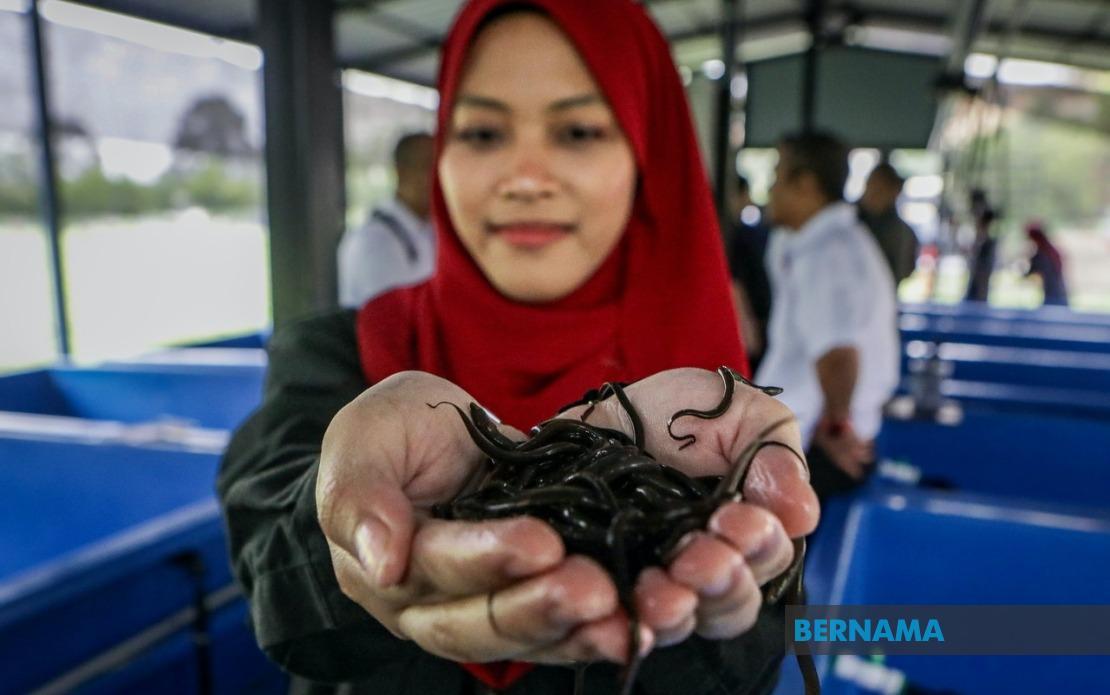
Politeknik Tuanku Syed Sirajuddin (PTSS) in Arau has embarked on an ambitious venture that exemplifies how technical education institutions can extend their mandate beyond classroom instruction to catalyse grassroots economic development. The launch of the Projek Penternakan Belut Komersial Geran Sejati MADANI represents a strategic pivot for TVET institutions in Malaysia, transforming them into engines of community capacity-building and sustainable enterprise development. By positioning itself as both educator and implementer, PTSS demonstrates that vocational training facilities possess the expertise and institutional infrastructure to tackle real-world challenges facing rural communities seeking alternative income streams.
The project, officially inaugurated by Azlan Abdul Samat, director of the Perlis Federal Development Office and the Prime Minister's Department's Implementation Coordination Unit (ICU JPM), targets five distinct communities within the state. Each beneficiary community will receive 15,000 eel fingerlings alongside comprehensive training and technical support, establishing the foundation for commercially viable aquaculture operations. This targeted approach acknowledges that agricultural diversification through aquaculture represents a viable pathway for communities seeking resilience against fluctuating commodity prices and climatic uncertainties that traditionally plague conventional farming.
According to PTSS director Khairul Anuar Ishak, the institution's six-month stewardship of the project encompasses the complete value chain from initial infrastructure development through to full operational handover. The RM500,000 investment covers facility construction, equipment procurement, seed acquisition, comprehensive farmer training, and financial management systems—elements critical for sustainable enterprise success. This structured implementation timeline ensures that community members receive not merely theoretical instruction but practical, hands-on experience applicable immediately to their farming operations. The phased approach reflects sophisticated understanding that rural economic initiatives require robust institutional scaffolding during their formative months to maximise survival rates and eventual profitability.
The aquaculture production projections are considerable: each participating community anticipates harvesting approximately 5,000 kilograms of eels following a five to six-month growth cycle. At current market rates, such yields translate into meaningful household income supplementation for participating farmers. The adoption of contract farming arrangements for market access further de-risks the enterprise by securing predetermined buyer relationships before harvest, thereby eliminating post-production marketing challenges that frequently undermine smallholder initiatives. This market-linkage strategy proves particularly valuable in rural contexts where information asymmetries and limited business networks often prevent direct farmer-to-buyer transactions.
From a broader institutional perspective, PTSS's direct involvement signals recognition among Malaysian policymakers that TVET institutions must evolve beyond traditional service delivery models. Khairul Anuar emphasised that the project demonstrates how vocational expertise can be instrumentalised to enhance community capacity through structured training provision, systematic technical guidance, and innovation facilitation. This conceptualisation represents a departure from conventional approaches where educational institutions maintain clear separation from operational development work. Instead, PTSS functions as a knowledge transfer intermediary, leveraging its technical staff's aquaculture competencies to address demonstrable community needs whilst simultaneously providing students with authentic experiential learning opportunities.
The collaborative architecture underlying the initiative deserves particular attention for Malaysian policymakers. The project integrates educational institutions, government agencies, private industry stakeholders, and local communities within a coherent framework designed to generate mutual benefits. Educational partners gain access to real operating environments for student training; government entities accomplish community development objectives whilst strengthening institutional capacity; industry participants expand potential supplier networks; and communities acquire income-generating capabilities. This multisectoral alignment reflects sophisticated understanding that sustainable rural development requires synchronisation across institutional silos rather than episodic interventions.
Eel farming specifically offers attractive characteristics for Malaysian smallholder development contexts. The species demonstrates relatively rapid growth cycles compared to alternative aquaculture ventures, requires modest space allocation suitable for constrained landholdings, generates returns within timeframes compatible with household cash-flow requirements, and commands consistent domestic market demand. Malaysian urban consumer preferences for eels in traditional cuisine maintain reliable demand throughout the year, providing farmers with predictable market conditions. The technical inputs required—proper water quality management, appropriate feeding regimes, temperature control—fall within parameters accessible to farmers possessing basic technical guidance and monitoring systems. Furthermore, eel farming generates minimal environmental disruption when properly managed, avoiding some water quality complications associated with more intensive aquaculture operations.
The initiative carries particular significance for Perlis, a northern state where agricultural transformation remains economically critical. Rural communities across the state have experienced declining returns from conventional rice cultivation and smallholder rubber production, creating urgent need for diversified income sources. Aquaculture ventures offer mechanisms for agricultural stakeholders to remain within their sector whilst adopting modern production technologies and market engagement strategies. By demonstrating that eel farming can generate substantial returns within manageable timeframes, the PTSS project may encourage broader state-level agricultural transformation and position Perlis as an aquaculture hub within northern Malaysia's agricultural landscape.
The knowledge transfer dimension proves equally significant for regional development patterns. Many Southeast Asian countries share similar rural development challenges, agricultural workforce demographics, and market structures. Malaysia's experience with institutionalised knowledge transfer through TVET facilities managing agricultural projects may offer replicable models applicable across the region. Countries including Thailand, Vietnam, and Indonesia have established comparable vocational institutions; successful Malaysian demonstrations of TVET-facilitated enterprise development could catalyse wider regional adoption of similar approaches. This potential for cross-border institutional learning underscores the project's significance beyond Perlis's immediate boundaries.
Sustainability considerations will prove determinant in assessing the project's long-term success. The critical transition point arrives when PTSS concludes its six-month implementation mandate and transfers full operational responsibility to community management structures. Historical experience with externally-supported rural enterprises frequently demonstrates decline following institutional withdrawal unless robust community governance systems have been established. Khairul Anuar's emphasis on financial management training suggests PTSS recognises this vulnerability, though actual outcomes will depend upon community members' capacity to maintain discipline regarding reinvestment of profits, maintenance of facilities, and market engagement. The project design allocating 15,000 fingerlings per community provides reasonable scale for generating motivating income levels whilst remaining manageable for community organisational capacity.
The RM500,000 investment, whilst meaningful, remains modest relative to comprehensive agricultural transformation ambitions. Successful demonstration through this initial phase could justify scaled replication across additional Perlis communities or pilot implementation in comparable communities throughout Malaysia. Provincial governments across the country confront similar pressures to generate rural income diversification, suggesting demand for replicable models proven effective in Malaysian contexts. PTSS's role as project implementer positions the institution to refine implementation methodologies, document outcomes, and translate findings into transferable knowledge resources accessible to other TVET institutions contemplating comparable community development initiatives.
Looking forward, the project's success will depend substantially upon community leadership quality and sustained institutional support from PTSS personnel beyond the formal six-month implementation period. While formal implementation concludes at month six, informal advisory relationships frequently prove invaluable during subsequent operation periods when unanticipated technical challenges arise or market conditions shift unexpectedly. The distinction between institutional disengagement and graduated responsibility transition often determines whether rural enterprises achieve sustainability or deteriorate following external support withdrawal. PTSS's demonstrated commitment to community empowerment through technology transfer and experiential learning suggests institutional openness to flexible engagement patterns extending beyond initial formal timelines.

