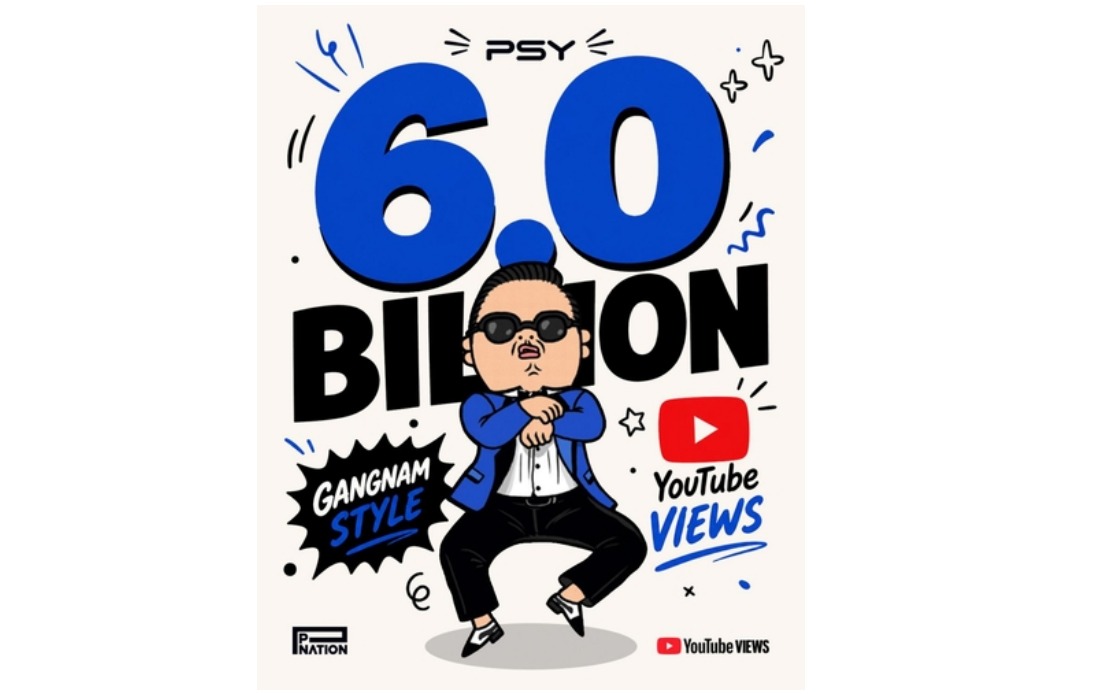
South Korean artist Psy has achieved a historic milestone as his 2012 blockbuster "Gangnam Style" surpassed 6 billion views on YouTube, establishing itself as the most-watched K-pop music video in history. The achievement, reached on Friday according to his agency P Nation, underscores the remarkable staying power of a track that fundamentally altered the landscape of Korean popular music on the global stage more than a decade ago.
The 12-year journey from release to this viewership benchmark represents an extraordinary feat in the digital era. When Psy first released "Gangnam Style" in July 2012, few could have predicted the phenomenon it would become. The previous milestone of 5 billion views was achieved just seven months earlier in December 2023, indicating that momentum behind the track remains robust even as the song enters its second decade of existence. This acceleration in viewership demonstrates that the video continues to attract fresh audiences while maintaining engagement from loyal fans who have followed Psy's career trajectory.
P Nation emphasized the broader significance of this achievement, noting that surpassing 6 billion views represents more than a numerical landmark. The agency framed the milestone as a testament to K-pop's cultural penetration worldwide, highlighting how a single track can transcend linguistic, geographic, and generational boundaries. The statistic serves as a bellwether for the global expansion of Korean entertainment, a phenomenon that has only intensified since "Gangnam Style" first captured international attention. For Southeast Asian audiences in particular, the song's success story provides insight into how regional cultural products can achieve unprecedented international reach through digital platforms.
What made "Gangnam Style" so distinctive was its multifaceted appeal that operated simultaneously on several levels. The track's infectious, minimalist beat proved remarkably accessible to listeners regardless of musical sophistication or background. Beyond the sonic elements, the song's narrative content offered satirical commentary on the affluent Gangnam district of Seoul, a neighbourhood synonymous with wealth and consumerism in South Korea. This blend of catchiness and social commentary created a formula that resonated across diverse demographics, from curious newcomers to K-pop enthusiasts who appreciated its cultural specificity.
The signature horse-riding dance move became the track's visual calling card, proliferating across social media platforms and inspiring countless cover versions from celebrities, military personnel, and ordinary citizens in dozens of countries. This participatory element transformed "Gangnam Style" from a passive listening experience into an interactive cultural phenomenon. The dance's intuitive simplicity meant that fans worldwide could recreate and share their own versions, generating organic viral content that sustained the song's visibility across multiple platforms and across time.
Commercially and critically, "Gangnam Style" achieved unprecedented success for K-pop at that moment. The single peaked at number two on the Billboard Hot 100 chart, narrowly missing the top position but establishing itself as a major force on American radio and streaming services. More significantly, its music video became the first K-pop production to break the 1 billion YouTube views barrier, a historic distinction that foreshadowed its eventual ascent to 6 billion views. This trajectory mirrors the broader maturation of K-pop from a regional phenomenon to a globally dominant musical force.
Psy celebrated the achievement during a concert performance on Sunday, using the occasion to connect with his fanbase and acknowledge their role in sustaining interest in the track. He pledged to upload new content to YouTube, signalling his intent to maintain engagement with followers across digital platforms. This active approach to fan interaction demonstrates how successful artists navigate the modern entertainment ecosystem, where direct communication with audiences through social media and streaming services has become essential to career longevity.
The success of "Gangnam Style" carries particular implications for Southeast Asian entertainment industries and aspiring artists in the region. The track's triumph proved that non-English language content could achieve massive global audiences, provided the production quality, cultural authenticity, and creative execution met international standards. For Malaysian and regional musicians and producers, Psy's achievement illustrated that geographic position outside Western entertainment capitals need not limit commercial or artistic potential. The model established by "Gangnam Style" influenced subsequent waves of K-pop and regional content creators seeking international recognition.
Furthermore, the song's enduring appeal raises questions about the nature of viral phenomena and digital-age immortality. Unlike entertainment products from pre-streaming eras that gradually faded from public consciousness, "Gangnam Style" remains continuously accessible and discoverable by new audiences. Children born after the song's release can encounter it through YouTube's recommendation algorithms, classroom screenings, or social media references, ensuring generational renewal of viewership. This structural feature of digital platforms fundamentally alters how cultural products achieve longevity and maintain relevance across time.
The 6 billion view achievement also contextualizes K-pop's current position within global popular music. In 2024, the genre commands unprecedented influence across streaming platforms, concert attendance, and merchandise sales worldwide. Artists like BTS and BLACKPINK have built upon the foundation that Psy helped establish, though with increasingly sophisticated production values and strategic marketing. "Gangnam Style" therefore occupies a historic position as both a pioneering commercial success and an ancestral touchstone for the contemporary K-pop industry.
Looking forward, the continued accumulation of views suggests "Gangnam Style" may eventually reach 7 or 8 billion views, further cementing its legacy. The song serves as a case study in how digital platforms democratize entertainment distribution while simultaneously creating new avenues for cultural influence. For emerging artists and entertainment stakeholders across Southeast Asia, the Psy phenomenon offers both inspiration and practical lessons about adapting to platform-driven discovery models and leveraging authenticity in an oversaturated media landscape.

