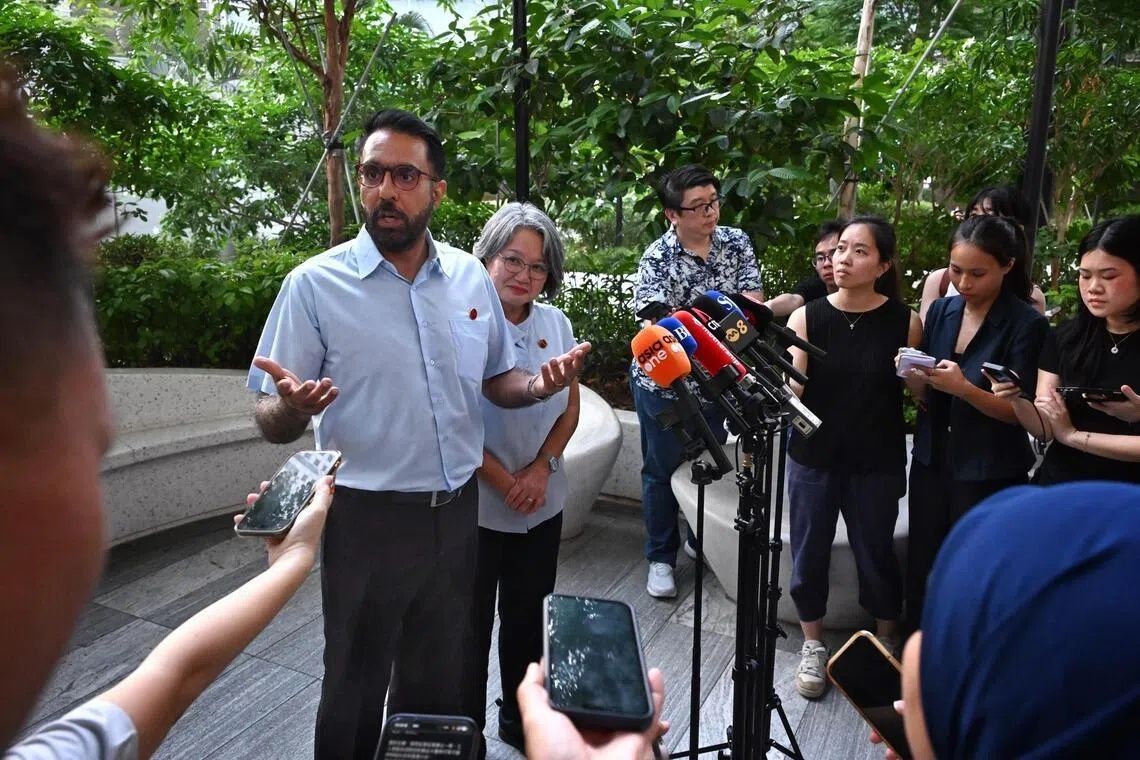
Pritam Singh's position as leader of Singapore's largest opposition movement has been substantially reinforced following internal elections held on June 28, when dissatisfied party members failed to dislodge him from office. The Workers' Party chief faced a concerted effort from approximately 25 unhappy cadres who had petitioned for his removal, but the motion foundered decisively when party members voted in a secret ballot. The outcome represents a turning point for an organisation that has endured considerable turbulence in recent years, centring on events that unfolded during the parliamentary term that began in 2020.
The internal challenge erupted from deep frustrations within the party's membership concerning Singh's legal entanglements and his handling of a serious parliamentary scandal. In December 2025, a group of disgruntled cadres formally requested that Singh account for his actions before Parliament's Committee of Privileges, step aside from leadership, or face a confidence vote if he refused to resign voluntarily. This petition was triggered partly by Singh's court conviction for misleading a parliamentary committee, a judgment that the High Court upheld in December 2025. The convergence of legal liability and institutional questions about accountability created an opening for party members to demand a reckoning.
Yet when party members gathered for a special cadres conference at noon on June 28, Singh survived the challenge with commanding support. According to Gerald Giam, the Aljunied GRC MP who chaired the meeting, Singh secured backing that exceeded a supermajority threshold among the party's inner circle of slightly more than 100 members. Party sources subsequently disclosed that Singh obtained approximately 80 per cent of the vote, indicating that even among cadres troubled enough to sign a petition, a substantial majority ultimately chose continuity in leadership. The ballot was conducted with appropriate procedural safeguards and transparency, allowing members to voice concerns before voting occurred.
Singh's legal predicament stems from his involvement in the 2021 lie-telling scandal involving former Sengkang GRC MP Raeesah Khan. Evidence presented to Parliament's Committee of Privileges established that Singh had guided Khan in sustaining a false narrative about police conduct for several months before the truth emerged. Courts later found him culpable of misleading the parliamentary committee about his knowledge of Khan's deception and his role in encouraging her to maintain it. In January 2026, Prime Minister Lawrence Wong declared Singh unsuitable to serve as Leader of the Opposition, a position he had held, and subsequently removed him from the role. The government invited the Workers' Party to nominate a replacement MP for the position, but the party steadfastly refused, asserting that the post should remain with the leader of the largest opposition party.
The timing of the internal vote proved strategically significant for Singh's interests. In the days leading to June 28, uncertainty had swirled around whether former party chief Low Thia Khiang would continue supporting his successor. Rumours circulated that members of the unhappy faction had approached Low seeking his endorsement for a leadership challenge, but Low definitively ended speculation on the morning of voting by publicly reaffirming his backing for Singh. This statement from the party's elder statesman and revered founding figure neutralised the dissident faction's narrative that Singh had lost the confidence of historical party leadership. Low's intervention may have influenced how centrist cadres weighed the decision before them.
In remarks to journalists following his re-election, Singh characterised the outcome as evidence of party unity and reiterated his commitment to responsible governance. He emphasised that the Workers' Party understands its obligation to conduct itself rationally and represent Singaporean constituents with fidelity. Singh acknowledged the petition process as legitimate democratic expression but suggested that members had now rendered their verdict and the party should move forward with consolidated ranks. The tone conveyed both vindication and a call for reconciliation—Singh neither dismissed the grievances raised nor suggested they had been trivial.
The internal elections that followed the confidence vote proceeded to confirm the party's existing power structure. Sylvia Lim was returned as chair, a position she has occupied continuously since 2003. The party elected twelve members to its central executive committee, the body responsible for day-to-day decision-making, with most returning to seats they previously held. Significantly, the membership opted to add one new face: senior counsel Harpreet Singh, a prominent legal practitioner who had contested the Punggol GRC seat as part of the Workers' Party slate during the general election held in May 2025. Four of the twelve CEC members are not sitting MPs—a group that includes former Aljunied GRC MP Faisal Manap, long-serving CEC veteran Tan Kong Soon, and the elder statesman Low himself.
Harpreet Singh's inclusion on the CEC and his subsequent public comments offered insight into how at least some party figures viewed the confidence vote and its implications. In a LinkedIn post, Harpreet Singh characterised the cadres' decision as reflective of careful judgment rather than uncritical loyalty. He highlighted Singh's record of steadiness under sustained political pressure and commended his measured leadership in advancing the party's parliamentary standing across Singapore's electoral history. Importantly, Harpreet Singh explicitly acknowledged that the High Court's conviction judgment warranted respect and must remain undisturbed, while maintaining that Singh's broader track record and character must factor into assessments of his fitness for the chief's role. This formulation attempted to reconcile respect for the judiciary with faith in Singh's ongoing leadership.
The internal turbulence reflected genuine institutional strain that had accumulated since the Khan affair of 2021 erupted into public view. That incident had exposed organisational vulnerabilities and raised questions about how the party's senior leadership handled sensitive matters affecting parliamentary integrity. A disciplinary panel comprising two sitting Sengkang GRC MPs and a former Hougang MP had examined Singh's conduct and determined that he had violated two provisions of the party's constitution through his actions relating to Khan's parliamentary statements. The CEC subsequently issued Singh a formal letter of reprimand in April 2026, two months before the confidence vote, acknowledging the panel's findings while stopping short of demanding his removal.
For Malaysian observers and broader Southeast Asian political analysts, the Workers' Party's management of internal dissent carries instructive implications. The episode demonstrates how opposition movements can navigate serious institutional crises through transparent internal processes while preserving organisational cohesion. Unlike scenarios where internal challenges catalyse permanent fractures or authoritarian suppression of dissent, the Workers' Party implemented balloting procedures that allowed genuine contestation before members rendered judgment. The outcome—an overwhelming endorsement of the incumbent leader despite legitimate concerns—suggests that cadre confidence in Singh's abilities ultimately outweighed reservations about his legal troubles.
The Workers' Party's institutional resilience also reflects the maturity of Singapore's opposition politics and the premium placed on procedural legitimacy even when stakes are high. Rather than suppress or minimise the petition process, the party elevated the matter to a formal conference with structured debate and voting. Dissident cadres obtained opportunity to articulate grievances and question Singh directly. The party leadership responded with statements accounting for decisions and outlining future direction. This model of internal accountability, though imperfect, contrasts sharply with governance patterns in some neighbouring jurisdictions where institutional opposition to sitting leaders faces greater obstacles.
Moving forward, Singh's reinforced mandate presents both opportunities and constraints. The cadres' decision provides political capital for party unity and renewed focus on parliamentary performance and constituent service. However, Singh carries the permanent liability of a court conviction upheld on appeal and the stigma of removal from the Opposition Leader post, factors that opposition critics and government allies will continue invoking in future electoral contests. The party faces the ongoing task of rebuilding trust and demonstrating that it can maintain institutional integrity and protect parliamentary standards even as it pursues robust advocacy for its constituents. Whether Singh's overwhelming internal endorsement translates to sustained electoral advantage in future general elections remains an open question, but the June 28 outcome has unquestionably repositioned him as a firmly rooted leader commanding majority support within his party's structure.

