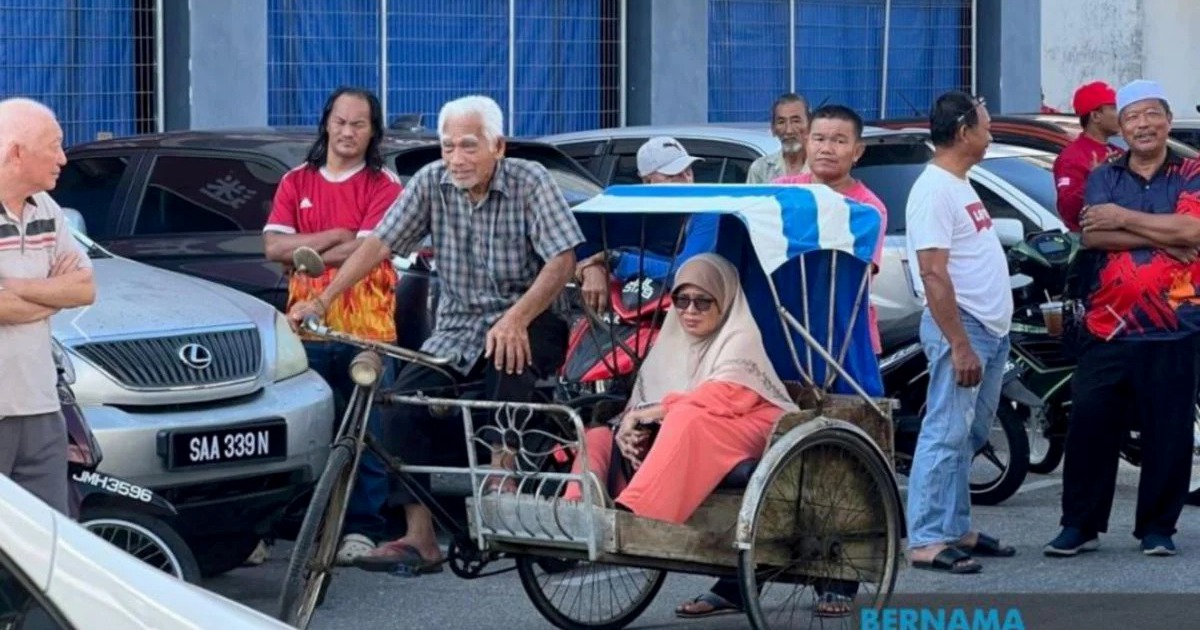
Prime Minister Datuk Seri Anwar Ibrahim has publicly recognised an 86-year-old trishaw operator for his remarkable gesture of pedalling nearly a kilometre to honour his wife's cherished wish to see the country's leader face to face. The encounter, which unfolded in Kuala Lumpur, drew widespread admiration for both the elderly man's dedication and the Prime Minister's willingness to acknowledge the touching moment. The incident underscores the enduring human desire for connection with national figures, even when age and circumstance present formidable obstacles.
The trishaw rider's journey represents far more than a simple physical feat. At 86 years old, manpower alone sustains the operation of traditional trishaws—vehicles that depend entirely on the rider's leg power to move forward. To pedal nearly a kilometre in contemporary Kuala Lumpur, navigating traffic and infrastructure designed primarily for motorised transport, demonstrates both physical resilience and emotional commitment. The man's decision to undertake this challenge reveals the profound weight his wife's aspiration carried within their household, transforming what might otherwise have been an impossible dream into a reality through sheer determination.
This type of encounter resonates deeply within Malaysian society, where respect for national leadership remains culturally significant. For many citizens, particularly those from older generations, the opportunity to see or meet a Prime Minister represents a milestone moment—a tangible connection to the nation's governance and a memory to cherish throughout their remaining years. The fact that this particular individual was motivated not by personal ambition but by spousal devotion adds another dimension to the story, highlighting family bonds and the sacrifices people undertake for those they love.
The Prime Minister's public expression of gratitude carries its own significance in the political landscape. Anwar Ibrahim's acknowledgement validates the emotional and cultural importance of such moments for ordinary Malaysians. Rather than viewing such encounters as routine or dismissive, his response suggests a genuine appreciation for the grassroots connection between leaders and citizens. This approach to public engagement reflects an awareness that governance extends beyond policy implementation to encompass the human relationships that form the foundation of national cohesion.
Traditional trishaw culture itself merits consideration within this narrative. As Malaysia has modernised and urbanisation has expanded, the trishaw has become increasingly marginalised in transport hierarchies, superseded by motorcycles, cars, and public transit systems. Yet these vehicles remain iconic symbols of Malaysia's heritage and continue to serve specific communities, particularly elderly and lower-income residents. The 86-year-old rider embodies a generation that witnessed Malaysia's transformation from colonial administration through independence to contemporary development. His continued operation of a trishaw suggests either economic necessity or a deliberate choice to maintain connections to traditional livelihoods.
The story also illuminates the circumstances of Malaysia's senior citizens, many of whom live with limited resources and mobility constraints. For individuals in their eighties, physical exertion represents a genuine health risk, yet this man calculated that fulfilling his wife's wish justified the personal sacrifice. This decision reflects both the cultural value placed on spousal relationships and the often overlooked resilience of elderly Malaysians who continue participating in economic activity and pursuing aspirations despite advancing age and physical limitations.
Social media and news coverage of such incidents have evolved significantly in Malaysia's digital age, allowing ordinary citizens' stories to circulate widely and garner national attention. What might have previously remained a private family anecdote now becomes a public narrative, shared across platforms and discussed in households and workplaces throughout the country. This democratisation of storytelling means that the elderly trishaw rider's determination now inspires and touches audiences far beyond his immediate community, contributing to broader conversations about resilience, love, and human connection.
The encounter also underscores persistent inequalities in Malaysia's transport infrastructure and economic landscape. The fact that an 86-year-old continues operating a human-powered vehicle for income—a labour-intensive activity that modern alternatives have largely displaced—points to gaps in social safety nets and economic opportunities for elderly citizens. While the Prime Minister's gracious response is commendable, it also implicitly raises questions about systemic support for senior citizens living at the margins of formal economy and urban development.
For regional observers, this incident demonstrates the enduring significance of personal connections between leaders and citizens in Southeast Asian contexts. Across the region, stories of extraordinary journeys undertaken to meet national figures reflect cultural values emphasising respect, hierarchy, and the symbolic importance of face-to-face encounters. Such narratives transcend individual countries, resonating with audiences throughout Malaysia and neighbouring nations where similar hierarchies and values persist.
Looking forward, this moment serves multiple purposes within Malaysia's political and social fabric. For the elderly couple involved, it transforms an aspiration into a cherished memory. For Datuk Seri Anwar Ibrahim, it provides an opportunity to demonstrate accessibility and appreciation for citizens across all socioeconomic strata. For Malaysia more broadly, it reinforces narratives about national unity and mutual respect, even as underlying structural challenges regarding elderly welfare and economic dignity remain unaddressed. The trishaw rider's pedal-powered journey thus becomes not merely a touching human interest story, but a mirror reflecting both the best impulses of Malaysian society and areas requiring ongoing attention and reform.

