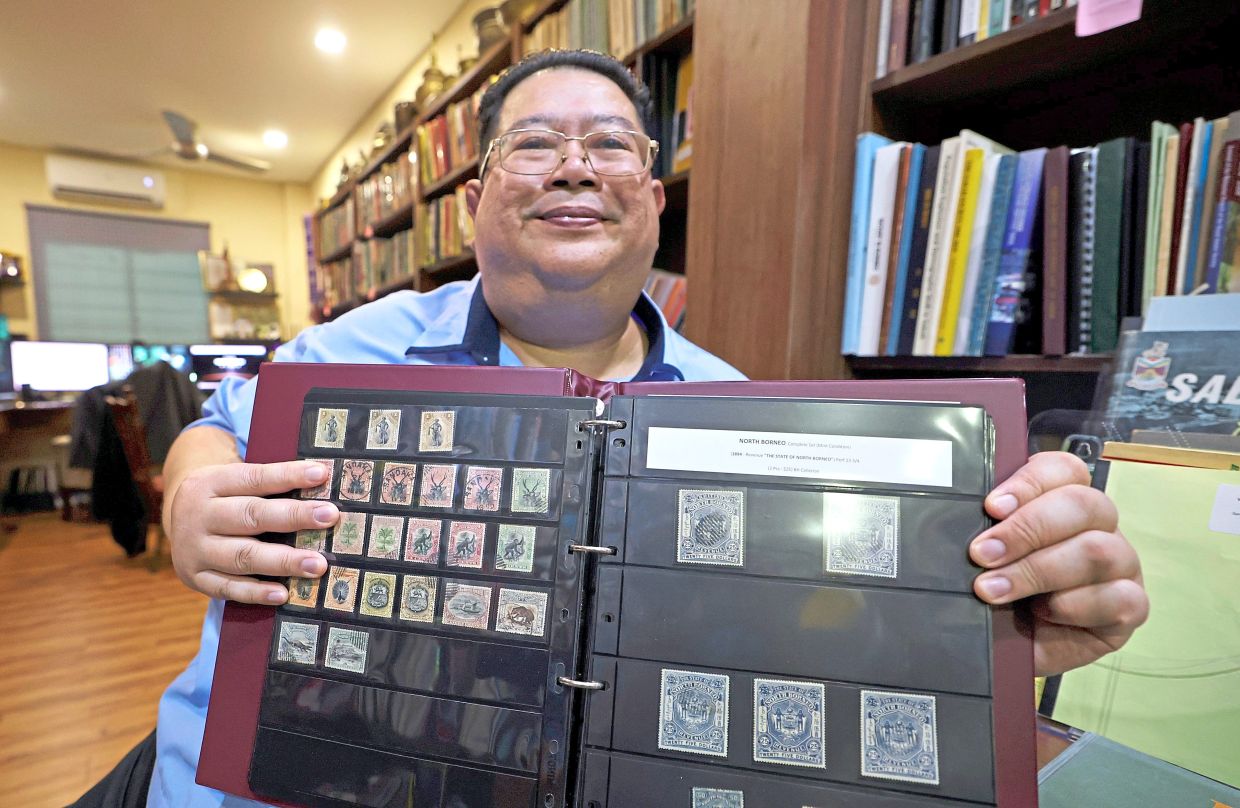
Amid growing rarity and diminishing collector interest, North Borneo's postage stamps issued over eighty years—from 1883 to 1963—now face the challenge of disappearing into obscurity. These small yet historically significant artefacts have become increasingly difficult to locate, prompting conservationists and historians to renew calls for their preservation as vital documents of Sabah's past. The urgency intensifies as fewer people engage in stamp collecting, a pursuit that once captivated generations and served as a gateway to understanding world history and geography.
Dr Shari Jeffri, a 56-year-old philatelist and founder of the Borneo History Association, characterises these stamps as a "living archive" deserving careful stewardship and transmission to younger generations. His perspective reflects a broader concern within heritage circles: that the accumulated knowledge embedded in physical collections risks vanishing as contemporary culture privileges digital documentation over tactile, vintage objects. The stamps represent far more than postal conveniences; they constitute primary sources chronicling economic activity, political relationships, and cultural identity during a pivotal chapter of Borneo's development.
Surveys conducted at antique retailers throughout Kota Kinabalu reveal how dramatically North Borneo stamps have become elusive commodities. Pricing fluctuates considerably based on issue date, physical condition, and collector demand—metrics that themselves reflect the shifting valuation of historical materials in the marketplace. Recent discoveries include an album housing a six-cent denomination featuring Queen Elizabeth II alongside a Dusun woman, and a ten-cent issue depicting logging operations, both originating from the 1954 to 1961 period. Such finds underscore how these stamps documented Sabah's economic transformation and its place within the British Commonwealth system.
Dr Jeffri's own journey into philately began through familial inheritance, a pathway that illuminates how knowledge transmission traditionally operated within hobby communities. His grandfather, employed at the Recreation Club Jesselton during the 1920s, developed his collecting passion by observing British officers pursuing the same interest. That intergenerational bridge—grandfather to grandson—exemplifies how cultural practices and historical awareness propagated through informal networks before the digital age democratised information access. Dr Jeffri was introduced to stamp collecting at age seven, yet only pursued active collecting during secondary school, subsequently dedicating himself to preserving and researching his family's accumulation and the broader historical narratives it contained.
Among Dr Jeffri's most treasured items are two two-cent North Borneo stamps from the inaugural 1883 issue, each bearing the distinctive brown sailing boat design and complete postmarks indicating actual postal use. For committed collectors, possessing an example from this inaugural series represents a benchmark of comprehensiveness; without it, a collection remains fundamentally incomplete. Beyond their rarity and monetary value, these stamps function as temporal capsules—each one confirms that someone, at some moment, prepaid postage to dispatch correspondence, embedding them within networks of communication and commerce that shaped the territory's development.
The British North Borneo Chartered Company introduced the first stamps in 1883, maintaining the postal system for approximately five decades until 1963, when the territory transitioned toward Malaysian federation. Throughout this fifty-year lifecycle, designers continuously evolved the imagery to reflect evolving political and economic circumstances. The 1935 series more explicitly embodied Sabah's distinct character, circulating across denominations ranging from two cents to one dollar. Early issues showcased imperial symbols—lions, vessels, and predatory cats—complemented by the Latin inscription Pergo et Perago, meaning "I undertake and I achieve," an explicit attempt to position North Borneo within international consciousness as a territory of enterprise and purpose.
From 1894 onward, the artistic direction shifted markedly toward representing Borneo's ecological wealth and indigenous character. Stamps increasingly featured the region's native flora, fauna, and wildlife—visual inventories of natural abundance and distinctiveness. This stylistic progression mirrored broader imperial marketing strategies, whereby colonies and protectorates were presented to metropolitan audiences through their botanical and zoological assets. Yet this artistic transition simultaneously created fragility; the organic materials depicted and the degradable printing technologies employed made preservation far more challenging than the durable lion emblems of earlier editions. Acid exposure, fluctuating humidity, and improper storage conditions threaten to fade these delicate historical documents unless housed in specialised, acid-free archival materials.
Stamps bearing complete postal cancellation marks—those dated ink impressions indicating when and where correspondence entered the mail system—command particular esteem among researchers and collectors. These cancellations transcend the stamps themselves, providing granular postal records that illuminate communication patterns, institutional operations, and economic activity across colonial Sabah. The specific post office designation, transmission date, and time-of-day information encoded in such marks create micro-histories of individual letters and parcels. Additionally, the paper composition and adhesive formulations employed in manufacturing stamps serve as material testimony to their authenticity and age, allowing specialists to distinguish genuine specimens from later reproductions or forgeries.
Dr Jeffri deepened his expertise through mentorship with renowned Singaporean philatelic specialists Voon Kyam Foh and Tan Chun Lim, while simultaneously consulting authoritative references including the Commonwealth & British Empire Stamps catalogue. This pursuit of scholarly rigour distinguishes serious philatelic work from mere collecting, transforming hobby enthusiasm into systematic historical inquiry. The comparative analysis of stamps across colonies, the examination of design evolution, and the investigation of postal operations constitute legitimate historical methodology when conducted with appropriate methodological discipline.
While correspondence has largely migrated from physical envelopes to digital networks, these antique stamps retain their evidentiary power regarding Sabah's historical trajectory. They document the territory's economic specialisations—logging, agriculture, commerce—and its institutional relationships within imperial structures. As younger generations increasingly lack familiarity with letter-writing practices and material postal culture, the tangible connection to these historical realities risks attenuation. The stamps represent one of the few remaining bridges between contemporary Malaysia and the colonial-era Sabah that preceded independence and federation. Without deliberate preservation efforts and active community engagement, these witnesses to history face extinction in dusty attics or landfills, their stories untold and their documentary significance lost to future generations seeking understanding of how their region developed and transformed.

