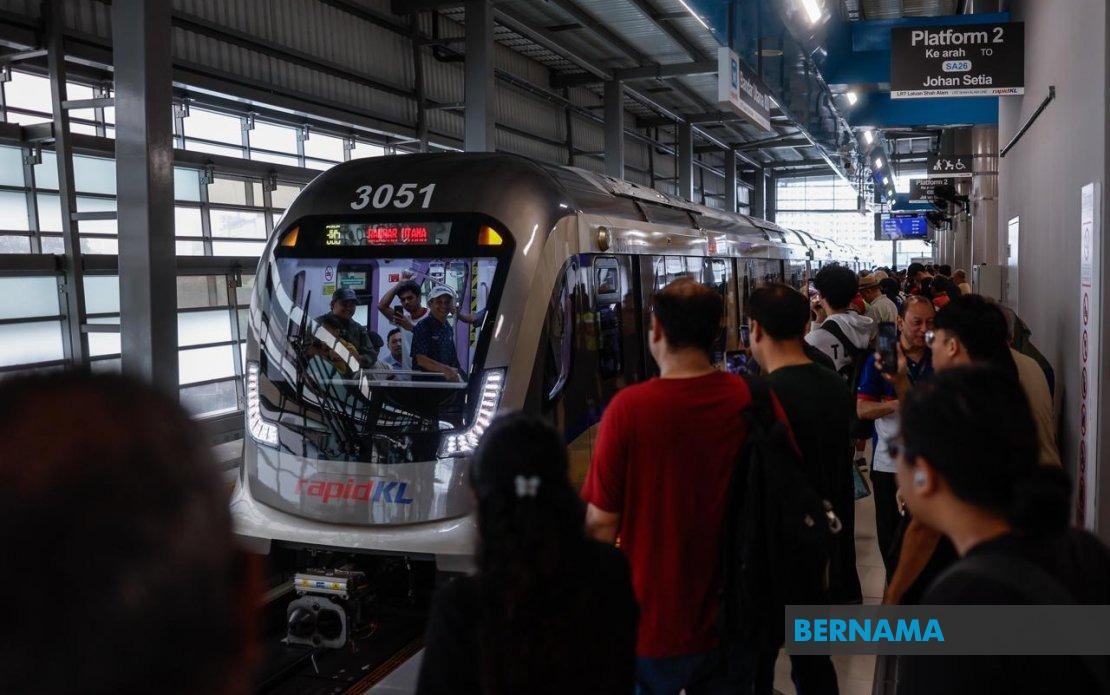
The Light Rail Transit 3 Shah Alam Line began operations at 6 am today, marking a significant expansion of Kuala Lumpur's public transportation network. Prasarana Malaysia Berhad projects that between 5,000 and 10,000 passengers will ride the new line during its opening day, with this figure expected to climb substantially as the service becomes embedded in commuters' routines. According to Prasarana president and chief executive officer Amir Hamdan, the operator has set an ambitious target of 67,000 daily passengers by the end of the first operational year, though he cautioned that reaching such numbers depends significantly on how quickly users familiarise themselves with the new service and incorporate it into their commuting patterns.
The early response to the launch has been encouraging, with Amir noting that passengers expressed enthusiasm for the new line and shared positive experiences on social media platforms. Early riders highlighted a particular benefit: the ability to reach their destinations without the stress of driving through congested roads, a factor that resonates strongly in a metropolitan area notorious for traffic challenges. This initial sentiment suggests that the line may appeal to a significant portion of the workforce seeking alternatives to personal vehicle use, particularly those working in the Shah Alam corridor and surrounding business districts.
Operations commenced smoothly across all stations and facilities, with Prasarana deploying trains at regular intervals of approximately eight minutes during peak travel hours. This headway frequency represents a balanced approach for the launch period, allowing the operator to manage passenger flow effectively while avoiding overcrowding issues that sometimes plague new transit lines. Amir emphasised that this measured approach reflects standard industry practice, as new rail lines typically experience a gradual passenger uptake rather than immediate capacity utilisation. The operator's philosophy at this juncture focuses on ensuring a positive user experience rather than maximising throughput, recognising that comfortable, reliable service encourages repeat usage and word-of-mouth recommendations.
The LRT3 Shah Alam Line functions as an integrated component of the broader Klang Valley rapid transit network, featuring critical interchange stations that connect passengers to existing lines. Glenmarie 2 station serves as a crucial junction linking the new line to the Kelana Jaya Line, while Bandar Utama station provides connections to the Kajang Line. These interchange points will be subject to particular monitoring, as they represent both opportunities and potential pressure points for passenger distribution across the network. Prasarana intends to conduct ongoing assessments at these strategic locations to understand how effectively passengers can transfer between lines and whether additional infrastructure or staffing may be required.
The operator's initial focus centres on monitoring user experience metrics at station level, including the functionality of automated entry gates, ticketing machine performance, and general passenger flow patterns. This granular approach to data collection will inform decisions about service enhancements and operational adjustments in the coming weeks and months. Should demand surge beyond current projections, Prasarana has indicated readiness to increase train frequency or deploy additional rolling stock, including the possibility of stationing backup trains along certain routes during peak periods. This flexibility demonstrates recognition that commuter behaviour patterns may evolve rapidly once the novelty of the new line fades and it becomes incorporated into standard commuting options.
One consideration that remains under review is the implementation of women-only coaches, a feature present on several other Malaysian rail transit lines. Amir indicated that Prasarana will not immediately introduce such facilities but will evaluate the need for them based on ridership data and passenger feedback accumulated during the initial operational phase. This evidence-based approach reflects a pragmatic stance, deferring decisions about operational refinements until sufficient usage patterns emerge to justify the investment and operational complexity.
A significant factor supporting early adoption has been the introduction of free fares for the opening month. Prime Minister Datuk Seri Anwar Ibrahim announced yesterday that passengers would enjoy complimentary travel on the LRT3 Shah Alam Line services, extending to feeder bus operations run by Prasarana, through July 31. This promotional period effectively reduces the financial barrier to trial and encourages experimental usage among commuters who might otherwise hesitate to adopt a new service. The month-long free period provides crucial time for Prasarana to gather data about demand, peak usage times, and passenger preferences while simultaneously building brand awareness and demonstrating the line's convenience.
The Shah Alam Line's opening represents a concrete step toward addressing transportation challenges in the western corridor of the Klang Valley, an area that has experienced rapid residential and commercial development over recent years. Improved public transit connectivity has the potential to ease congestion on major thoroughfares, particularly during morning and evening peak hours when road networks become severely strained. For Malaysian readers, this development signals the continued evolution of the public transport infrastructure that many rely upon, while also demonstrating government commitment to expanding rapid transit beyond the core urban centre.
The coming weeks will prove critical for establishing usage patterns and passenger sentiment. Should the initial phase demonstrate strong demand and positive user experiences, the LRT3 Shah Alam Line could serve as a model for future transit expansion in other Malaysian metropolitan areas grappling with similar traffic and connectivity challenges. Conversely, any operational issues or lower-than-expected ridership during this period would provide valuable lessons for refining service delivery and identifying barriers to public transport adoption in the Southeast Asian context.

