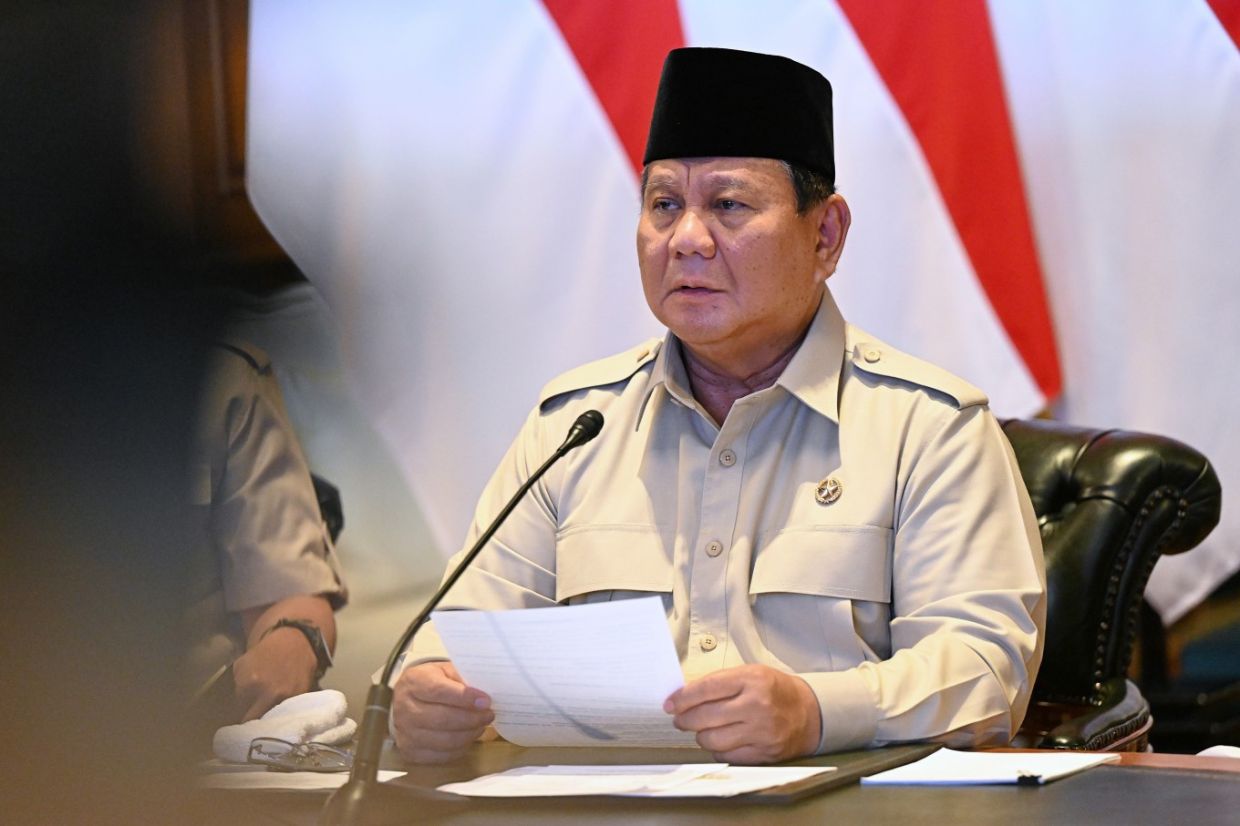
The extraordinary political honeymoon that has insulated Indonesia's President Prabowo Subianto from criticism for much of his tenure has finally expired. Multiple independent surveys now confirm a steep decline in public confidence, with his approval rating plummeting from 81.2 percent in November 2025 to just 51.1 percent by July 2026—a striking 30-point drop in less than nine months. This represents a decisive shift from the unusual plateau of sustained high approval that had characterised his first eighteen months in office, confounding expectations that most new administrations see rapid erosion of support.
The durability of Prabowo's initial popularity was itself noteworthy, extending well beyond typical honeymoon periods observed in comparable democracies. His early success stemmed not merely from residual goodwill following his 2024 election victory, but from tangible social spending initiatives that kept public sentiment favourable even as months passed. The centrepiece of this strategy—the free nutritious meal programme launched in January 2025—became a visible emblem of his administration's commitment to social welfare, translating campaign rhetoric into direct, observable benefit for ordinary households. This approach sustained approval ratings that exceeded even those achieved by his predecessor, Joko Widodo, during comparable timeframes. Widodo did not reach such heights until deep into his second term, when surveys recorded 81.7 percent approval in May 2023.
The comparison with Widodo's trajectory reveals how successfully Prabowo initially navigated the typical pitfalls of early presidency. Widodo began his first term with similar momentum—around 62 percent approval at inauguration—but suffered a precipitous collapse to 41 percent shortly after, triggered by a politically damaging fuel price hike. Prabowo avoided such an early crisis, managing instead to maintain elevated approval through his first year and beyond. This relative stability suggested either superior political management or a more favourable operating environment. Yet the latest data from Saiful Mujani Research and Consulting (SMRC) and corroborating surveys from Indikator Politik Indonesia indicate that Prabowo has now joined the historical norm: all honeymoons eventually end, replaced by the harder work of governing amid competing pressures and constrained resources.
The scale of the recent decline warrants serious attention, though it should be contextualised within broader patterns of presidential approval across democracies. A 30-point drop over nine months is steep but not unprecedented; both former U.S. Presidents Obama and Biden experienced early, sharp declines from their opening highs, though neither enjoyed Prabowo's extended plateau of 70-to-80 percent approval. Donald Trump began his second term in January 2025 at a historically low 47 percent, making Prabowo's current 51 percent appear relatively robust by comparison. Yet the trend matters more than any single number. Dissatisfaction surged from roughly 16 percent in November 2025 to 46.9 percent in July 2026, indicating not merely declining enthusiasm but rising active discontent.
The SMRC survey, conducted July 5-19 among 749 respondents, identified three specific areas driving deteriorating perceptions. Satisfaction with economic management declined dramatically, with positive views standing at just 15.7 percent by July 2026. Political perceptions collapsed even more sharply, falling from 35.8 percent in November 2025 to 13.5 percent by mid-2026. Law enforcement assessments held somewhat more steady at 26.4 percent positive, but nonetheless reflected weakening confidence. These figures point to fundamental concerns about Prabowo's core campaign promises. He pledged to curb corruption and accelerate GDP growth from 5 to 8 percent—targets now being tested against a weakening rupiah, sluggish equity markets, and mounting concerns about fiscal sustainability and central bank autonomy.
The convergence of findings between SMRC and Indikator Politik Indonesia lends credibility to the overall picture. Indikator's larger sample of 4,250 respondents, surveyed July 14-24, found satisfaction at 49.5 percent, tracking closely with SMRC's figures and showing a similar trajectory of decline from 68 percent in April 2026 and 81 percent in December 2025. This independent corroboration matters because critics aligned with Prabowo's Gerindra Party have questioned SMRC founder Saiful Mujani's objectivity, noting his recent emergence as a vocal government critic. While such political context is fair to acknowledge, it does not constitute evidence of methodological bias. SMRC maintained credibility during years when its surveys favoured Widodo, and polling methodology itself is largely neutral. When two independently operated polling organisations converge on comparable numbers and trends, the explanation cannot rest on alleged bias.
Prabowo has not remained passive as his ratings declined. He maintains an exceptionally visible public profile through frequent televised addresses, a sophisticated communications operation designed to sustain media attention, and a willingness to directly rebut critics and journalists. This approach proved effective when underlying economic conditions allowed rhetoric to fill gaps between promises and results. Yet the July numbers suggest that strategy has reached its ceiling. Presidential visibility on screens translates only so far when citizens experience different realities in their daily lives—prices for essential goods, exchange rate fluctuations affecting purchasing power, employment prospects, whether promised meal programmes actually arrive on schedule. Citizens ultimately judge leaders by tangible experience rather than forceful speeches.
The specific concerns animating public discontent have become clearer through consultations between Prabowo's circle and pollsters involved in his 2024 campaign victory. These advisers have reportedly urged comprehensive improvements to public communication and urgent review of programmes experiencing implementation difficulties. The free nutritious meal scheme and Red and White Cooperatives initiative, both touted as flagship initiatives, have encountered execution problems that undermine their political value. More broadly, pollsters have counselled that approval recovery depends on substantive improvements within the presidential inner circle, not merely enhanced messaging. This professional assessment aligns with public expectations: voters distinguish between promises and delivery.
Government insiders report that Prabowo has engaged the National Economic Council to reassess economic policy, an area where public satisfaction has eroded most sharply. Officials indicate plans to expand social assistance programmes and anticipate that climate disruptions from an expected El Niño event could exacerbate economic turbulence through weakened household purchasing power and rising food costs. Consequently, fuel prices are being held steady despite inflationary pressures, a deliberate choice to avoid inflaming public sentiment further. These responses suggest the administration recognises both the urgency and the limits of its political position. Short-term stabilising measures can slow further decline but cannot restore previous approval levels without demonstrable improvement in underlying conditions.
The historical context suggests that Prabowo's situation, while serious, remains retrievable. Presidents have recovered from steeper falls in approval ratings, particularly when government actions produce tangible improvements citizens can experience. Yet a 30-point decline in nine months, confirmed by multiple credible pollsters, indicates that goodwill purchased through early social spending has been exhausted. The dynamic that sustained approval through 2025 has inverted: citizens now measure Prabowo's administration by whether campaign commitments on corruption, growth, and stability are being met, finding the gap between rhetoric and results increasingly difficult to overlook. What unfolds next depends far less on communication strategy than on whether the economy, political institutions, and law enforcement actually improve in ways ordinary Indonesians experience in their neighbourhoods and family budgets.

