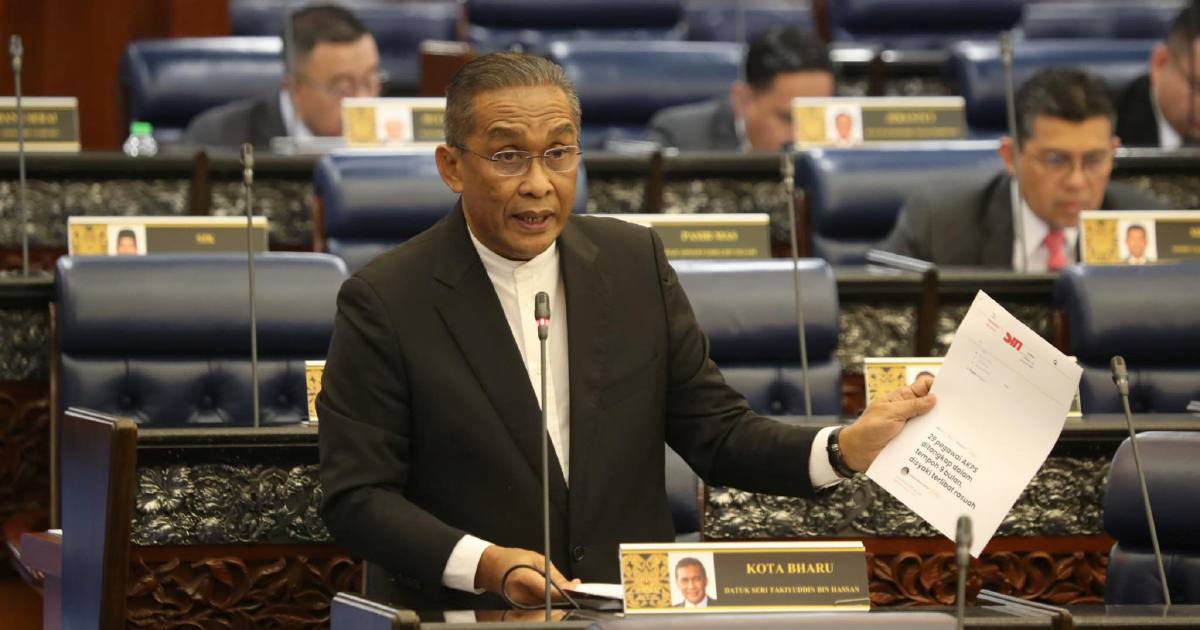
Datuk Seri Takiyuddin Hassan, serving as the Opposition's chief whip in Parliament, has formally requested postponement of the scheduled special sitting in the Dewan Rakyat where legislators are expected to deliberate on the findings contained in the Royal Commission of Inquiry report concerning Tabung Haji. The proposal hinges on the availability of Prime Minister Datuk Seri Anwar Ibrahim, who the opposition believes should be present for such a pivotal discussion affecting Malaysia's pilgrimage savings fund.
The timing of this request reflects broader parliamentary dynamics in Malaysia, where the presence of the sitting Prime Minister during major policy debates carries significant procedural and political weight. The Tabung Haji institution, formally the Pilgrims Fund Board, manages savings and investment schemes for Muslim Malaysians undertaking the Hajj pilgrimage to Mecca, making any inquiry into its governance a matter of considerable public interest and trust. The RCI's investigative findings potentially carry implications for millions of depositors who rely on the fund for one of Islam's five pillars.
Takiyuddin's intervention signals that the Opposition views this debate as sufficiently consequential to warrant the Prime Minister's direct engagement and participation. The chief whip's position suggests that conducting such discussions in the PM's absence could undermine the gravity of the RCI report's conclusions or limit the effectiveness of parliamentary scrutiny over government responses to the inquiry's recommendations. This stance reflects conventional parliamentary practice, where matters of significant national importance typically await the head of government's availability.
Tabung Haji has encountered considerable scrutiny in recent years, with concerns raised about investment management, governance structures, and the protection of depositor interests. The establishment of a Royal Commission of Inquiry represents a formal governmental mechanism to investigate these concerns thoroughly. The anticipated parliamentary debate will likely examine the RCI's findings in detail and determine what policy or administrative measures the government intends to implement in response. Such discussions carry weight not only for the institution's future direction but also for maintaining public confidence in Malaysia's pilgrimage savings ecosystem.
The request for postponement until Anwar's return adds another layer to Malaysia's current parliamentary calendar, which often involves managing the availability and schedules of senior government figures. The Prime Minister's temporary absence from Parliament—whether due to international engagements, health considerations, or other official duties—creates periodic gaps in the parliamentary session schedule. Opposition figures frequently use such moments to propose rescheduling sensitive debates, either to ensure proper governmental accountability or to align discussions with their preferred procedural conditions.
From a regional perspective, Malaysia's parliamentary institution faces ongoing pressures to balance procedural flexibility with operational efficiency. The practice of deferring significant debates creates scheduling complexities but also ensures that major policy discussions occur under conditions deemed appropriate by multiple stakeholder groups. The Tabung Haji case illustrates how governance questions touching on religious practices and financial management command heightened parliamentary attention across Southeast Asia's Muslim-majority nations.
The Opposition's move reflects their responsibility to monitor governmental affairs and financial institutions, particularly those managing public funds entrusted to them by citizens. The RCI's investigation into Tabung Haji likely examined operational decisions, investment strategies, and risk management practices that may have impacted depositor returns or fund stability. Parliamentary scrutiny of such findings serves as a crucial accountability mechanism, ensuring that institutional leadership can be questioned and challenged regarding their stewardship of public assets.
Anwar's current engagement schedule and expected return date have not been detailed in publicly available information, though parliamentary leadership typically coordinates the timing of major debates around the availability of key government officials. The anticipated debate on the Tabung Haji RCI report carries implications beyond immediate policy adjustments—it signals governmental responsiveness to public concerns about financial stewardship and institutional transparency. For millions of Malaysian Muslims saving for pilgrimage, parliamentary oversight of Tabung Haji governance provides an additional safeguard for their invested funds.
The Opposition's procedural request underscores the adversarial yet rule-bound nature of Malaysian parliamentary practice. While opposition parties seek to hold governments accountable, they simultaneously recognize that substantive debates require appropriate conditions and proper representation. Takiyuddin's call for postponement, rather than proceeding without full governmental participation, demonstrates an understanding that parliamentary debates function most effectively when all relevant parties can engage meaningfully. The timing of the eventual debate will likely be determined through negotiations between government and opposition parliamentary leadership, reflecting Malaysia's balance between majoritarian governance and minority voice protection in its legislative chamber.

