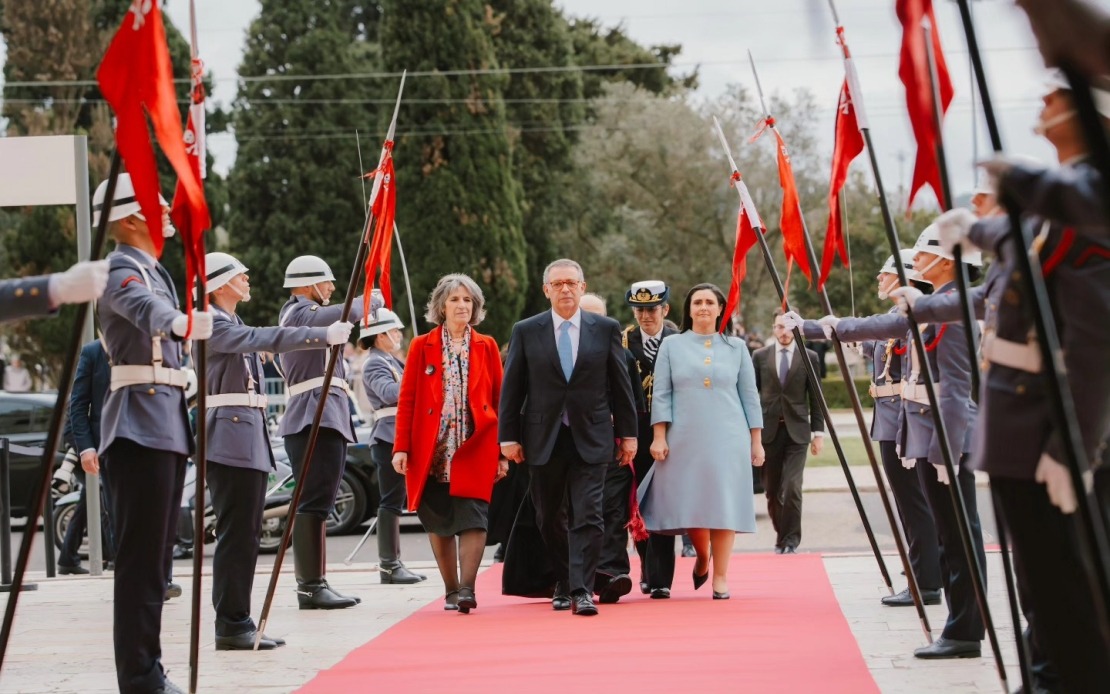
Portugal has joined a growing list of European democracies to institute restrictions on face coverings in public, with President Antonio Jose Seguro formally approving the controversial legislation on Tuesday. The decision marks a significant victory for the right-wing Chega party, which originally proposed the measure, though parliamentary amendments during the legislative process ultimately secured the president's signature despite initial reservations about its scope and implications.
Seguro's endorsement came through a presidential statement from Belem Palace, Portugal's official seat of government in Lisbon, framing the law as a response to matters of considerable cultural and social import. The president determined that modifications introduced by lawmakers had addressed his concerns sufficiently to warrant his approval, suggesting the parliamentary debate had produced a more balanced legislative outcome than the original proposal.
The Portuguese leader articulated his reasoning through three principal pillars: the preservation of social integration, the prevention of discrimination, and the maintenance of public security. Additionally, Seguro referenced established jurisprudence from the European Court of Human Rights, which has previously examined the legitimacy of restrictions on facial coverings, providing legal precedent for Portugal's approach.
Central to the president's justification was a philosophical argument about social cohesion rooted in mutual recognition. According to the official position, an uncovered face represents a fundamental element of trust within Portuguese society, enabling the direct human engagement and reciprocal understanding that he contended forms the bedrock of daily coexistence. This framing positions the law not merely as a security measure but as essential to preserving the social fabric itself.
The government also emphasised gender equality dimensions of the policy, arguing that permitting only women to obscure their entire faces creates an unacceptable asymmetry contrary to principles of equal dignity and parity that underpin European democratic values. By restricting all persons rather than targeting specific religious or cultural groups nominally, Portuguese authorities characterise the measure as gender-neutral and therefore non-discriminatory in application, though the practical effect disproportionately affects Muslim women who observe niqab or burqa traditions.
Further, the presidential statement invoked concepts of individual freedom and personal identity within frameworks of collective standards. This reasoning suggests that Portuguese democracy permits personal expression of beliefs and identity provided such expression occurs within parameters that maintain shared civic experience—a standard the government claims aligns with European Court of Human Rights interpretations of permissible public restrictions.
However, Amnesty International Portugal has directly contested this characterisation, arguing the law constitutes illegal discrimination that violates the rights of Muslim women who voluntarily choose facial coverings as expressions of religious conviction. The human rights organisation's position reflects broader concerns within civil society that such restrictions, regardless of stated intent, effectively criminalise religious practice and burden specific communities disproportionately.
Portugal's decision positions it alongside France, Belgium, Austria, Denmark and the Netherlands—nations that have already implemented full or partial prohibitions on public face coverings. This European pattern suggests a continent-wide trend toward restricting particular forms of religious expression, ostensibly for social integration and security purposes. The uniformity of this approach across diverse political systems raises questions about whether genuine security concerns or cultural assimilation pressures drive the movement.
For Malaysia and other Southeast Asian nations with substantial Muslim populations, Portugal's action reflects ongoing tensions within Europe between immigration, religious freedom and integration policy. The Portuguese model demonstrates how democracies can enact restrictions targeting religious practice while maintaining plausible legal and philosophical justifications that reference universal principles rather than explicit religious targeting. This legislative technique—restricting conduct nominally applicable to all citizens but practically affecting specific faith communities—presents a pattern worth monitoring for its potential influence on other jurisdictions navigating similar pressures.
The Portuguese case illustrates deeper complexities in multicultural governance. Authorities justify restrictions through appeals to social cohesion and shared identity, yet Muslim women who adopt facial coverings often regard this practice as integral to their own identity and agency. This fundamental disagreement over what constitutes beneficial social integration and individual freedom remains unresolved by the law, suggesting that Portugal's ban addresses symptoms rather than underlying questions about religious accommodation in secular democracies.

