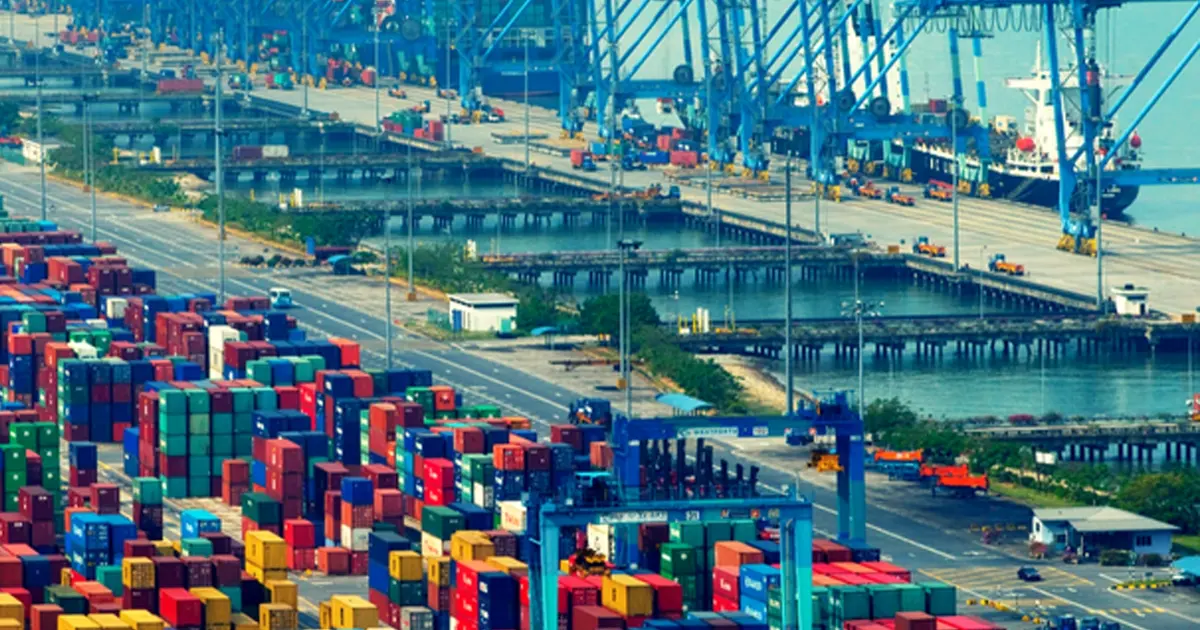
Malaysia's Port Klang Free Zone (PKFZ) is demonstrating resilience and momentum, having generated RM108 million in revenue while advancing its comprehensive reactivation programme to 86 per cent completion. Transport Minister Loke Siew Fook highlighted the facility's encouraging trajectory over the past eighteen months, underscoring the strategic importance of the nation's premier free trade enclave to regional commerce and competitiveness.
The PKFZ, a sprawling facility established to facilitate international trade and logistical operations, had faced significant operational and reputational challenges in previous years. The high reactivation rate indicates substantial progress in returning dormant or underutilised zones within the facility to productive commercial use, a critical metric for assessing the port's functional recovery. This advancement reflects renewed confidence from both domestic enterprises and international trading partners in the zone's capacity to serve their supply chain requirements.
Revenue generation at this level suggests that tenants and operators within the free zone are capitalising on the facility's strategic position as a gateway between major Asian markets and the Indian Ocean maritime routes. The PKFZ's location at the mouth of the Strait of Malacca places it at the nexus of global container traffic patterns, making its operational efficiency a concern not merely for Malaysia but for regional trade flows. The steady financial performance indicates that business confidence in the facility's management and infrastructure is strengthening.
The reactivation milestone carries particular significance for Malaysia's broader economic positioning. As Southeast Asian nations compete intensely for foreign direct investment and logistics hub status, the PKFZ's recovery demonstrates that Malaysia retains capacity to capitalise on its geographical advantages and port infrastructure. The facility's role in supporting manufacturing clusters, particularly in the Klang Valley industrial corridor, makes its functionality essential to maintaining the competitiveness of Malaysian-based enterprises in global supply chains.
For regional observers, the PKFZ's progress signals that Malaysia's logistics sector remains viable despite infrastructure challenges and operational hurdles that have constrained growth in previous years. The facility serves companies engaged in automotive components, electronics, petrochemicals, and general cargo handling—sectors vital to the country's industrial ecosystem and export performance. Improved utilisation of PKFZ's warehousing, transshipment, and value-added services capacity directly benefits manufacturers seeking to integrate their operations within efficient, cost-competitive trade environments.
The minister's emphasis on performance metrics over the eighteen-month window reflects governmental commitment to transparent assessment and accountability. Public acknowledgement of the reactivation rate and revenue figures suggests stakeholder confidence that the facility is being managed according to contemporary standards. This transparency is particularly important given the historical concerns surrounding the PKFZ's administration and value delivery, which had previously eroded investor confidence and drawn scrutiny from both domestic and international observers.
The implications extend to Malaysia's positioning within regional supply chain architecture. As countries throughout Southeast Asia invest in port modernisation and free trade facility development—notably Singapore's continued dominance, Thailand's Eastern Seaboard initiatives, and Vietnam's capacity expansion—the PKFZ's recovery becomes strategically consequential. A functional, efficiently managed free zone enhances Malaysia's attractiveness as an investment destination and reinforces the country's role as a supply chain orchestrator rather than merely a transit corridor.
Improvement to 86 per cent reactivation also suggests that previous tenant attrition is being reversed. Enterprises that relocated operations during periods of uncertainty or operational disruption may now reconsider their commitment to PKFZ infrastructure. The facility's competitive positioning against regional alternatives—particularly Penang's free trade zones and Port Tanjung Pelepas in Johor—depends on sustained demonstration of operational excellence and commercial viability. The current trajectory indicates that lost market share may be recoverable through consistent execution.
The revenue figure and reactivation rate must also be contextualised within Port Klang's broader cargo handling performance. The free zone operates within Malaysia's busiest port complex, handling container traffic, break-bulk cargo, and specialised shipments. As overall port throughput fluctuates with regional economic conditions and global trade volumes, the free zone's ability to maintain revenue generation despite macroeconomic headwinds suggests underlying structural health and tenant commitment.
Looking forward, the transport ministry's continued emphasis on the PKFZ's development implies further investments in infrastructure modernisation, digital integration, and service expansion. Enhanced facilities for customs clearance, value-added logistics services, and seamless integration with road and rail transport networks could drive further revenue growth and reactivation completion. The facility's evolution toward offering comprehensive supply chain solutions rather than basic warehousing will determine its long-term competitiveness.
For Malaysian businesses, particularly exporters and manufacturing enterprises, the PKFZ's recovery carries tangible implications. Improved facility utilisation can reduce logistics costs and transit times, enhancing the price competitiveness of Malaysian goods in regional and global markets. Small and medium enterprises increasingly reliant on efficient supply chain infrastructure benefit directly from PKFZ's operational improvements and expanded service offerings.
The transport minister's positive assessment reflects broader policy commitment to positioning Malaysia as a critical logistics hub within Asian trade architecture. As global supply chains continue their gradual restructuring in response to geopolitical shifts and changing trade patterns, nations with robust, efficiently managed free trade infrastructure position themselves advantageously. The PKFZ's recovery, whilst still incomplete at 86 per cent reactivation, indicates that Malaysia retains the capability to compete effectively for international commerce and investment.