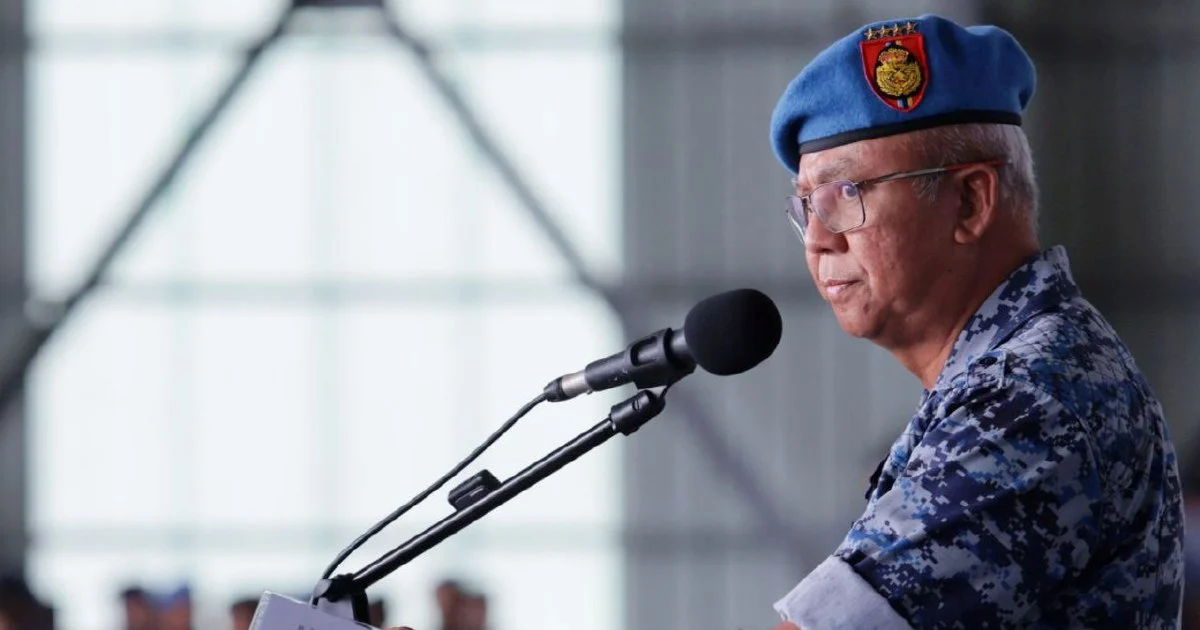
The Royal Malaysian Air Force finds itself struggling to maintain adequate surveillance over Malaysia's maritime boundaries despite the region's mounting security complexities. Speaking at Subang, the service's commander has drawn attention to a resource gap that threatens the nation's ability to exercise effective jurisdiction over its Exclusive Economic Zone—a critical strategic asset that extends across vast ocean territories vital to Malaysia's economic interests and national security. The deficiency underscores a broader challenge facing Southeast Asian nations as they navigate competing claims and increased military activity across one of the world's most contested shipping routes.
Malaysia's maritime domain encompasses territorial waters and an EEZ spanning hundreds of thousands of square kilometres, yet the RMAF operates with a fleet that was largely designed for earlier security paradigms. The current inventory of surveillance aircraft, maritime patrol systems, and supporting infrastructure has become increasingly strained as operational demands escalate. Monitoring such expansive ocean territory requires sustained airborne presence, round-the-clock capability, and sophisticated sensor systems—resources that existing platforms struggle to provide continuously. The gap between operational requirements and available assets has widened considerably over recent years.
Geopolitical dynamics in the South China Sea have intensified this pressure dramatically. With multiple regional powers maintaining significant naval and air forces in contested waters, Malaysia faces a heightened imperative to detect and track unauthorized activities within its maritime space. From illegal fishing operations to foreign military transits and potential sovereignty challenges, the range of threats requiring monitoring has expanded substantially. The air force must project awareness and presence across distances that far exceed current capability, particularly when accounting for maintenance schedules and crew rest requirements that prevent 24/7 coverage.
The implications for Malaysia extend beyond military concerns. The EEZ represents crucial fishing grounds, hydrocarbon exploration areas, and shipping lanes integral to the nation's economic prosperity. Inadequate surveillance capacity compromises the government's ability to enforce regulations against illegal fishing, which costs developing nations billions annually across the region. Malaysian fishing communities depend on marine resources within the EEZ, yet illegal foreign fishing fleets operate with relative impunity due partly to limited detection capabilities. Economic losses compound the security dimensions of this resource gap.
From a regional perspective, Malaysia's maritime monitoring challenges mirror those facing other Southeast Asian states. Smaller nations throughout the region struggle with similar resource constraints while bordering highly contested waters. The Philippines, Vietnam, Indonesia, and Thailand all contend with comparable gaps between strategic requirements and available assets. This collective vulnerability creates security dilemmas that potentially destabilize the region by reducing transparency and increasing misunderstandings between nations. When countries cannot effectively monitor their own maritime spaces, the risk of unintended escalation rises considerably.
The air force chief's statement reflects broader defence planning challenges Malaysia navigates within fiscal constraints. Military modernization competes against healthcare, education, and infrastructure spending in budgetary cycles. The RMAF must make difficult choices about platform acquisition and maintenance while defending existing budgetary allocations. Upgrading maritime surveillance capacity requires sustained investment in new aircraft, sensor systems, and supporting infrastructure—commitments that extend across multiple fiscal years and represent significant financial obligations.
International partnerships offer partial solutions to capability gaps facing Malaysia and other Southeast Asian nations. Enhanced information-sharing with allied air forces, coordinated patrols with regional partners, and intelligence cooperation can extend effective coverage beyond what individual nations can achieve independently. However, such arrangements require trust, compatible systems, and compatible strategic interests—conditions that may not always align perfectly. The Association of Southeast Asian Nations has attempted to coordinate maritime domain awareness efforts, yet individual member interests sometimes diverge, limiting collective effectiveness.
Technological advancement presents both opportunities and challenges. Unmanned aerial systems potentially offer cost-effective solutions for extended surveillance, yet they require supporting infrastructure, training pipelines, and integration into existing operational frameworks. Modern satellite-based monitoring systems could supplement aircraft-based capabilities, yet accessing such technology often depends on international relationships and commercial considerations. Malaysia must evaluate technological solutions against operational requirements and budgetary realities—a complex calculus that defence planners continuously navigate.
Looking forward, the RMAF's capacity challenge demands sustained attention from defence policymakers and political leadership. Incremental improvements may help address immediate gaps, yet comprehensive solutions require strategic commitment and consistent resource allocation. Regional security interdependencies mean that Malaysia's maritime monitoring capacity affects not only national interests but broader Southeast Asian stability. As competition for maritime resources and strategic advantage intensifies across the South China Sea, investing in adequate surveillance capabilities becomes increasingly urgent for safeguarding Malaysia's sovereignty, economic interests, and regional security position.
%22%2F%3E%3C%2Fpattern%3E%3C%2Fdefs%3E%3Crect%20width%3D%22100%25%22%20height%3D%22100%25%22%20fill%3D%22url(%23ph3r5jwg)%22%2F%3E%3Crect%20width%3D%22100%25%22%20height%3D%22100%25%22%20fill%3D%22url(%23ph3r5jwp)%22%2F%3E%3Ctext%20x%3D%2250%25%22%20y%3D%2250%25%22%20text-anchor%3D%22middle%22%20dominant-baseline%3D%22central%22%20fill%3D%22rgba(255%2C255%2C255%2C0.95)%22%20font-family%3D%22Georgia%2C%20'Times%20New%20Roman'%2C%20serif%22%20font-weight%3D%22700%22%20font-size%3D%22320%22%20letter-spacing%3D%22-0.02em%22%3EPAS%3C%2Ftext%3E%3C%2Fsvg%3E)

%22%2F%3E%3C%2Fpattern%3E%3C%2Fdefs%3E%3Crect%20width%3D%22100%25%22%20height%3D%22100%25%22%20fill%3D%22url(%23ph1b8gfg)%22%2F%3E%3Crect%20width%3D%22100%25%22%20height%3D%22100%25%22%20fill%3D%22url(%23ph1b8gfp)%22%2F%3E%3Ctext%20x%3D%2250%25%22%20y%3D%2250%25%22%20text-anchor%3D%22middle%22%20dominant-baseline%3D%22central%22%20fill%3D%22rgba(255%2C255%2C255%2C0.95)%22%20font-family%3D%22Georgia%2C%20'Times%20New%20Roman'%2C%20serif%22%20font-weight%3D%22700%22%20font-size%3D%22320%22%20letter-spacing%3D%22-0.02em%22%3EOnn%3C%2Ftext%3E%3C%2Fsvg%3E)