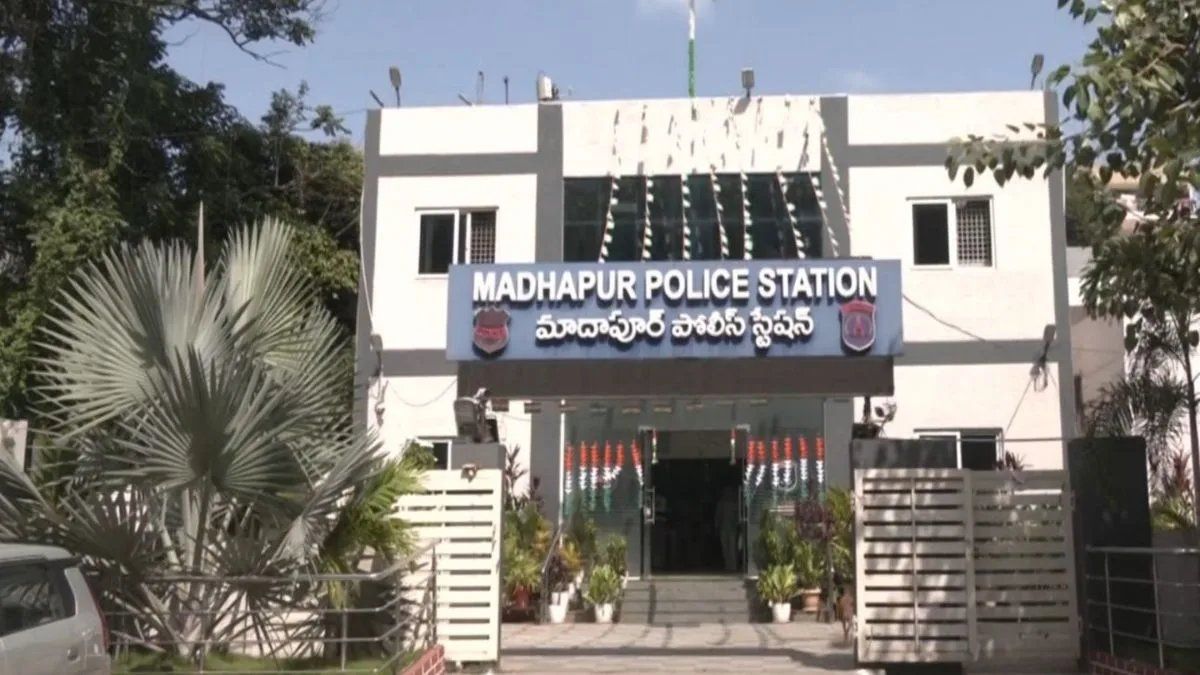
A fatal traffic collision in Hyderabad has ignited a political firestorm after Lingamaneni Sanjush, son of Jana Sena Party MP Lingamaneni Ramesh, was granted station bail in connection with the death of a 26-year-old woman. The incident, which occurred on August 16 outside Inorbit Mall in the Madhapur locality, has transformed from a routine fatal accident case into a flashpoint for accusations of preferential treatment and alleged collusion between political parties in Telangana.
According to police records, the collision took place around 3 pm when Bharati Mukhi, who worked at a Lifestyle retail outlet within the mall, was struck by the Aston Martin while crossing the road. Bharati and her colleague Pooja Ashok had ventured out to fetch meals from a nearby restaurant and were returning to their workplace when the incident occurred. The impact proved catastrophic; Bharati sustained severe head injuries and was rushed to Apollo Hospital in Jubilee Hills, where she was pronounced dead by attending medical personnel.
The Madhapur police station filed a formal case under Section 106(1) of the Bharatiya Nyaya Sanhita, which covers causing death by negligence. According to the police account, investigators found evidence suggesting the vehicle was being operated at excessive speed with rash and negligent disregard for safety. Sanjush was apprehended on the same day as the incident. The police conducted comprehensive toxicological examinations including breath analysis for alcohol and drug screening, with blood samples subsequently forwarded to the Forensic Science Laboratory for detailed examination.
Beyond the immediate investigative procedures, Sanjush was also issued a notice under Section 35(3) of the Bharatiya Nagarik Suraksha Sanhita, a provision that can facilitate certain procedural aspects of investigations. A Madhapur police official confirmed the issuance of this notice alongside the grant of station bail, which allows the accused to remain free while investigations proceed. The vehicle involved in the collision has been impounded as evidence, and authorities indicated that forensic examination of the vehicle and collection of post-mortem examination reports would continue.
The case remained relatively low-profile for the initial five days following the tragic incident. However, this changed dramatically when the Young Shriomaan Rajendra Chandra Party (YSRCP) launched a political assault against state authorities. Karthik Yellapragada, serving as national spokesperson for the YSRCP, publicly alleged that a systematic cover-up had occurred and questioned why the incident had attracted minimal media attention and public discourse during the first week after the fatality. The opposition politician's comments transformed a local traffic tragedy into a broader political controversy about governance and justice.
Yellapragada's accusations extended beyond simple negligence allegations. He contended that the muted response to the case reflected an understanding between Chief Minister Revanth Reddy and Telugu Desam Party leader Chandrababu Naidu, suggesting a political arrangement that might be shielding the accused from rigorous prosecution. The spokesperson demanded "immediate justice" and raised questions about whether differential legal standards were being applied in this case compared to similar incidents involving ordinary citizens. Such allegations, if substantiated, would represent a serious breach of equal treatment under law and undermine public confidence in judicial impartiality.
The timing and intensity of the YSRCP's intervention reflect deeper political tensions within Telangana's fractured political landscape. Jana Sena Party maintains a complex relationship with various coalitions and alliances in the state, and the involvement of an MP's son in a fatal accident provides ammunition for rival parties seeking to demonstrate governmental favoritism. For residents and observers across Southeast Asia, including Malaysian viewers, such incidents illustrate how traffic safety and criminal accountability can become entangled with patronage politics in Indian states, potentially compromising justice for ordinary victims.
From a legal procedural standpoint, station bail is a standard investigative tool that does not prejudge guilt or innocence. However, the controversy surrounding this particular grant of bail reflects public perceptions about unequal justice. When high-profile individuals receive bail in fatal accident cases while ordinary citizens face stricter conditions, it reinforces narratives about systemic bias and political protection. The fact that the investigation involves toxicological testing, vehicle examination, and forensic analysis suggests authorities are conducting a substantive inquiry, yet the political storm indicates public skepticism about whether such procedures will actually influence prosecutorial decisions.
The case also underscores broader issues of road safety and accountability in Indian metropolitan areas. Hyderabad, like many rapidly expanding South Asian cities, struggles with traffic management and enforcement challenges. Fatal accidents involving high-speed vehicles are tragically common, yet cases involving politically connected individuals often attract disproportionate attention precisely because they raise questions about unequal treatment. For Malaysia and the broader region, such incidents serve as reminders that developing economies frequently face trade-offs between rapid urbanization and adequate legal protection for vulnerable citizens.
The Telangana police's handling of this case will likely become a litmus test for judicial independence in the state. The collection of forensic evidence, toxicological reports, and vehicle examination data provides an objective foundation for prosecution decisions. However, the political pressure from the YSRCP and the public spotlight now cast upon the investigation may paradoxically serve to ensure more rigorous adherence to procedure, albeit for the wrong reasons. The ultimate outcome will substantially impact public trust in Telangana's legal system and may influence how similar cases involving politically connected individuals are handled in the future.
As investigations proceed, attention will focus on whether the evidence gathered supports charges of negligent homicide or more serious culpability. The involvement of an MP's family has already transformed this case from a routine fatal accident into a political litmus test. For Malaysian observers, the incident illustrates how political patronage networks, even in democratic systems, can challenge the principle that all citizens, regardless of background, face equal scrutiny under law when fatal consequences result from allegedly reckless behavior.

