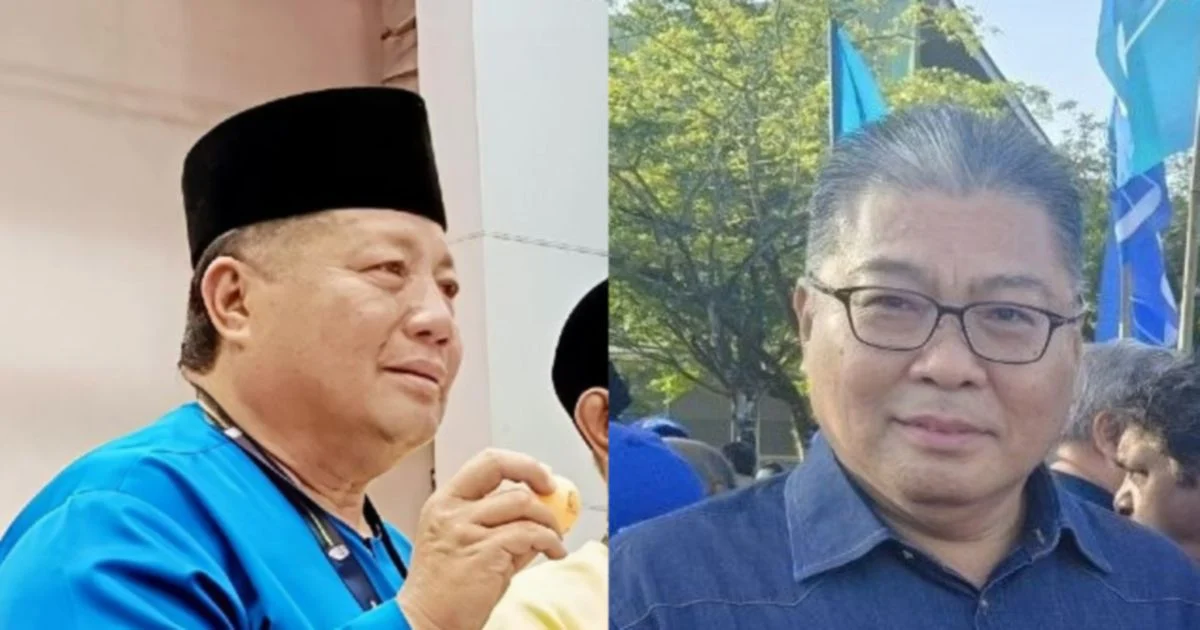
Datuk Maulizan Bujang, who formerly led the Tebrau division of Umno, has set aside political differences to publicly champion his younger sibling Mazlan's candidacy in the upcoming Johor election. Despite representing competing coalitions—Maulizan backing Umno while Mazlan runs under the Perikatan Nasional banner—the two brothers are united in their desire to serve the Kahang constituency. The public endorsement highlights the complex interplay between Malaysia's intensely competitive electoral environment and the enduring bonds of kinship that often transcend partisan divides.
The Kahang seat represents a significant battleground in Johor's electoral landscape, where multiple coalitions are vying for voter support. The emergence of such family-split candidacies reflects the broader political fragmentation across Malaysia, particularly in states where opposition to dominant coalitions has consolidated around alternative blocs. Johor, traditionally Umno's stronghold through its long association with the state government, has witnessed increased competition from Perikatan Nasional, which has made inroads in the peninsula's southern corridor. This competitive environment has occasionally resulted in family members joining different parties, creating unique scenarios where household names become divided banners.
Maulizan's willingness to openly support Mazlan's PN campaign demonstrates a pragmatic approach to familial relationships in an era of heightened political polarization. Rather than engaging in the public acrimony that sometimes characterises intra-family political competition, the former Tebrau division chief has chosen to acknowledge his brother's right to pursue his own political path. This stance carries implications for how Malaysian voters might perceive such arrangements—some viewing it as mature democratic behaviour, while others might question the sincerity of either party's commitment to their respective political platforms.
The Kahang constituency has historically been contested along both communal and developmental lines, with voters prioritizing issues such as infrastructure, education, and economic opportunities. Both Umno and Perikatan Nasional have sought to position themselves as the vehicle best suited to deliver these goods, though their philosophical approaches and coalition partners differ substantially. The entry of a PN candidate in this seat suggests the coalition believes it can mobilize sufficient support in Kahang to challenge Umno's traditional advantage. For Mazlan specifically, his brother's endorsement might provide valuable social capital in a constituency where family networks and personal reputation remain influential political factors.
Umno's position in Johor remains formidable despite recent electoral challenges at the national level. The party's deep organisational roots, decades-long governance experience, and established networks across the state continue to provide considerable structural advantages. However, Perikatan Nasional's emergence as a coherent political force, buoyed by its coalition arrangements and messaging, has forced Umno to compete more vigorously for seats it once considered secure. The Kahang contest exemplifies this shifting dynamic, where neither coalition can take rural or semi-rural constituencies for granted.
Family divisions in Malaysian politics are not uncommon, though they are rarely acknowledged as openly as Maulizan has done. Typically, such arrangements either remain unspoken or become sources of public friction. By explicitly wishing his brother well, Maulizan has adopted a notably gracious posture that acknowledges democratic pluralism within the family unit. This approach may also reflect generational shifts in how Malaysian politicians view political competition—as contests between ideas and programmes rather than existential conflicts where opposing sides must be treated as enemies.
The broader context of Johor politics includes the state's recent political instability and power transitions. The state has experienced government changes following elections and political realignments, creating uncertainty about which coalitions will ultimately govern. Within this fluid environment, candidates from all parties are working to establish personal credibility and local connections. Mazlan's candidacy under the PN flag, supported publicly by his brother, positions him as a serious contender with deep community roots—a significant advantage in Kahang politics where personal relationships and family histories carry substantial weight.
For voters in Kahang, the situation presents an unusual opportunity to evaluate two candidates from the same family, potentially offering insights into their individual qualities and commitment to constituent service. Political observers will watch whether Maulizan's endorsement proves substantive—whether he actively campaigns for his brother or merely offers rhetorical support. Similarly, the extent to which Mazlan distances himself from or embraces his brother's Umno affiliation could influence voter perceptions of his independence and political authenticity.
The electoral outcome in Kahang will provide important signals about Perikatan Nasional's capacity to win seats in Umno's traditional strongholds and whether voters are responsive to anti-Umno messaging in Johor. It will also indicate whether public family harmony translates into meaningful electoral support. Beyond this specific contest, the Maulizan-Mazlan arrangement exemplifies the nuanced reality of Malaysian politics—a system that accommodates fierce electoral competition while permitting personal relationships to remain intact across party boundaries. As Johor voters prepare to cast their ballots, such family dynamics add an intriguing human dimension to what are ultimately contests over governance, resource allocation, and political direction.

